
Best Under-Sink Water Filters (Expert Consensus)
Last reviewed: 2026-03-16
(This page is updated periodically as expert recommendations and market conditions change.)
Disclosure: This page contains affiliate links. If you buy through our links, we may earn a commission. This does not influence our recommendations or rankings.
Category Overview & Market Context
What This Category Is
Under-sink water filters are point-of-use filtration systems installed beneath a kitchen sink, delivering filtered drinking water through a dedicated faucet or your existing tap. They sit out of sight inside the cabinet and connect directly to your cold-water supply line, providing on-demand filtered water without the wait associated with pitcher filters or the countertop clutter of faucet-mount systems.
This category divides into two fundamentally different technologies. Standard (non-RO) filters use activated carbon, ion exchange, and other media to reduce chlorine, lead, volatile organic compounds (VOCs), and select contaminants while retaining beneficial minerals. Reverse osmosis (RO) systems force water through a semi-permeable membrane that blocks contaminants at the molecular level, removing up to 99% of dissolved solids, heavy metals, PFAS, fluoride, and more. Because expert sources evaluate these two types using materially different criteria, this review segments recommendations by filtration technology. Our Best Standard (Non-RO) Under-Sink Water Filter pick is for households with reasonably good municipal water seeking improved taste and targeted contaminant reduction. Our Best Reverse Osmosis (RO) Under-Sink System pick is for households wanting the broadest possible contaminant removal, including PFAS, fluoride, and dissolved solids.
State of the Market
The under-sink water filter market has evolved significantly in recent years. On the standard-filter side, Aquasana’s Claryum filtration line has established itself as the certification leader, with NSF/ANSI certifications spanning Standards 42, 53, 401, and P473 (PFAS). In the RO segment, tankless designs from brands like Waterdrop have challenged traditional tank-based systems by offering space savings, smart-faucet total dissolved solids (TDS) monitoring, and improved waste-to-pure-water ratios. Newer entrants like Cloud RO have introduced app-connected, battery-powered designs with built-in remineralization. Consumer awareness of PFAS contamination has driven increased demand for systems certified to reduce these persistent chemicals, making certification transparency a key differentiator.
Who This Is For / Not For
Under-sink water filters are best suited for homeowners or long-term renters who want a permanent, high-capacity filtration solution that delivers filtered water on demand without occupying counter space. They are a strong fit for households concerned about lead, chlorine, PFAS, or other contaminants in municipal water. They are not ideal for renters who cannot modify plumbing or drill into countertops (though direct-connect options exist for this use case), for households on well water with high sediment or bacterial contamination (which may require whole-house treatment first), or for buyers seeking portable or temporary solutions.
How This Review Was Produced
This review is based on expert consensus rather than a single reviewer’s opinion.
We analyze and synthesize recommendations from multiple independent expert review sources that meet our editorial quality and transparency standards. We document where experts agree, where they differ, and why. No single source determines our recommendations.
We do not conduct original product testing. Instead, we rely on experts who do — such as publications that perform hands-on testing, lab measurements, or clearly documented evaluation methodologies.
Manufacturers do not influence our recommendations. Advertising, affiliate relationships, or commercial considerations do not affect which products are included, how they are ranked, or how they are described.
When helpful, we also consult additional secondary review outlets to understand how broader expert opinion aligns — or conflicts — with the primary consensus. These secondary sources do not determine winners but may provide context or confirmation.
Top Picks at a Glance
Best Standard (Non-RO) Under-Sink Water Filter
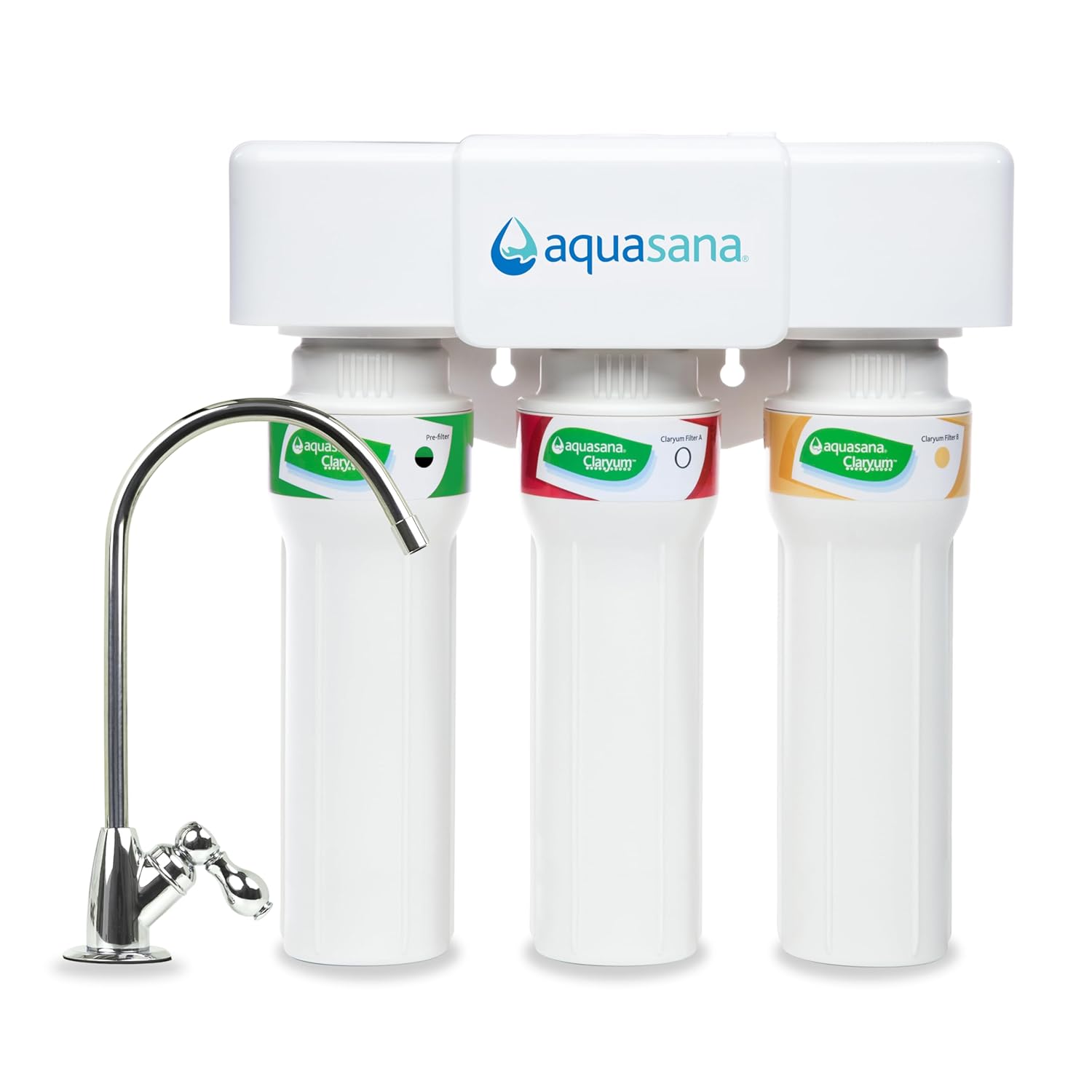
Aquasana AQ-5300+ Max Flow
The most broadly recommended non-RO under-sink filter among experts, certified to reduce 78 contaminants including PFAS, lead, and chlorine while retaining beneficial minerals.
Best Reverse Osmosis (RO) Under-Sink System: Waterdrop G3P800
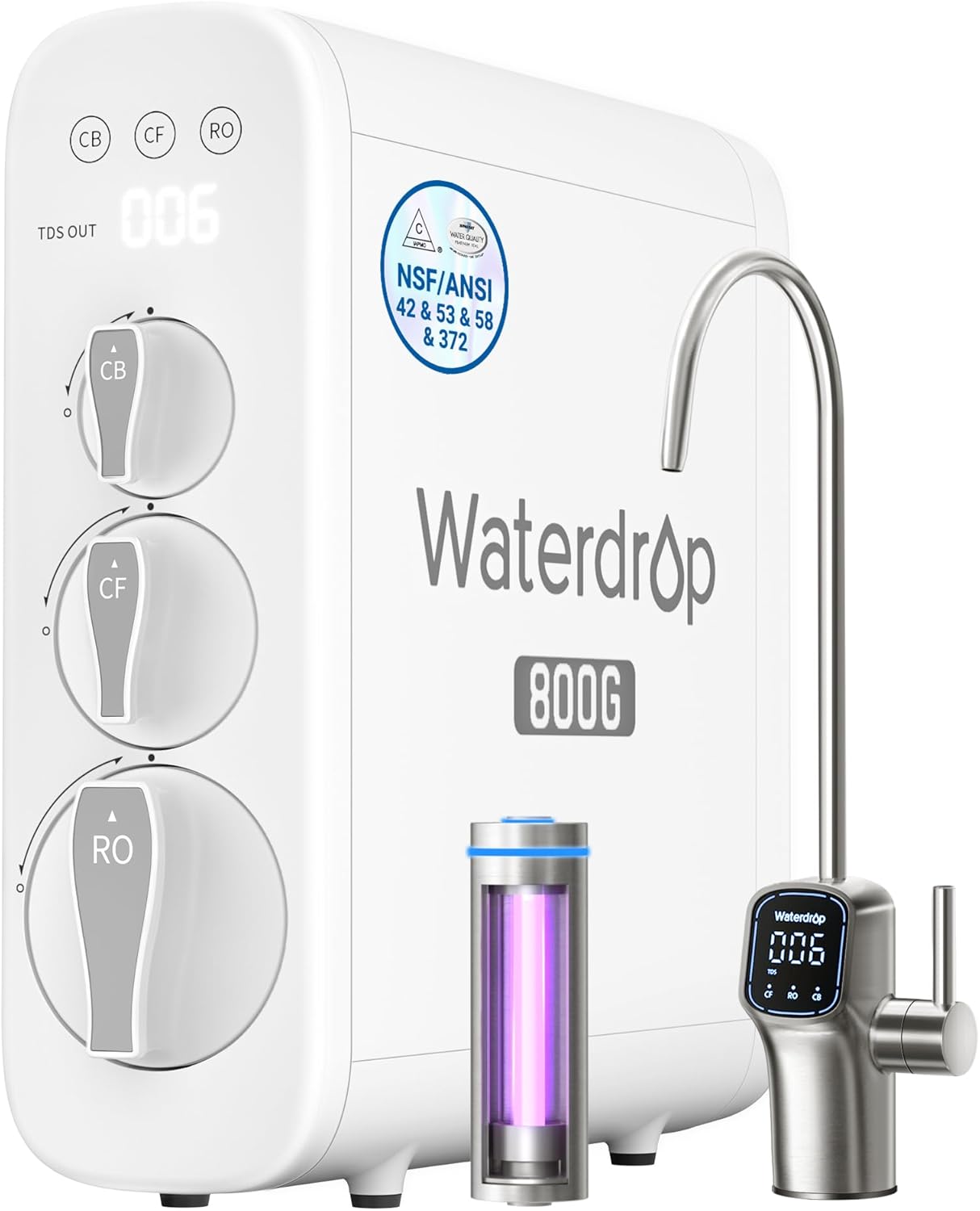
Waterdrop G3P800
A tankless RO system validated across the widest range of expert sources, delivering on-demand purified water with smart TDS monitoring and a space-saving design.
Top Picks in Detail
Below are our recommendations explained in more depth, including why experts agree and where each pick has trade-offs.
Best Standard (Non-RO) Under-Sink Water Filter: Aquasana AQ-5300+ Max Flow
BEST STANDARD (NON-RO) UNDER-SINK WATER FILTER
Aquasana AQ-5300+ Max Flow
Earns the broadest expert endorsement of any non-RO under-sink filter. Its three-stage Claryum filtration technology holds some of the most comprehensive NSF/ANSI certifications in the category, covering chlorine, lead, PFAS, pharmaceuticals, and dozens of other contaminants. A sediment prefilter and higher flow rate distinguish it from the more compact AQ-5200.
If you buy through our links, we may earn a commission. This doesn’t affect our recommendations.
Why It’s a Top Pick
The Aquasana Claryum family is the most consistently recommended non-RO under-sink filter across our expert sources. Wirecutter names the AQ-5200 its Top Pick and the AQ-5300+ its Upgrade Pick for its higher flow rate and capacity. Good Housekeeping (GH) selects the AQ-5300+ as its Best Overall after testing more than 20 under-sink models in its Home Improvement & Outdoor Lab. The Spruce names the AQ-5200 its Best Overall after testing 12 systems. Family Handyman names Aquasana its Best Overall, and Quality Water Lab (QWL) calls the AQ-5300+ its Best Balance of Flow & Filtration.
The AQ-5300+ variant is recommended over the AQ-5200 by sources that evaluate both — it offers a 44% faster flow rate (0.72 versus 0.5 gallons per minute), higher filter capacity (800 versus 500 gallons), and an included sediment prefilter that the AQ-5200 lacks. Both variants share the same ANSI/NSF certifications to Standards 42, 53 (including P473 for PFAS), and 401, covering 78 contaminants while retaining beneficial minerals like calcium, magnesium, and potassium.
One notable dissent: Consumer Reports (CR) scores the Aquasana Claryum 2-Stage at 68 out of 100 — the second-lowest score in its under-sink ratings. CR’s lab testing methodology, which evaluates flavor and odor reduction, flow rate, and clogging resistance using spiked control water, produces materially different rankings than the certification-focused and hands-on editorial approach used by all other sources. CR’s top-rated under-sink filter is the GE GXK255TBN (score 88), a system not recommended as a top pick by any other source in our review.
What Experts Like
- Certified to reduce 78 contaminants including lead, mercury, PFAS (PFOA/PFOS), chlorine, chloramines, pesticides, pharmaceuticals, and microplastics across NSF/ANSI Standards 42, 53, 401, and P473
- Retains beneficial minerals (calcium, magnesium, potassium) unlike RO systems, which strip all dissolved solids
- Higher flow rate (0.72 GPM) and 800-gallon capacity make the AQ-5300+ variant well-suited for larger households
- DIY-friendly installation with all-metal hardware and a dedicated faucet available in multiple finishes. No wastewater produced
Trade-Offs to Consider
- The three-filter AQ-5300+ is physically much larger than the compact AQ-5200 and may not fit in smaller under-sink cabinets
- Annual filter replacement cost is higher than simpler single-cartridge systems
- Does not remove fluoride, dissolved solids, or nitrates. Households with these concerns should consider an RO system
- Consumer Reports’ lab testing methodology produces a materially different ranking, scoring Aquasana low for flavor and odor improvement relative to other systems in its ratings
Runners-Up
Several other non-RO filters earned notable expert endorsements. The Aquasana AQ-5200 is Wirecutter’s specific Top Pick and The Spruce’s Best Overall — it shares the same certifications as the AQ-5300+ in a more compact and affordable form factor. The Culligan US-EZ-4 is a strong value alternative endorsed by both GH and CR.
- Aquasana AQ-5200 — Wirecutter’s Top Pick and The Spruce’s Best Overall. Same ANSI/NSF certifications as the AQ-5300+ in a package barely larger than two soda cans. Lower flow rate (0.5 GPM) and capacity (500 gallons) explain why sources that cover both variants recommend the AQ-5300+ for higher-demand households.
- Culligan US-EZ-4 — GH’s Best Value and CR’s third-highest-rated under-sink filter (score 85). A simple single-cartridge EZ-Change system with broad retail availability and an affordable replacement cycle. Certified for lead, chlorine, cysts, mercury, VOCs, and PFOA/PFOS. It lacks the breadth of Aquasana’s emerging-contaminant certifications but delivers strong core filtration at a lower cost.
Best Reverse Osmosis (RO) Under-Sink System: Waterdrop G3P800
BEST REVERSE OSMOSIS (RO) UNDER-SINK SYSTEM
Waterdrop G3P800
Has the broadest cross-source expert support of any RO system in this review, spanning both specialist water-filtration publications and general-interest home-improvement sources. Its tankless design, smart TDS-monitoring faucet, and 10-stage filtration process deliver comprehensive contaminant removal without the footprint of a traditional tank-based system.
If you buy through our links, we may earn a commission. This doesn’t affect our recommendations.
Why It’s a Top Pick
The Waterdrop G3P800 earns recommendations across the widest range of sources of any RO system we evaluated. Water Filter Guru (WFG) ranks it second overall (9.21 out of 10) behind only the Cloud RO. QWL names it its Best Tankless RO. BOS Water rates it 4.65 out of 5 as its Best Tankless pick. On the general-interest side, GH features a Waterdrop RO as its Best Deal, Bob Vila names the G3P600 variant its Best Tankless, and Family Handyman selects Waterdrop as its Best Tankless RO.
The G3P800 is certified by IAPMO R&T to NSF/ANSI Standards 42, 53, 58, and 372. Its 10-stage filtration process has been tested by SGS to reduce PFAS, fluoride, heavy metals, salts, and over 1,000 other contaminants. The tankless design delivers 800 gallons per day on demand — fast enough to fill a cup in roughly five seconds — with a 3:1 pure-to-waste ratio. An integrated smart faucet displays real-time TDS readings and filter life status.
It is worth noting that specialist water-filtration sources unanimously rank the Cloud RO above the G3P800. Cloud RO is the top-scoring system in WFG, QWL, and BOS Water. However, Cloud RO is not reviewed by any general-interest Primary source in our pool. For our expert-consensus model, which prioritizes breadth of independent expert validation, Waterdrop’s broader cross-source support is the stronger editorial signal. Readers who prioritize lab-verified performance and modern design may want to consider the Cloud RO, featured as a runner-up below.
What Experts Like
- Tankless design saves substantial under-sink cabinet space compared to traditional tank-based RO systems
- Smart faucet with real-time TDS display and filter life indicator eliminates guesswork on water quality and maintenance timing
- Certified to NSF/ANSI 42, 53, 58, and 372. Third-party lab testing by SGS confirms reduction of PFAS, fluoride, heavy metals, and dissolved solids
- Built-in UV sterilizer provides an additional layer of protection against bacteria, achieving up to 99.9% sterilization
- Quick-change filter cartridges make maintenance straightforward, with filter replacement costs that multiple sources characterize as competitive for a system of this caliber
Trade-Offs to Consider
- Does not include built-in remineralization. An optional add-on remineralization filter is available separately. Without remineralization, RO water can taste flat
- Tankless RO systems are susceptible to TDS creep, a temporary increase in TDS levels that can affect purified water quality, particularly after periods of non-use
- Requires an electrical outlet under the sink, which not all kitchens have
- Installation is more involved than standard non-RO filters, requiring a drain line connection and dedicated faucet hole. Multiple sources report installation times of one to two hours
Runners-Up
The RO segment features strong alternatives at different design points. Cloud RO leads among specialist testing sources with the highest lab-verified scores. The APEC ROES-PH75 represents the traditional, value-priced approach to reverse osmosis.
- Cloud RO — The highest-scoring RO system among all three specialist water-filtration sources: WFG’s number-one pick (9.25 out of 10), QWL’s number-one overall with a 97-out-of-99 Tap Score, and BOS Water’s Best Overall (4.66 out of 5). Cloud’s built-in remineralization stage adds calcium, magnesium, and potassium back into the purified water, producing a natural alkaline taste that specialist testers consistently praise. A battery-powered pump eliminates the need for an electrical outlet. The Cloud app provides real-time tracking of TDS, filter life, tank volume, and water consumption. It did not win the segment because it has not yet been reviewed by any general-interest Primary source in our pool.
- APEC ROES-PH75 — Bob Vila’s Best Overall and TechGearLab’s Best Under-Sink pick (ROES-50 variant, scored 89 out of 100). A traditional 6-stage tank-based RO system with an alkaline remineralization stage from a California-based manufacturer with over 20 years of experience. Uses widely available, non-proprietary standard-size replacement filters, resulting in some of the lowest annual operating costs of any RO system. The trade-off is a larger under-sink footprint due to the storage tank and a higher wastewater ratio compared to modern tankless and tank-based designs.
How to Choose the Right Under-Sink Water Filter for You
Start with your water quality report. The single most important step before choosing any filter is understanding what contaminants are actually present in your water. Your local water utility is required to publish an annual Consumer Confidence Report, which is typically available online. For a more detailed analysis, third-party water testing services can identify contaminants at the tap, including those introduced by your home’s own plumbing.
Decide between standard filtration and reverse osmosis. Standard (non-RO) carbon-based filters are the most practical choice for most households on municipal water. They effectively reduce chlorine, lead, VOCs, and many other common contaminants while retaining beneficial minerals and producing no wastewater. If your water report shows elevated levels of fluoride, dissolved solids, nitrates, arsenic, or PFAS, a reverse osmosis system provides significantly broader contaminant removal at the molecular level. RO does waste some water and strips minerals, so a remineralization filter is a worthwhile addition for taste.
Check NSF/ANSI certifications, not just marketing claims. Look for systems certified to specific NSF/ANSI standards by independent testing organizations like NSF International, WQA, or IAPMO. Standard 42 covers aesthetic improvements (taste and odor). Standard 53 covers health-related contaminants (lead, cysts). Standard 401 covers emerging contaminants (pharmaceuticals). Standard 58 applies to reverse osmosis performance. Standard P473 covers PFAS reduction. Systems that claim to be “tested to NSF standards” without actual certification may not deliver the same performance.
Measure your under-sink cabinet space. Under-sink filters range from compact single-cartridge units that mount flat against the cabinet wall to large multi-stage RO systems with storage tanks. Tankless RO systems save considerable space compared to traditional tank-based designs, but even the slimmest systems require room for the unit itself, supply line connections, and a drain saddle (for RO). Measure your available space before purchasing.
Factor in long-term cost, not just the upfront price. The initial system cost can be misleading. A less expensive system with a short filter life and proprietary replacement cartridges may cost more annually than a system with a higher purchase price but longer-lasting, widely available filters. Calculate the annual replacement cost and compare it alongside the upfront investment.
How We Make Our Recommendations
Our recommendations follow a documented, repeatable editorial process designed to prioritize expert agreement, comparability, and clarity.
For each category, we:
- Define clear category scope and exclusions
- Identify and vet independent expert review sources
- Inventory all products reviewed across those sources
- Analyze patterns of agreement and disagreement
- Apply editorial judgment only after consensus is documented
When a category includes materially different product types, we segment recommendations rather than forcing a single “best overall.” For more information, see How We Work.
Sources & Citations
Primary Sources
- Bob Vila, The Best Under-Sink Water Filters of 2026, Expert-Tested and Reviewed, Jan. 2026
- BOS Water, Best Under Sink Water Filters 2026: Lab & Hands-On Testing, March 2026
- Consumer Reports, Best Under-Sink Water Filters of 2026, Jan. 2026 [subscription required]
- Consumer Reports, Reverse Osmosis Water Filters Ratings [subscription required]
- Consumer Reports, Under-Sink Water Filters Ratings [subscription required]
- Consumer Reports, Water Filter Buying Guide, July 2025
- Good Housekeeping, 6 Best Under Sink Water Filters for Safer, Delicious Tap Water, Feb. 2026
- Quality Water Lab, Top Under-Sink Water Filters for Clean, Fast, Reliable Drinking Water, March 2026
- TechGearLab, The Best Water Filters of 2026, Dec. 2025
- The Spruce, The 7 Best Under-Sink Water Filters The Spruce Has Tested, Feb. 2026
- Water Filter Guru, 5 Best Under Sink Water Filter Systems (LAB TESTED), Jan. 2026
- Wirecutter, The Best Under-Sink Water Filter, May 2025
Secondary Sources Consulted for Context
- Better Homes & Gardens, The 5 Best Under-Sink Water Filters, Tested by BHG, July 2025
- Family Handyman, The 10 Best Under-Sink Water Filters for Clean H2O, Jan. 2026
- Reviewed, The Best Faucet Water Filters of 2026, Jan. 2026
- TapWaterData, Best Under Sink Water Filters (2026), Jan. 2026
- This Old House, Best Under-Sink Water Filters (2026), July 2025
Updates & Ongoing Review
This review is monitored on an ongoing basis. We update recommendations when expert sources publish new test results, products are discontinued, or consensus meaningfully changes.
Version History
- 2026-03-16 — Initial publication