
Best Baby Monitors (Expert Consensus)
Last reviewed: 2026-04-10
(This page is updated periodically as expert recommendations and market conditions change.)
Disclosure: This page contains affiliate links. If you buy through our links, we may earn a commission. This does not influence our recommendations or rankings.
Category Overview & Market Context
What This Category Is
Baby monitors are electronic devices that allow parents and caregivers to remotely observe or listen to an infant or young child from another room or location. Modern baby monitors range from simple audio-only units to sophisticated WiFi-connected cameras with sleep tracking, breathing monitoring, and artificial intelligence features. This review covers three distinct types: WiFi/smart video monitors that stream to a smartphone app, non-WiFi local video monitors with dedicated parent display units, and audio-only monitors.
State of the Market
The baby monitor market has evolved significantly in recent years, splitting into two primary camps: WiFi-connected smart monitors and privacy-focused non-WiFi models. WiFi monitors now offer features that were unimaginable a few years ago — sleep analytics, breathing tracking, AI-powered cry translation, and remote access from anywhere with a cellular connection. However, these features often come with subscription fees and raise legitimate security and privacy concerns. Non-WiFi monitors, meanwhile, have improved their video quality and battery life while maintaining the simplicity and security that many parents prefer. The audio-only segment remains relevant as a budget-friendly, travel-friendly option.
A notable development during our research period is the recall of the Babysense MaxView Baby Monitor, which had been a leading non-WiFi pick among expert sources. The recall, due to overheating and fire hazard concerns with the parent display unit, has disrupted the non-WiFi segment. Babysense has released a successor model (MaxView Pro), but it is still too new to have been widely tested by expert reviewers.
Who This Is For / Not For
This review is for parents and caregivers shopping for a baby monitor for use with infants and toddlers (typically birth through age 3-4). It covers monitors designed for home nursery use. It is not for parents seeking standalone wearable health monitors (such as the Owlet Dream Sock sold without a camera), commercial or institutional monitoring systems, or generic home security cameras repurposed as baby monitors.
How This Review Was Produced
This review is based on expert consensus rather than a single reviewer’s opinion.
We analyze and synthesize recommendations from multiple independent expert review sources that meet our editorial quality and transparency standards. We document where experts agree, where they differ, and why. No single source determines our recommendations.
We do not conduct original product testing. Instead, we rely on experts who do — such as publications that perform hands-on testing, lab measurements, or clearly documented evaluation methodologies.
Manufacturers do not influence our recommendations. Advertising, affiliate relationships, or commercial considerations do not affect which products are included, how they are ranked, or how they are described.
When helpful, we also consult additional secondary review outlets to understand how broader expert opinion aligns — or conflicts — with the primary consensus. These secondary sources do not determine winners but may provide context or confirmation.
Top Picks at a Glance
Best WiFi/Smart Baby Monitor
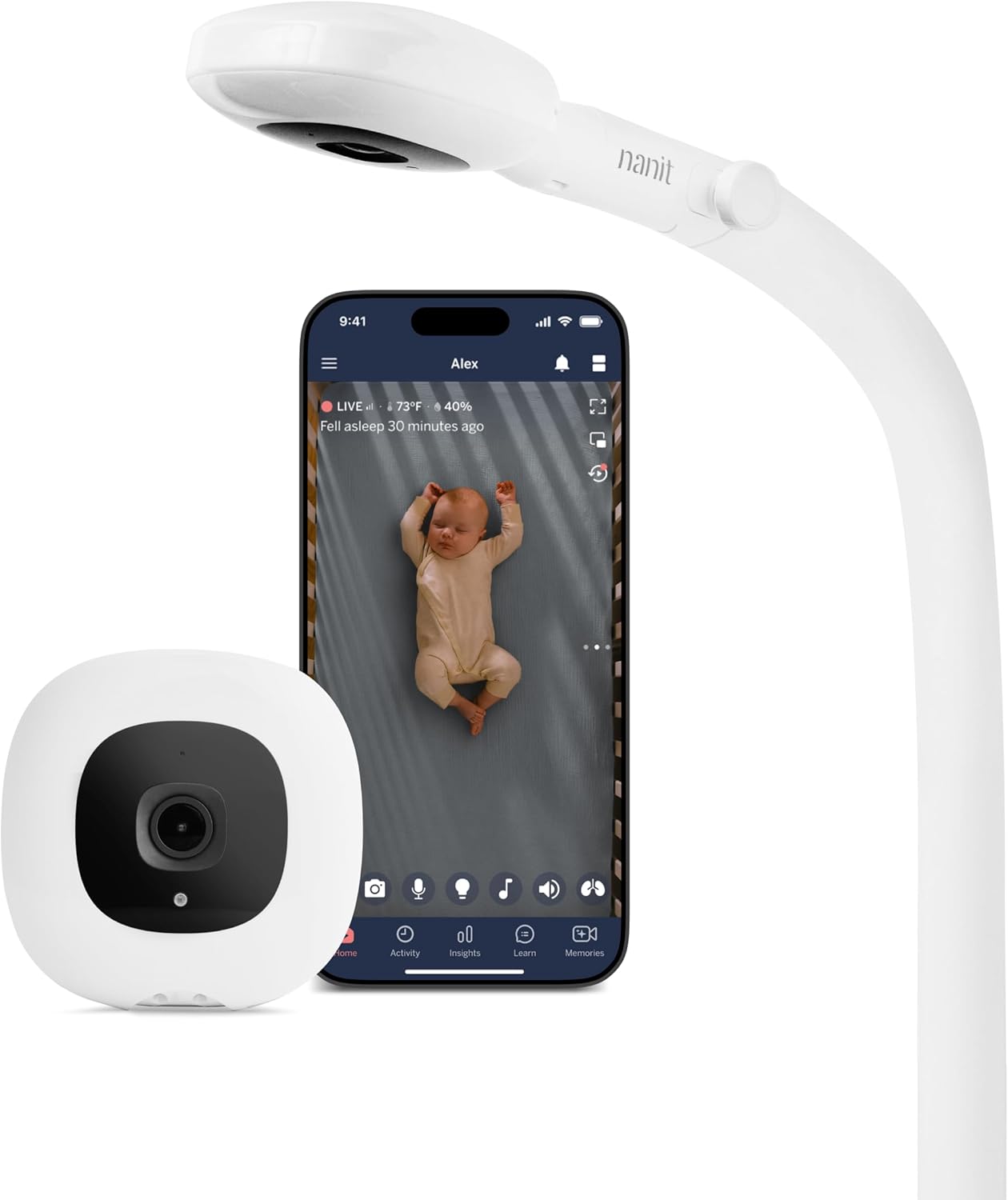
Nanit Pro Smart Baby Monitor
The most recommended WiFi baby monitor among expert reviewers, combining 1080p HD video, advanced sleep tracking, and strong security in a well-designed package.
Best Non-WiFi Baby Monitor
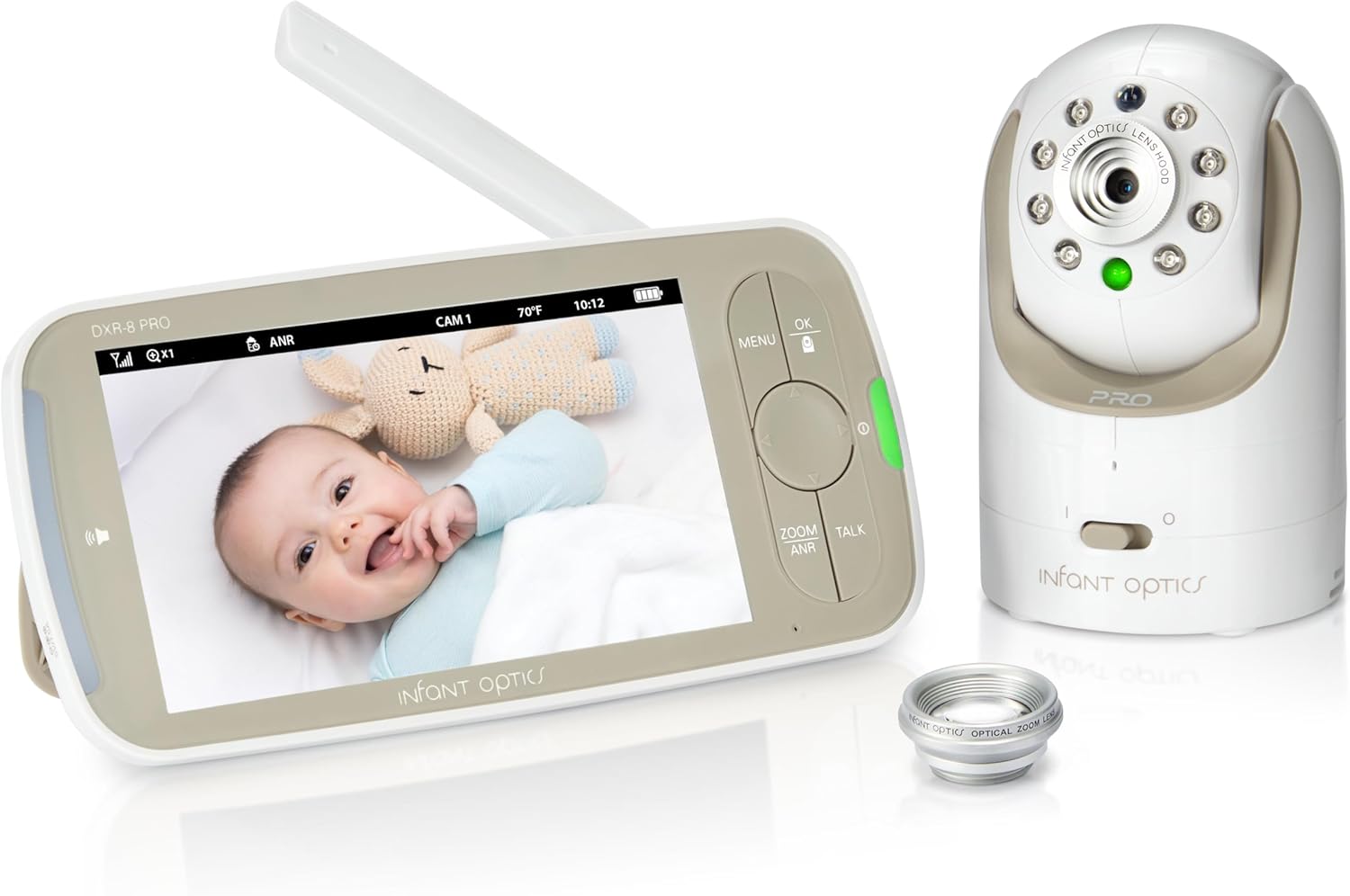
Infant Optics DXR-8 Pro
A reliable, hack-proof monitor with interchangeable lenses and active noise reduction, offering privacy-first parents a strong dedicated-display option.
Best Audio-Only Baby Monitor
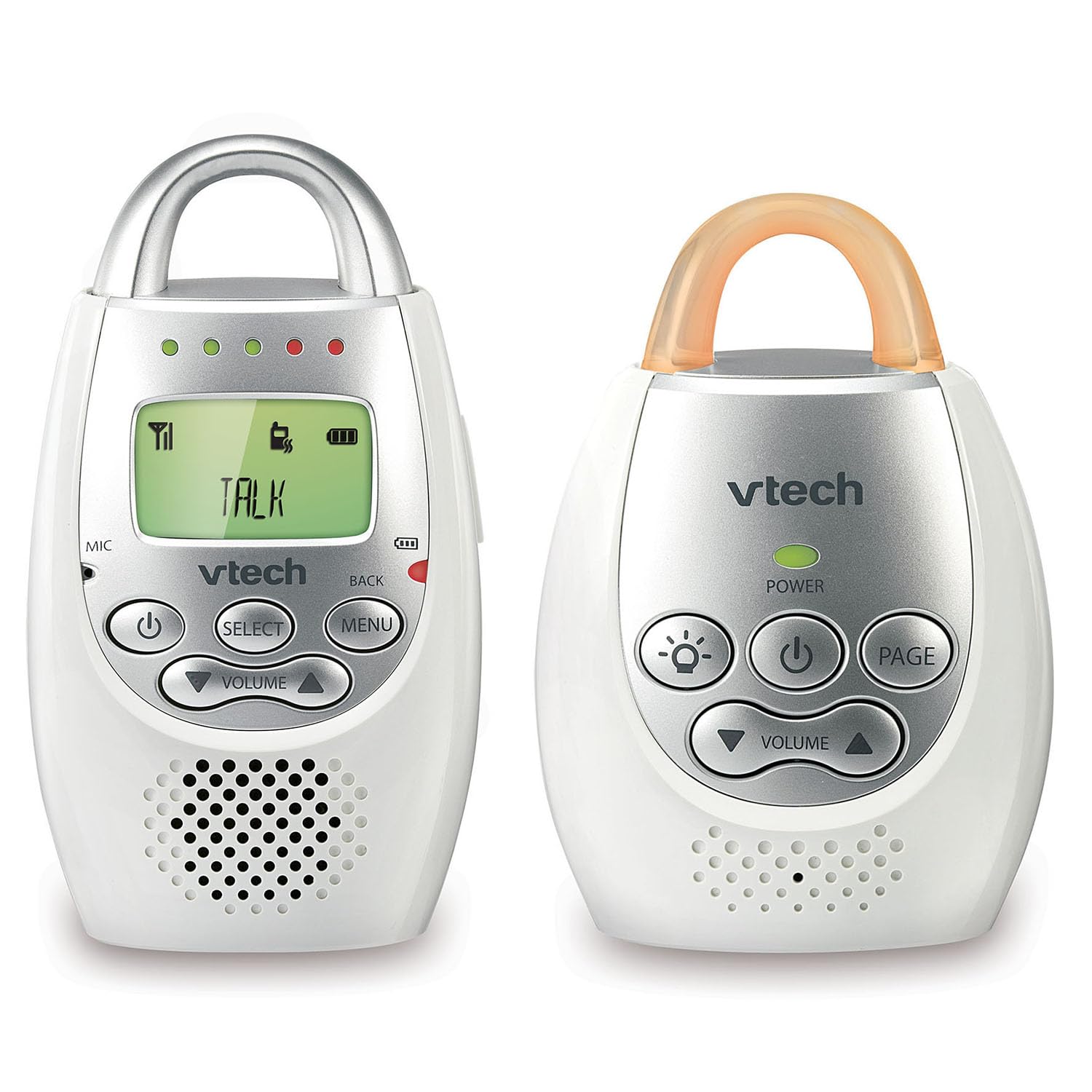
VTech DM221
The near-unanimous expert pick for audio monitoring, delivering crystal-clear encrypted sound, excellent battery life, and a remarkably affordable entry point.
Top Picks in Detail
Below are our recommendations explained in more depth, including why experts agree and where each pick has trade-offs.
Best WiFi/Smart Baby Monitor: Nanit Pro Smart Baby Monitor
BEST WIFI/SMART BABY MONITOR
Nanit Pro Smart Baby Monitor
Delivers the strongest expert consensus of any baby monitor we analyzed. Its 1080p HD overhead camera, sleep tracking analytics, and sensor-free breathing monitoring earned top-pick designations from more expert reviewers than any competitor. The well-designed app provides always-on audio and smart notifications, and the monitor uses 256-bit encryption with two-factor authentication for security.
If you buy through our links, we may earn a commission. This doesn’t affect our recommendations.
Why It’s a Top Pick
The Nanit Pro earned the broadest cross-source consensus of any baby monitor in our analysis. Wirecutter selects it as Top Pick for WiFi monitors, noting that it connects to a well-designed app and is the most stringent of the WiFi monitors tested on security. PCMag names it Top Pick and Best for Sleep Training. Reviewed designates it Best Overall. WIRED selects it as Best Wi-Fi Monitor. The Bump names it Best Overall WiFi Baby Monitor after testing 22 monitors with real families.
The Nanit Pro mounts overhead above the crib — either on a wall mount or floor stand — providing a bird’s-eye view that captures nearly everything in and around the crib. The 1080p HD camera streams clear video day and night to your smartphone, and the app offers an always-on audio feed that continues playing even when you leave the app. Nanit’s Breathing Wear band works with the camera to track your baby’s breathing motion without any sensors touching the baby, and the sleep tracking analytics provide nightly reports, sleep scores, and personalized tips.
Consumer Reports rates the Nanit Pro at 84, which is solid but below their top-scored WiFi monitors. This represents the primary expert divergence on the Nanit: Consumer Reports rates the Maxi-Cosi See Pro 360 and Hubble SkyVision AI Pro higher at 91 each. However, neither of those monitors received top-pick designations from any other Primary source in our analysis, whereas the Nanit Pro is recommended by five of seven Primary sources.
What Experts Like
- Excellent 1080p HD video quality with effective night vision that allows parents to see details like their baby’s chest rising and falling
- Sleep tracking analytics that help parents identify patterns and improve bedtime routines, with nightly reports and personalized tips
- Sensor-free breathing monitoring using computer vision and the Breathing Wear band, with no electronics touching the baby
- Strong security with 256-bit AES encryption and two-factor authentication, which Wirecutter notes is the most stringent of the WiFi monitors tested
- Always-on audio feed that continues playing even when you navigate away from the app, a feature that is surprisingly rare among WiFi monitors
Trade-Offs to Consider
- A subscription is required to access the full suite of features after an introductory trial period, including historical sleep data and some smart notifications
- The monitor is entirely WiFi-dependent with no local-only fallback, meaning it will not function during internet outages
- Carries a significant price premium compared to non-WiFi alternatives, particularly when factoring in the ongoing subscription cost
Runners-Up
The WiFi/smart monitor segment has several strong alternatives, each with a distinct strength that may make it the better choice for specific families.
- Maxi-Cosi See Pro 360 — Consumer Reports’ highest-rated WiFi baby monitor with a score of 91. This hybrid monitor works with both WiFi (via the Connected Family app) and a non-WiFi parent display unit, giving parents the best of both worlds. Its CryAssist AI technology translates baby’s cries into five categories. However, it is recommended as a top pick only by Consumer Reports among our Primary sources, limiting cross-source validation.
- CuboAi Smart Baby Monitor 3 — Recommended by both PCMag (Best for Tracking Breathing) and Consumer Reports (Best Extra Features, score 83). The CuboAi uses AI to alert parents if a baby’s face or nose is covered, or if the baby rolls over — safety features that go beyond what most monitors offer. Its 2.5K QHD video is among the sharpest available. The bird-shaped design is distinctive and the app captures photos and daily video compilations. It did not win due to narrower cross-source consensus compared to the Nanit Pro.
- Owlet Dream Duo 2 — BabyGearLab’s Best One-and-Done and Best WiFi Video Monitor pick. The Owlet uniquely combines a video camera with the FDA-cleared Dream Sock wearable that tracks pulse rate and oxygen saturation — the only monitor in our analysis offering vitals tracking. Consumer Reports rates it 80. It did not win because its core camera and video quality trail the Nanit Pro in most expert assessments, and both the American Academy of Pediatrics (AAP) and the FDA have cautioned that consumer wearable health monitors have not been proven to prevent sudden infant death syndrome (SIDS). An active model transition is underway: the Gen 3 Dream Duo has launched, though most expert reviews tested the Gen 2.
Best Non-WiFi Baby Monitor: Infant Optics DXR-8 Pro
BEST NON-WIFI BABY MONITOR
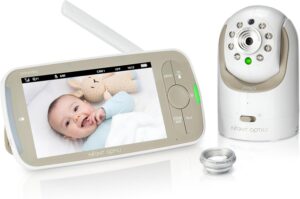
Infant Optics DXR-8 Pro
The most consistently recommended currently-available non-WiFi baby monitor, the Infant Optics DXR-8 Pro operates on a closed-loop system that eliminates the remote hacking risk associated with WiFi monitors. Its patented Active Noise Reduction filters out background noise from fans and heaters, and the interchangeable lens system lets parents customize their viewing angle without compromising video quality.
If you buy through our links, we may earn a commission. This doesn’t affect our recommendations.
Moderate Consensus Note: This segment’s consensus was impacted by the recall of the Babysense MaxView, which had been the top-rated non-WiFi monitor among multiple expert sources. The Infant Optics DXR-8 Pro is the strongest currently-available alternative, supported by one Primary source and four Secondary sources, but it does not carry the same breadth of expert agreement as the WiFi segment winner.
Why It’s a Top Pick
The Infant Optics DXR-8 Pro is the most broadly recommended non-WiFi baby monitor that is currently available and not subject to a safety recall. PCMag selects it as Best Non-Internet-Connected Baby Monitor. Among Secondary sources, Forbes Vetted names it Best Non-WiFi Baby Monitor Overall after testing 12 models, The Strategist’s senior parenting writer calls it her favorite monitor over five-plus years of parenting, Baby Gear Essentials designates it Best Non-WiFi Baby Monitor, and SafeWise selects it as Best Non-WiFi Monitor.
The DXR-8 Pro’s defining feature is its patented Active Noise Reduction, which filters out background noise from fans, air purifiers, and heaters — a common complaint with other monitors. It operates on a closed-loop frequency-hopping spread spectrum (FHSS) system with no WiFi or internet connection, which eliminates the remote hacking risk associated with internet-connected monitors. The interchangeable lens system, including an optical zoom lens in the box and a wide-angle lens available separately, gives parents flexibility to customize their viewing angle.
Consumer Reports rates the DXR-8 Pro at 51, significantly below other non-WiFi models in their testing. This represents a notable expert divergence. Wirecutter does not include it among their picks, instead selecting the now-recalled Babysense MaxView and the VTech VM5254 as their non-WiFi options. Parents who prioritize Consumer Reports’ lab testing may want to consider their recommended HelloBaby model instead.
What Experts Like
- Active Noise Reduction that filters background noise from nursery appliances, allowing parents to hear their baby more clearly
- Closed-loop system with no WiFi, apps, or internet connection, eliminating remote hacking risk
- Interchangeable lens system that lets parents swap between a zoom lens and a wide-angle lens without replacing the camera
- Expandable to up to four cameras for monitoring multiple rooms or children
- No subscription fees or ongoing costs after the initial purchase
Trade-Offs to Consider
- Battery life is shorter than many competitors at approximately six hours of continuous screen-on monitoring
- 720p resolution is below the 1080p standard now common in WiFi monitors, though adequate for most nursery monitoring needs
- Consumer Reports’ testing scored it significantly lower than competing non-WiFi models, suggesting inconsistency in expert assessment of this product
Runners-Up
The non-WiFi segment offers strong budget alternatives and models with features the winner lacks.
- HelloBaby HB6550 — The consensus budget leader in the non-WiFi segment. BabyGearLab selects it as Best Budget Video Monitor, Forbes Vetted names it Best Value Non-WiFi, and Popular Mechanics calls it Best Value. Consumer Reports recommends the closely related HelloBaby HB6560, a 6-inch screen variant, as Best Budget-Friendly. Together, the HelloBaby lineup offers pan-tilt-zoom, long battery life, and a range of up to 1,000 feet at a fraction of the cost of premium monitors. It did not win because its video resolution is lower than the DXR-8 Pro and it lacks the Active Noise Reduction and interchangeable lens features.
- Eufy Baby Monitor E210 — WIRED selects the closely related Eufy E110 as Best Radio-Based Monitor, and multiple Secondary sources recommend various Eufy models. Parents.com names the E210 Easiest to Use, praising its 30-hour battery life and 330-degree pan range. It did not win due to model fragmentation across sources (E110, E210, SpaceView Pro are distinct products) and narrower Primary-source consensus than the Infant Optics.
Best Audio-Only Baby Monitor: VTech DM221
BEST AUDIO-ONLY BABY MONITOR
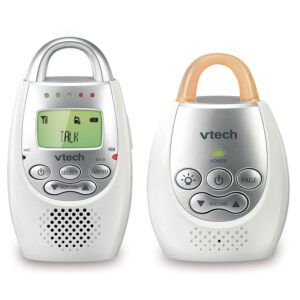
VTech DM221
The dominant expert pick for audio-only monitoring, the VTech DM221 delivers interference-free sound via DECT 6.0 encryption, a five-level visual sound indicator, and excellent battery life — all at one of the lowest prices of any baby monitor on the market. For parents who want reliable sound monitoring without the complexity of video, this is the clear choice.
If you buy through our links, we may earn a commission. This doesn’t affect our recommendations.
Why It’s a Top Pick
The VTech DM221 commands near-unanimous expert support as the best audio-only baby monitor. BabyGearLab names it Best Overall Sound Monitor. WIRED selects it as Best Audio-Only Monitor. Among Secondary sources, Forbes Vetted names it Best Audio-Only Non-WiFi Baby Monitor, Babylist selects it as Best Audio Baby Monitor, Baby Gear Essentials designates it Best Audio Baby Monitor, and Parents.com names it Best Audio. Wirecutter picks the closely related VTech DM1411, which is from the same VTech audio monitor family — a minor product variant that underscores the VTech audio consensus.
The DM221 uses Digital Enhanced Cordless Telecommunications (DECT) 6.0 technology, which provides interference-free, encrypted audio transmission. Its five-level sound indicator lights up progressively based on the volume of sounds in the nursery, allowing parents to visually assess their baby’s state even with the monitor muted. With a range of up to 1,000 feet and battery life of approximately 18 hours, it provides reliable wireless coverage throughout a typical home.
What Experts Like
- DECT 6.0 encryption eliminates interference from WiFi routers, cordless phones, and neighboring monitors while keeping transmissions private
- Five-level sound indicator provides a visual readout of nursery noise levels, useful for light sleepers who want the monitor muted but visible
- Excellent battery life of approximately 18 hours allows overnight monitoring without recharging
- One of the most affordable baby monitors available, offering reliable core functionality at a fraction of the cost of video monitors
Trade-Offs to Consider
- No video capability, which means parents cannot visually check on their baby without entering the room
- No smart features such as sleep tracking, temperature monitoring, or app connectivity
- Micro-USB charging feels dated compared to USB-C used by newer devices
How to Choose the Right Baby Monitor for You
Decide whether you need WiFi connectivity or prefer a closed system. WiFi monitors let you check on your baby from anywhere — at work, at a restaurant on date night, or from anywhere with a cellular connection. But they depend on your internet connection, raise legitimate security concerns, and often require subscription fees. Non-WiFi monitors with dedicated display units are simpler to set up, immune to hacking, and work during internet outages, but they limit monitoring to within approximately 1,000 feet of the camera.
Consider video resolution and night vision quality. Most of your monitoring will happen in a dark nursery, so night vision quality matters more than daytime image clarity. Look for at least 720p resolution. WiFi monitors typically offer 1080p or higher, while non-WiFi models range from 480p to 1080p. If you want to see details like your baby’s chest rising and falling, prioritize models that expert reviewers specifically praise for night vision.
Evaluate battery life based on how you will use the monitor. If you carry a parent display unit around the house, aim for at least 10 hours of battery life with the screen active. Many non-WiFi monitors now offer 20-30 hours in voice-activated (VOX) mode. If you use a WiFi monitor streaming to your smartphone, keep in mind that continuous streaming will drain your phone battery faster.
Factor in ongoing costs beyond the purchase price. Many WiFi monitors with premium features — including the Nanit Pro, CuboAi, and Owlet — require paid subscriptions to access their full feature sets after an introductory trial. Audio-only and non-WiFi monitors typically have no ongoing costs. Consider the total cost of ownership over the two to four years most families use a baby monitor.
Assess whether smart features like sleep tracking and breathing monitoring add genuine value for your family. Sleep analytics can help parents identify patterns and improve bedtime routines, but they can also increase anxiety for parents who find themselves compulsively checking data. Breathing monitoring provides an additional layer of reassurance, but the AAP and FDA have cautioned that consumer-grade wearable health monitors have not been proven to prevent SIDS. Consider whether these features will provide peace of mind or add unnecessary stress.
Think about security and privacy. Any WiFi-connected device in your home is a potential target for hackers. Look for monitors with end-to-end encryption and two-factor authentication. If privacy is a top concern, a non-WiFi monitor eliminates network exposure entirely. Consumer Reports tests baby monitors specifically for security and privacy vulnerabilities and found that most WiFi models receive middling marks in these areas.
How We Make Our Recommendations
Our recommendations follow a documented, repeatable editorial process designed to prioritize expert agreement, comparability, and clarity.
For each category, we:
- Define clear category scope and exclusions
- Identify and vet independent expert review sources
- Inventory all products reviewed across those sources
- Analyze patterns of agreement and disagreement
- Apply editorial judgment only after consensus is documented
When a category includes materially different product types, we segment recommendations rather than forcing a single “best overall.” For more information, see How We Work.
Sources & Citations
Primary Sources
- BabyGearLab, The 10 Best Baby Monitors, April 2025
- BabyGearLab, The Best Video Baby Monitors, March 2026
- Consumer Reports, Baby Monitor Buying Guide, Dec. 2025 [subscription required]
- Consumer Reports, Best Baby Monitors of 2026, March 2026 [subscription required]
- Consumer Reports, Video Baby Monitors Ratings & Reviews [subscription required]
- Consumer Reports, WiFi Video Baby Monitor Recommended [subscription required]
- Consumer Reports, WiFi Video Baby Monitors Ratings & Reviews [subscription required]
- PCMag, The Best Baby Monitors for 2026, Nov. 2025
- Reviewed, The Best Baby Monitors of 2026, Feb. 2025
- The Bump, The Best WiFi and Non-WiFi Baby Monitors, Tested by Moms, July 2025
- Wirecutter, The Best Baby Monitors, Feb. 2026
- WIRED, The Best Baby Monitors for Peace of Mind, Sept. 2025
Secondary Sources Consulted for Context
- Baby Gear Essentials, The 8 Best Baby Monitors of 2025, March 2025
- Babylist, We Tested the Best Baby Monitors of 2026, April 2026
- CNET, The Best Smart Baby Monitors of 2026, as Tested by Moms, Feb. 2026
- Fathercraft, Quest for the best baby monitor: our baby monitor reviews, 2025
- Forbes Vetted, The Best Non-WiFi Baby Monitors, According To A Mom Who Tested A Dozen, Jan. 2026
- Mommyhood101, The Best Baby Monitors of 2026, Tested & Reviewed, Feb. 2026
- Parents.com, The 10 Best Baby Monitors We Trust to Keep an Eye on Our Own Babies, Feb. 2026
- Popular Mechanics, The 7 Best Baby Monitors to Give You Peace of Mind, April 2025
- SafeWise, The Best Baby Monitors of 2025, Oct. 2025
- The Strategist, The 8 Very Best Baby Monitors, April 2025
- What to Expect, 6 Mom-Loved Video Baby Monitors That Help You Sleep Easier, June 2025
Additional Sources Reviewed
- What to Expect, Best Audio Baby Monitors, Jan. 2021
Updates & Ongoing Review
This review is monitored on an ongoing basis. We update recommendations when expert sources publish new test results, products are discontinued, or consensus meaningfully changes.
Version History
- 2026-04-10 — Initial publication