
Best Air Purifiers (Expert Consensus)
Last reviewed: 2026-02-23
(This page is updated periodically as expert recommendations and market conditions change.)
Disclosure: This page contains affiliate links. If you buy through our links, we may earn a commission. This does not influence our recommendations or rankings.
Category Overview & Market Context
What This Category Is
Air purifiers are standalone appliances that draw room air through one or more filters to remove airborne particles before returning the cleaned air to the space. Most units designed for home and office use rely on HEPA (High-Efficiency Particulate Air) filtration, a standard that requires capture of at least 99.97% of particles at 0.3 microns — the particle size most likely to penetrate deep into the lungs. The primary performance metric for the category is the Clean Air Delivery Rate, or CADR, which quantifies how quickly a purifier reduces smoke, pollen, and dust in a given space.
Key components in a typical home air purifier include a pre-filter for larger particles and hair, a HEPA or equivalent filter for fine particulate matter, and often an activated carbon layer for odors and gases. A fan drives airflow through this filter stack; its speed and efficiency determine how much air the unit can process per unit of time. Features such as air quality sensors, auto modes, sleep modes, and app connectivity have become increasingly common across the category.
State of the Market
The air purifier market has grown substantially over the past decade, driven by rising consumer awareness of indoor air quality, high-profile wildfire smoke events, post-pandemic concern about airborne particles, and a growing body of research linking fine particulate exposure to respiratory and cardiovascular health outcomes. The category now spans a wide range of form factors and price points, from compact units designed for single rooms to high-output machines capable of processing air in large open-plan spaces.
The core technology of HEPA filtration is well-established, and the performance gap between budget and premium units has narrowed considerably. Differentiation increasingly comes from CADR-to-room-size efficiency, noise management, running costs (including filter replacement frequency), and smart features rather than from fundamental differences in filtration quality. At the same time, the proliferation of HEPA-like and HEPA-type marketing language — terms that carry no standardized performance certification — has made it harder for buyers to evaluate products without independent expert testing.
Expert sources in this category have also diverged on secondary technologies. Most major publications recommend standard mechanical HEPA filtration. Some sources raise concerns about built-in ionizers, which generate trace ozone as a byproduct of operation. Others are less concerned. This divergence is documented and addressed in the relevant product sections below.
Who This is For / Not For
Air purifiers are well-suited to households with allergy or asthma sufferers, pet owners dealing with dander, anyone in a region affected by seasonal wildfire smoke, and people who want to reduce general indoor particulate exposure. They are also a practical tool for home offices and bedrooms, where sustained air quality over long periods of low activity matters most.
Air purifiers are less likely to provide meaningful benefit in already well-ventilated spaces with low occupancy, or as a substitute for addressing the source of air quality problems — such as mold remediation, reducing combustion sources, or improving building ventilation. They also do not address all air quality concerns: most HEPA-based units do not meaningfully filter gases and VOCs without an activated carbon layer, and none eliminate biological sources of contamination.
How This Review Was Produced
This review is based on expert consensus rather than a single reviewer’s opinion.
We analyze and synthesize recommendations from multiple independent expert review sources that meet our editorial quality and transparency standards. We document where experts agree, where they differ, and why. No single source determines our recommendations.
We do not conduct original product testing. Instead, we rely on experts who do — such as publications that perform hands-on testing, lab measurements, or clearly documented evaluation methodologies.
Manufacturers do not influence our recommendations. Advertising, affiliate relationships, or commercial considerations do not affect which products are included, how they are ranked, or how they are described.
When helpful, we also consult additional secondary review outlets to understand how broader expert opinion aligns — or conflicts — with the primary consensus. These secondary sources do not determine winners but may provide context or confirmation.
Top Picks at a Glance
Best for Small/Medium Rooms
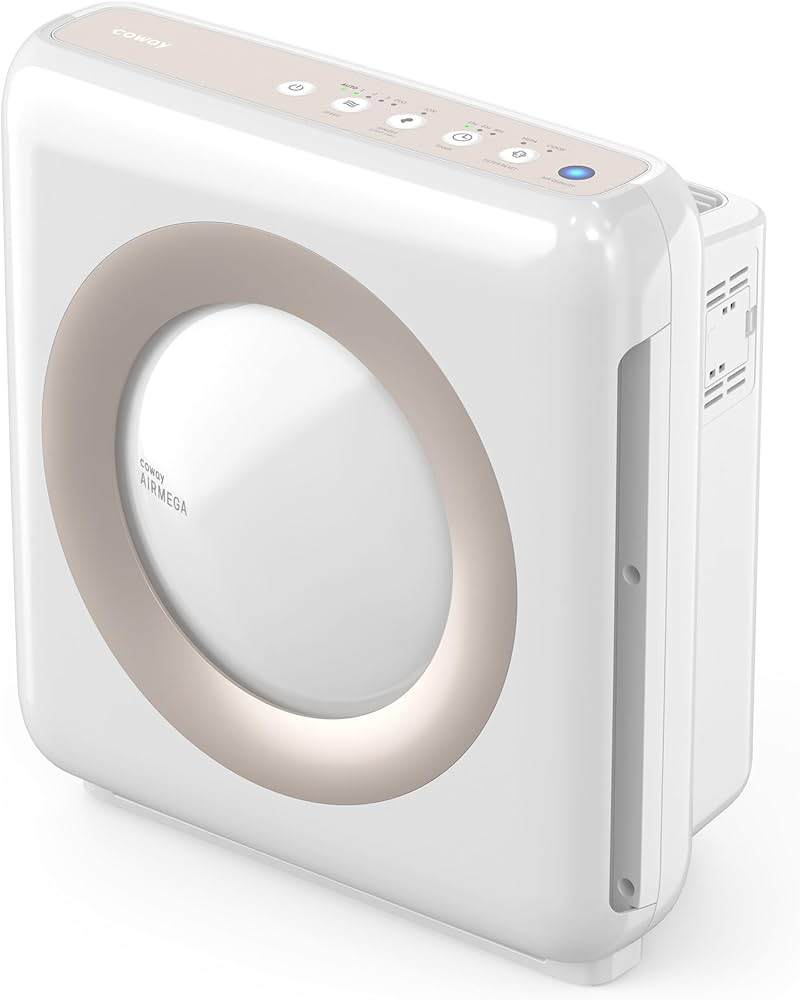
Coway Airmega AP-1512HH Mighty
A decade-tested HEPA workhorse that cuts smoke particles by over 99% in rooms up to 360 square feet Quiet, consistently affordable, and proven across years of continuous real-world testing by multiple expert sources.
Best for Large Rooms
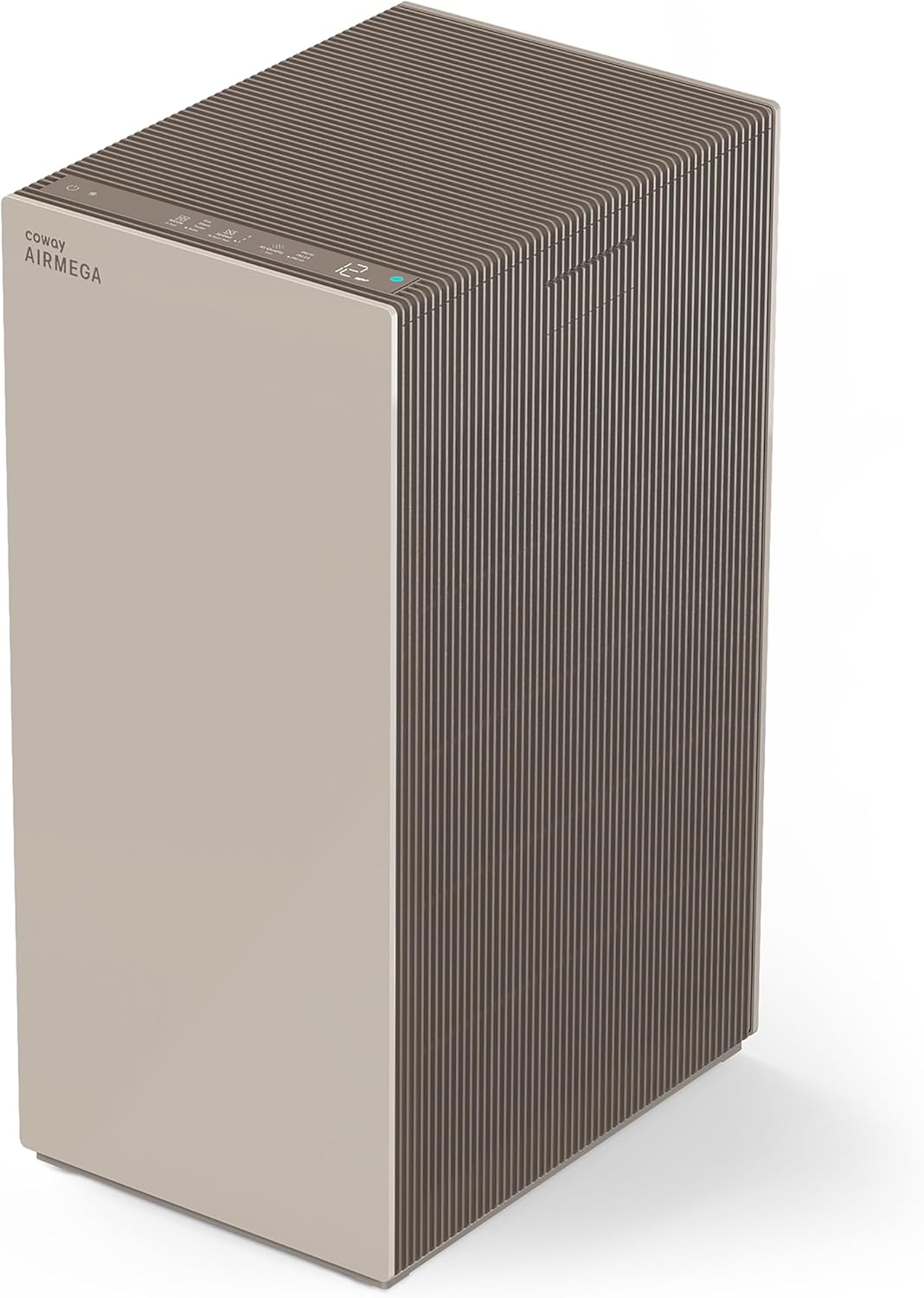
Coway Airmega ProX
The highest PM1 CADR recorded by HouseFresh across 129+ tested residential purifiers, and Consumer Reports’ top-rated pick for extra-large rooms. Purpose-built for spaces above 400 square feet where output matters most.
Top Picks in Detail
Below are our recommendations explained in more depth, including why experts agree and where each pick has trade-offs.
Best Air Purifier for Small/Medium Rooms: Coway Airmega AP-1512HH Mighty
BEST FOR SMALL/MEDIUM ROOMS

Coway Airmega AP-1512HH Mighty
The most proven air purifier for small and medium rooms. For rooms up to 360 square feet, the Mighty is the consensus pick with no meaningful caveats.
If you buy through our links, we may earn a commission. This doesn’t affect our recommendations.
Why It’s a Top Pick
The Coway AP-1512HH Mighty has held Wirecutter’s top recommendation for this segment for nearly a decade. That durability is unusual in a category where new entrants appear regularly, and it reflects something beyond short-term lab performance: the Mighty has proven itself in real-world conditions, with Wirecutter running units continuously for two to four years as part of their long-term durability assessment. In Wirecutter’s most recent tests, the Mighty reduced smoke particles by over 99% on high speed and 88% on medium speed. TechGearLab’s independent testing corroborates this, with the Coway earning an 8.5 out of 10 for air cleaning performance. Consumer Reports’ consistent placement of the Mighty across their 170+ unit ratings reinforces the same conclusion: within a space of 150 to 300 square feet, it delivers reliable performance without meaningful compromise.
What Experts Like
- Proven real-world performance over extended periods, including Wirecutter’s multi-year continuous operation testing
- Quiet enough at medium speed for bedroom or office use without disruption
- Auto mode adjusts fan speed in response to detected air quality, enabling set-and-forget operation
- Competitive annual operating cost for the segment, with one filter change per year typically sufficient
- Compact footprint relative to its coverage area, fitting comfortably in most standard room configurations
Trade-Offs to Consider
- HouseFresh describes the Mighty as somewhat dated relative to newer designs, though expert consensus indicates performance remains competitive
- Lacks smart app integration found in newer models; control is limited to the unit itself
- Does not cover rooms above approximately 360 square feet at the four-air-changes-per-hour threshold Wirecutter recommends as a minimum
- Design, while functional, does not stand out aesthetically compared to more recent entries in the segment
Runners-Up
- Blueair Blue Pure 311i Max — Recommended by four of five primary sources and ranked Best Overall by both TechGearLab and Good Housekeeping Institute. Its HEPASilent filtration cleared over 99% of smoke in multiple independent tests, and TechGearLab found it reduced room particles to near-zero in under 28 minutes. The one meaningful caveat: HouseFresh declines to recommend it because its built-in ionizer cannot be independently disabled. Ionizers produce trace ozone as a byproduct, which may concern users with respiratory sensitivities. If this is not a factor for you, the 311i Max is the strongest all-around performer in the segment.
- Levoit Vital 200S — The strongest consensus pick for buyers prioritizing value. HouseFresh rates it their top mainstream recommendation. RTINGS ranks it Best Mid-Range after independent testing, and Wirecutter includes it as an Also Great pick. It offers Wi-Fi connectivity and app integration that the Coway Mighty lacks. The trade-off is a shorter durability track record compared to the Mighty.
Several secondary review outlets, including RTINGS.com and Tom’s Guide, broadly align with the primary consensus on the strength of HEPA performance at this room size, reinforcing the case for the Coway Mighty and Levoit Vital 200S as well-supported picks.
Best Air Purifier for Large Rooms: Coway Airmega ProX
BEST FOR LARGE ROOMS
Coway Airmega ProX
The highest clean-air output of any residential purifier in independent testing. For rooms above 400 square feet, the ProX is the evidence-backed choice — but buyers with smaller rooms will get equal or better results from the small/medium-room picks at significantly lower cost.
If you buy through our links, we may earn a commission. This doesn’t affect our recommendations.
Why It’s a Top Pick
Consumer Reports names the Coway Airmega ProX as the top pick for extra-large rooms in their ratings of over 170 air purifiers. HouseFresh independently selects it as their Best Large Room pick, recording a PM1 CADR of 462 cfm — the highest figure HouseFresh has measured for any residential unit in their database of 129+ tested purifiers. When two primary sources with substantially different testing methodologies converge on the same product for the same use case, that agreement carries significant weight.
The ProX is designed for rooms above 400 square feet, with coverage reaching approximately 1,000 square feet at the four-air-changes-per-hour threshold most experts consider the effective minimum for real air quality improvement. For genuinely large spaces, it delivers clean air delivery that smaller units in Segment A cannot match.
The ProX carries a significant price premium over the small/medium-room picks and over the runner-up in this segment. That premium is worth naming directly: buyers whose rooms fall within the small/medium-room range will find equivalent or better air quality improvement from our smaller-room recommendations, at substantially lower cost.
What Experts Like
- The highest PM1 CADR recorded by HouseFresh across 129+ residential air purifiers tested
- Consumer Reports’ top rating in the Extra-Large room category from a database of 170+ rated purifiers
- Dual-fan design delivers high airflow with relatively controlled noise for the output level
- App connectivity supports scheduling, real-time air quality monitoring, and remote control
- Filter-change indicator and auto mode reduce the need for manual intervention
Trade-Offs to Consider
- Significantly more expensive than the small/medium-room picks — buyers with rooms under 400 square feet are better served by a smaller-room recommendation at substantially lower cost
- Physical size is substantial; placement in smaller rooms would feel intrusive
- Annual filter costs are higher than small/medium-room alternatives given the larger filter surface area
- Consensus rests on two primary sources rather than three or more, a thinner evidential base than the small/medium-room picks
Runners-Up
- Blueair Blue Pure 211i Max — Wirecutter’s Upgrade Pick for rooms up to approximately 500 square feet. In Wirecutter’s testing, it achieved over 99.9% smoke reduction on high speed and over 99.7% on medium-high. Several hundred dollars less expensive than the ProX, it is a genuinely strong large-room performer. The trade-off is CADR: the ProX moves substantially more air per minute, making it the better choice for the largest rooms. For rooms between 400 and 550 square feet, the 211i Max may well be sufficient. Note: the same ionizer caveat applies as with the 311i Max in the small/medium-room picks — the ionizer cannot be independently disabled.
How to Choose the Right Air Purifier for You
Match the purifier to your room size first. This is the single most important decision. An air purifier rated for 200 square feet running in a room of 500 square feet will not provide adequate air quality improvement regardless of its other qualities. Use the CADR rule of thumb: the CADR in cfm should be at least two-thirds of your room’s square footage. If in doubt, size up — an oversized purifier will simply run more quietly at lower fan speeds to achieve the same air changes.
Understand what HEPA actually means. True HEPA certification means the filter captures at least 99.97% of particles at 0.3 microns. Labels like HEPA-type, HEPA-style, or HEPA-grade are marketing terms without standardized performance requirements. Some highly-rated units in this review, including the Blueair models, use proprietary filtration that experts have verified performs comparably to True HEPA despite not carrying the certification label.
Think carefully about ionizers. Ionizers produce trace ozone as a byproduct, which can irritate the lungs, particularly for people with asthma or respiratory sensitivities. Check whether the ionizer can be turned off independently. The Blueair Blue Pure 311i Max and 211i Max both include ionizers that cannot be independently disabled, a caveat noted by HouseFresh and worth weighing for sensitive users.
Factor in long-term running costs. Filter replacement is the primary ongoing cost, typically once or twice per year. A purifier with a lower purchase price but more frequent filter replacement can cost more over time than a moderately more expensive unit with annual replacement.
Noise level matters for consistent use. Air purifiers run most effectively when operated continuously at moderate fan speed. If noise is disruptive, users tend to turn the machine off. For bedroom placement, look for units with a sleep mode or confirmed low-noise measurements at the speed you will use most often.
Smart features are convenience, not performance. Wi-Fi connectivity, app control, and auto modes are useful but do not improve filtration. Do not pay a significant premium for connectivity features if your primary concern is air quality rather than convenience.
Reserve large-room models for large rooms. The units in Segment B are purpose-built for large spaces. The Segment A picks deliver equivalent or superior air changes per hour in smaller rooms at substantially lower cost.
How We Make Our Recommendations
Our recommendations follow a documented, repeatable editorial process designed to prioritize expert agreement, comparability, and clarity.
For each category, we:
- Define clear category scope and exclusions
- Identify and vet independent expert review sources
- Inventory all products reviewed across those sources
- Analyze patterns of agreement and disagreement
- Apply editorial judgment only after consensus is documented
When a category includes materially different product types, we segment recommendations rather than forcing a single “best overall.” For more information, see How We Work.
Sources & Citations
Primary Sources
- Consumer Reports, Best Air Purifiers of 2026, Tested by Our Experts, Jan. 2026 [subscription required]
- Good Housekeeping Institute, These Expert-Approved Air Purifiers Deliver Cleaner Air in Every Season, Jan. 2026
- HouseFresh, The best air purifiers you can buy right now, Feb. 2026
- TechGearLab, The Best Air Purifiers, Sept. 2025
- Wirecutter (The New York Times), The Best Air Purifier, Jan. 2026
Secondary Sources Consulted for Context
- RTINGS.com, The 4 Best Air Purifiers of 2026, Nov. 2025
- Tom’s Guide, We spent over 800 hours testing the best air purifiers, Jan. 2026
- Vacuum Wars, Best Air Purifiers — 2026, July 2025
Updates & Ongoing Review
This review is monitored on an ongoing basis. We update recommendations when expert sources publish new test results, products are discontinued, or consensus meaningfully changes.
Version History
- 2026-02-23 — Initial publication