
Best Electric Toothbrushes (Expert Consensus)
Last reviewed: 2026-02-25
(This page is updated periodically as expert recommendations and market conditions change.)
Disclosure: This page contains affiliate links. If you buy through our links, we may earn a commission. This does not influence our recommendations or rankings.
Category Overview & Market Context
What This Category Is
Electric toothbrushes are rechargeable, powered toothbrushes designed for adult daily use. They fall into two main types: oscillating-rotating brushes, which feature a small round head that rotates and pulses (led by Oral-B), and sonic brushes, which use a rectangular or oblong head that vibrates at high speed (led by Philips Sonicare). Both types have been shown in clinical literature to remove more plaque and reduce gingivitis more effectively than manual brushing, primarily by helping users brush for the full two minutes dentists recommend and by doing most of the physical work automatically.
This review covers rechargeable electric toothbrushes for adults, from entry-level models through premium smart brushes. It does not cover children’s electric toothbrushes, battery-powered (non-rechargeable) models, water flossers, or U-shaped mouthguard-style brushes, all of which are evaluated by experts under materially different criteria.
State of the Market
The electric toothbrush market in 2026 is shaped by two competing dynamics. At the entry level, the sub-$60 price band has become remarkably competitive: the Philips Sonicare 4100 and Oral-B Pro 1000 have dominated this tier for years and continue to be the most-tested, most-recommended models across the expert landscape. At the premium end, both Oral-B and Philips have invested heavily in app-connected smart brushes with AI-guided feedback, zone tracking, and pressure monitoring — features that start well above $100 and reach above $300 for flagship models.
A notable emerging trend is the entry of newer brands — Laifen, Ordo, Suri, Supermouth, and others — offering competitive features at mid-range prices or distinctive design propositions such as eco-friendly materials, UV sanitizing cases, and highly customizable intensity settings. These brands are beginning to appear in expert roundups, though none has yet achieved the multi-source consensus of the established leaders. Replacement brush head costs remain a meaningful long-term consideration: Oral-B heads run roughly $5 each in bulk, while Philips Sonicare heads typically cost two to three times as much.
Who This Is For / Not For
An electric toothbrush is worth considering if you struggle to brush for a full two minutes, brush unevenly across your mouth, tend to press too hard, or simply want to reduce the physical effort of maintaining good oral hygiene. Experts consistently note that people who already brush well with a manual toothbrush have little reason to switch — but that powered brushes meaningfully help those who don’t.
Electric toothbrushes are not necessary for everyone. If you brush consistently with good technique, a manual toothbrush is clinically sufficient. They are also a higher ongoing cost commitment: replacement brush heads should be swapped every three months, adding to annual maintenance costs depending on brand. If cost or simplicity is the priority, a quality manual toothbrush remains a perfectly sound choice.
How This Review Was Produced
This review is based on expert consensus rather than a single reviewer’s opinion.
We analyze and synthesize recommendations from multiple independent expert review sources that meet our editorial quality and transparency standards. We document where experts agree, where they differ, and why. No single source determines our recommendations.
We do not conduct original product testing. Instead, we rely on experts who do — such as publications that perform hands-on testing, lab measurements, or clearly documented evaluation methodologies.
Manufacturers do not influence our recommendations. Advertising, affiliate relationships, or commercial considerations do not affect which products are included, how they are ranked, or how they are described.
When helpful, we also consult additional secondary review outlets to understand how broader expert opinion aligns — or conflicts — with the primary consensus. These secondary sources do not determine winners but may provide context or confirmation.
Top Picks at a Glance
Best for Most People
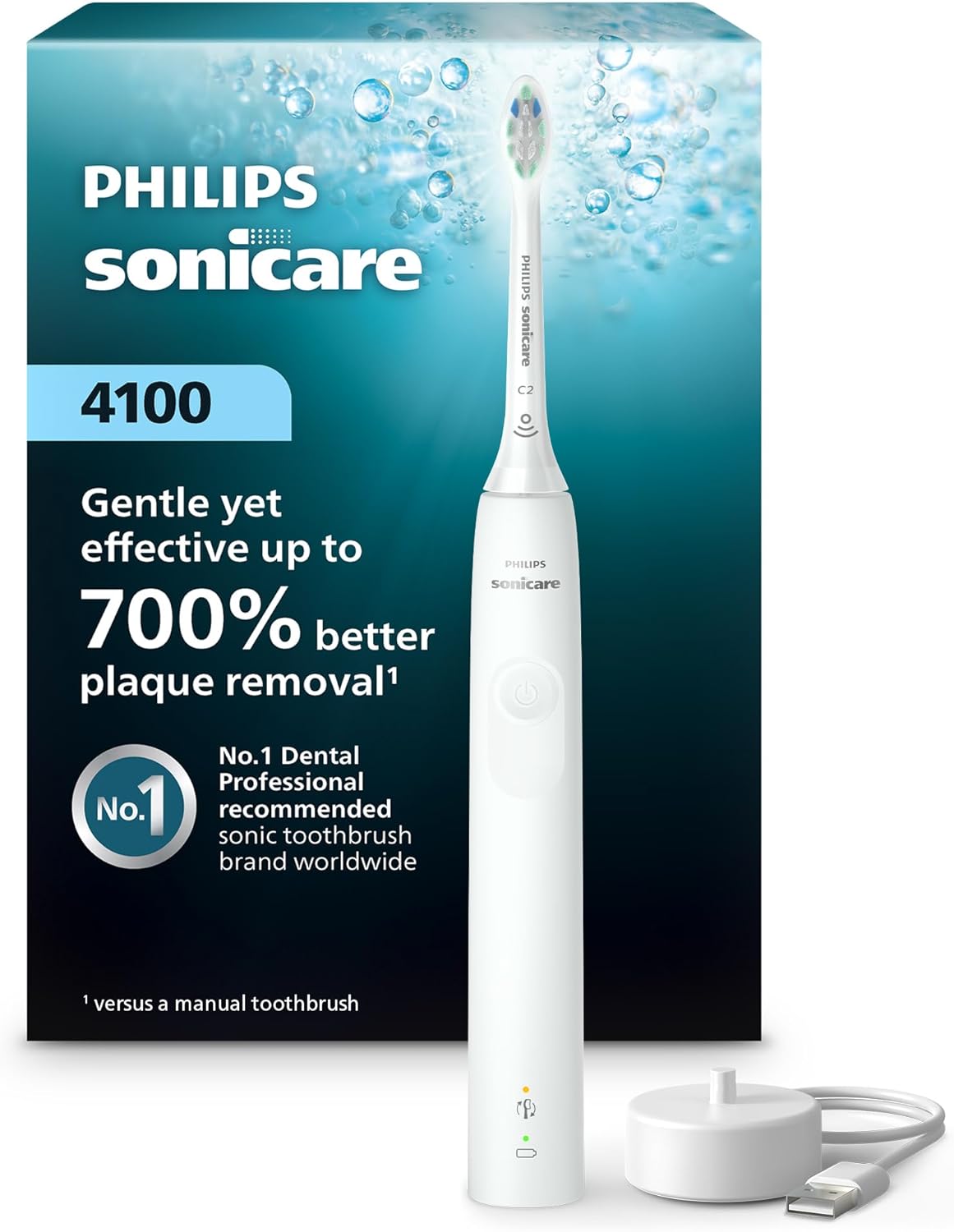
Philips Sonicare 4100
The only model in this review to win three segments. The clearest consensus in this category.
Best Budget
Philips Sonicare 4100
Delivers every feature dentists consider essential
at an entry-level price.
Best Premium / Smart
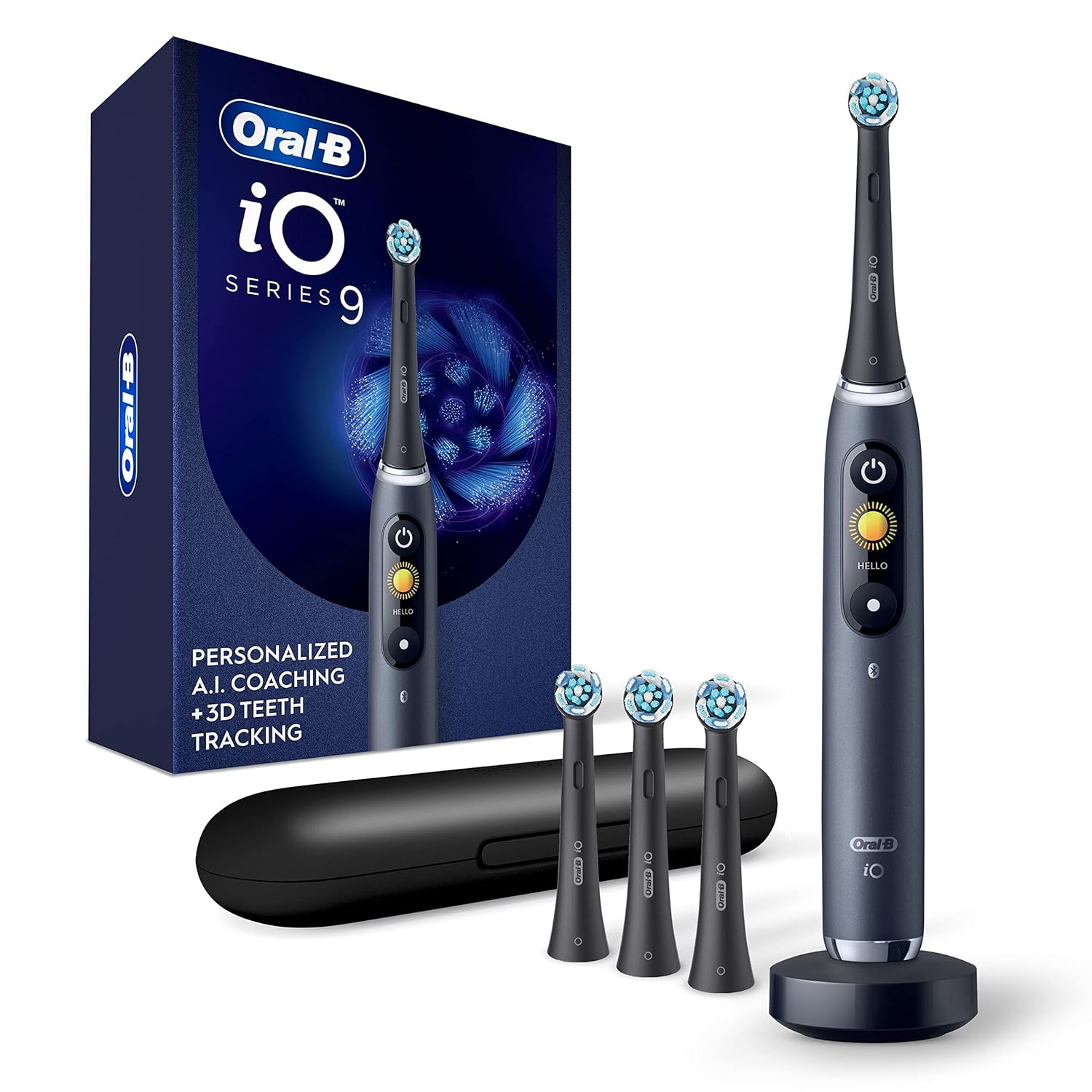
Oral-B iO Series 9
The app-connected pick with the strongest multi-source editorial consensus in the premium tier.
Best for Sensitive Teeth and Gums
Philips Sonicare 4100
A visible pressure sensor and gentle sonic action make the 4100 the most broadly defensible pick for buyers managing sensitivity concerns.
Top Picks in Detail
Below are our recommendations explained in more depth, including why experts agree and where each pick has trade-offs. Because this category spans meaningfully different use cases and price points, we segment our recommendations rather than forcing a single “best overall.”
Best Electric Toothbrush for Most People: Philips Sonicare 4100
BEST FOR MOST PEOPLE
Philips Sonicare 4100
The only model in this review to win three segments. Named top pick by CNN Underscored, GHI, and Wirecutter across all five primary sources. The clearest consensus in this category.
If you buy through our links, we may earn a commission. This doesn’t affect our recommendations.
Why It’s a Top Pick
The Philips Sonicare 4100 is the closest thing to a consensus pick this category has — and the only model in this entire review to win across multiple segments. It appears as a named top pick in three of our five primary sources: CNN Underscored’s Best Overall, the Good Housekeeping Institute’s Best Value, and Wirecutter’s Runner-Up. It was tested by all five. No other model in this review approaches that level of cross-source agreement. Consumer Reports awards it a solid score of 82 out of 100 in lab testing. TechRadar’s reviewers found it favorable in hands-on testing. The consistency of expert approval across organizations with very different testing methodologies — GHI’s lab drop and water-resistance testing, CR’s volunteer plaque-measurement panels, Wirecutter’s years of long-term real-world use, CNN’s multi-week editorial testing, and TechRadar’s disclosing-tablet methodology — is what makes the 4100 the clearest recommendation in this category.
What Experts Like
- Two-minute timer with 30-second quadrant pacing, consistently cited as the single most important feature for improving brushing habits
- Pressure sensor with indicator light — alerts you when you’re pressing too hard, protecting gums and enamel; GHI awarded it a near-perfect ease-of-use score, and CNN Underscored specifically praised the pressure sensor as a differentiating feature at this price point
- EasyStart feature gradually increases power over the first two weeks of use, easing new users into electric brushing — noted by CNN Underscored and GHI testers
- Quiet operation — GHI’s Quiet Mark partner lab rated it 3/3 stars (quietest tier); Wirecutter confirmed it runs quieter than the Oral-B Pro 1000
- 14-day battery life on a full charge; compatible with a wide range of Philips Sonicare replacement brush heads; brush head covers included
- Slim, lightweight design with a non-rolling flat back; comes with a compact USB-A charging dock suitable for travel
Trade-Offs to Consider
- Single cleaning mode with two intensity levels — buyers who want specialized modes for whitening or gum care will need to step up to the Sonicare 6100 or higher
- No wall adapter included — USB-A charging dock requires you to supply your own adapter, which Wirecutter and GHI both flagged as a minor inconvenience
- Replacement brush heads cost more per unit than Oral-B replacement heads, making long-term ownership modestly more expensive
- No companion app or smart features — buyers seeking brushing tracking or AI guidance will need a different brush
Runners-Up
Expert opinion on the best everyday electric toothbrush is not unanimous. The Oral-B Pro 1000 represents a genuine competing view held by two of our primary sources and is worth serious consideration depending on your preferences.
- Oral-B Pro 1000 — Wirecutter’s top pick since 2015 and GHI’s Best Overall with a near-perfect cleaning score of 4.9/5 in lab testing. Experts praise its oscillating motor, wide brush head ecosystem (eight head varieties, roughly $5 each in bulk), audible pressure sensor, and proven long-term durability — Wirecutter’s test unit lasted seven years of twice-daily use. The case for the Pro 1000 is straightforward: at the same price as the Sonicare 4100, it cleans very well and costs less to maintain over time. The case against: CNN Underscored explicitly preferred the 4100 over it, citing the Pro 1000’s louder noise, a pressure sensor that requires manual shutoff and lacks a visible indicator light, and a brushing experience some testers found harsher. CR’s lab rankings place iO Series models significantly above the Pro 1000, suggesting its cleaning advantage may be less pronounced in a structured comparative test. Both perspectives are well-supported. If you prefer oscillating motion or value lower brush head costs, the Pro 1000 is a legitimate choice.
- Philips Sonicare One Rechargeable — A compact, slim model with up to 30 days of battery life and a form-fitting travel case. CNN Underscored named it their Best for Travel. It lacks a pressure sensor and offers fewer brush head options than the 4100, but its small footprint and long battery life make it worth noting for frequent travelers who want to maintain their routine on the road.
Best Budget Electric Toothbrush: Philips Sonicare 4100
BEST BUDGET
Philips Sonicare 4100
The best-for-most-people pick is also the strongest expert-supported value pick in this review. Timer, quadrant pacing, and a visible pressure sensor at an accessible price.
If you buy through our links, we may earn a commission. This doesn’t affect our recommendations.
Why It’s a Top Pick
The Philips Sonicare 4100 wins this segment for the same reasons it wins Best for Most People — it is the only model in this review to earn top pick status across three segments, a reflection of its unusually consistent expert support at an accessible price. At its entry-level price point, it delivers every feature dentists identify as essential — a two-minute timer with quadrant pacing and a pressure sensor — without charging for features most buyers don’t need. GHI’s Lab noted that its performance scores were “slightly lower than premium Sonicare models, but you can get it for an eighth of the cost.” CNN Underscored found it “as comfortable, easy and effective to use as more expensive models.” For buyers whose primary goal is meaningful improvement over a manual toothbrush without overcommitting on price, no model in this review has stronger expert support.
What Experts Like
- Full essential feature set at an entry-level price: timer, quadrant pacing, pressure sensor, and replacement brush head reminder all included
- Compatible replacement heads available in affordable multi-packs — reasonable long-term cost
- Quiet, lightweight, and easy to use from day one; EasyStart mode reduces the adjustment period for new electric toothbrush users
- Two-year warranty and 14-day battery life; GHI’s durability testing (drop and water-resistance) produced strong results
Trade-Offs to Consider
- Replacement heads cost more per unit than Oral-B’s — buyers who prioritize lowest long-term cost should weigh this against the Oral-B Pro 1000 or iO Series 2
- No wall adapter included with USB-A charging dock
- Single cleaning mode; no app connectivity
Runners-Up
- Oral-B iO Series 2 — The entry point to Oral-B’s iO platform, which CR scores at 81 out of 100 — just one point below the Sonicare 4100. CNN Underscored reviewed it favorably as a step-up option, particularly for buyers who prefer oscillating motion. It includes a two-minute timer, quadrant pacing, and a pressure sensor indicator, and is compatible with all Oral-B iO replacement brush heads. Its primary limitation at this price is that the mode indicator relies on button flash patterns rather than a clear display, which some testers found confusing. For buyers who want an oscillating brush at a budget price, the iO Series 2 is the strongest option with multi-source support.
- Oral-B Pro 1000 — A legitimate alternative at the same price with lower brush head costs and strong long-term durability. See Best for Most People for full details.
- Philips Sonicare 1100 — Wirecutter recommends it as a step down from the 4100 at a lower price: same two-week battery life and two-minute timer, but without a pressure sensor or brush head replacement reminder. A reasonable option if budget is the overriding factor and the pressure sensor is not a priority.
Best Premium / Smart Electric Toothbrush: Oral-B iO Series 9
BEST FOR PREMIUM / SMART
Oral-B iO Series 9
The only premium / smart model with multi-source top-pick agreement. Seven cleaning modes, AI-guided 3D zone tracking, and a color-coded pressure sensor.
If you buy through our links, we may earn a commission. This doesn’t affect our recommendations.
Why It’s a Top Pick
The Oral-B iO Series 9 is the strongest consensus pick in the premium and smart toothbrush segment, named Best Smart Toothbrush by both GHI and CNN Underscored independently. Both sources specifically highlight the accuracy and usefulness of its companion app — a distinction that matters because app performance is notoriously inconsistent across smart toothbrushes. CNN Underscored, which tested 14 models including multiple smart brushes from Philips and Quip, found the iO Series 9’s app to be the most accurate and reliably useful of any connected brush they evaluated, providing genuine real-time guidance on brushing coverage across zones of the mouth. GHI’s testers described it as “a game-changer” and praised the Smart Pressure Sensor’s visible color-coded indicator (green for correct pressure, red for too much). For buyers who will genuinely engage with a connected brushing experience, the iO Series 9 has the broadest expert support of any premium model in this review. Note that for buyers seeking a strong everyday brush at an accessible price, the Philips Sonicare 4100 — our pick in both the Best for Most People and Best Budget segments — remains the consensus leader across this entire review.
What Experts Like
- Seven cleaning modes — the most of any brush tested by CNN Underscored — including daily clean, intense clean, whitening, gum care, sensitive, super sensitive, and tongue clean
- AI-powered app with real-time 3D zone tracking; consistently praised for accuracy across both primary sources that tested it
- Color-coded Smart Pressure Sensor with visible indicator on the brush handle — more intuitive than buzzing or audio alerts alone
- Quieter than most oscillating brushes; CNN Underscored noted it moved smoothly from tooth to tooth
- Comes with four brush heads, magnetic charger, and travel case; 60-day money-back guarantee reduces purchase risk
- 14-day battery life; full charge in approximately three hours
Trade-Offs to Consider
- Significantly more expensive than our entry-level picks; replacement iO-specific brush heads cost more than standard Oral-B heads and are not interchangeable with non-iO Oral-B models
- Smart features require phone proximity during brushing to receive live guidance — buyers who won’t keep their phone in the bathroom will get less value from the premium price
- GHI noted the design is “a bit bulky” compared to slimmer Philips models
- CR’s lab testing ranked the iO Series 7 (score 89) and iO Series 10 (score 88) above the Series 9, suggesting the Series 9 may not represent the peak of the iO platform’s cleaning performance in controlled testing — though all three are closely related products on the same technology base
Runners-Up
The premium segment has meaningful expert disagreement that buyers should understand before choosing.
- Oral-B iO Series 10 — TechRadar’s Best Premium pick and CR’s second-highest rated model (score 88). The Series 10 adds a WiFi-connected charging dock with a clock display, a more detailed color screen on the brush handle, and comprehensive zone-tracking software. TechRadar found it notably quiet for an oscillating brush and praised the in-handle display as “surprisingly motivating.” For buyers who want the most advanced Oral-B platform available and will use the dock’s features, the Series 10 is the stronger option. For most buyers, the Series 9 offers equivalent smart functionality at a lower price.
- Philips Sonicare 9900 Prestige — GHI’s highest-scoring brush overall (4.9/5 across all test criteria) and named Best Luxury by their Lab. GHI testers reported that their teeth felt professionally cleaned, and several noted healthier gums after extended use. The 9900 Prestige connects to the Sonicare app for real-time brushing guidance and auto-adjusts vibration intensity if you press too hard. However, expert opinion on this model is notably split: CR’s lab score of 71 is significantly lower than the iO Series models at similar or lower prices, and CNN Underscored found the brush overly reliant on the phone app, with all controls accessible only through the app rather than the brush itself. Buyers considering the 9900 Prestige should factor in that GHI’s strong result reflects a testing methodology that weights overall experience and durability heavily, while CR’s lower score reflects a plaque-removal focused lab panel. If app-guided premium brushing from Philips is your preference, the 9900 Prestige has strong support — but the Oral-B iO Series 9 has broader consensus across sources.
Best Electric Toothbrush for Sensitive Teeth and Gums: Philips Sonicare 4100
BEST FOR SENSITIVE TEETH AND GUMS
Philips Sonicare 4100
The 4100’s visible pressure sensor indicator and EasyStart ramp-up mode are among the most clinically relevant features for buyers managing sensitivity — cited by dental professionals across multiple primary sources.
If you buy through our links, we may earn a commission. This doesn’t affect our recommendations.
Why It’s a Top Pick
The Philips Sonicare 4100 wins a third segment here, a result of its genuinely broad expert support rather than a lack of competition. No single model in our primary source set was unanimously designated the best brush for sensitive teeth, making this segment one where consensus is thinner and our recommendation requires more editorial judgment. The 4100 is nonetheless the strongest defensible pick for most buyers with sensitivity concerns: its sonic vibration is inherently gentler in feel than oscillating motion for many users; its visible pressure sensor indicator actively prevents over-brushing, which is the primary mechanical cause of gum recession and enamel wear; and its low-intensity setting and EasyStart ramp-up feature are specifically designed for users with sensitive gums. CNN Underscored’s dental professional consultants emphasized that pressure control is among the most clinically important features for patients at risk of enamel wear or gum recession — and the 4100 handles this more visibly than most alternatives at its price point.
Buyers with more specific needs — braces, implants, significant gum disease — should consult their dentist before selecting a brush, as individual clinical needs may point toward a different tool than a consensus review can identify.
What Experts Like
- Visible pressure sensor indicator light actively prevents over-brushing — the primary cause of enamel wear and gum recession
- Low-intensity brushing mode and EasyStart gradual ramp-up for users adjusting to electric brushing or managing sensitive gums
- Sonic vibration widely noted as gentler in feel than oscillating motion for many users, particularly those with sensitivity
- Compatible with Philips Sonicare’s full range of brush heads, including heads specifically designed for sensitivity and gum care
Trade-Offs to Consider
- Does not have a dedicated “sensitive” cleaning mode as a separate program — sensitivity accommodation comes through the low-intensity setting rather than a distinct mode
- Buyers with very specific clinical needs (braces, implants, significant gum disease, post-procedure care) may benefit from a specialist recommendation rather than a consensus pick
Runners-Up
- Supermouth ULTIM8 SmartBrush System — Appears at GHI (Best for Braces) and TechRadar (Best Self-Cleaning) with consistent praise for its soft bristles, precise brush head design, and built-in UV sanitizing hub. GHI’s Lab gave it the highest score of any brush tested for being easier to use than a manual toothbrush and for causing no gum or tooth irritation. It includes a dedicated “Ortho” mode for users with braces. The proprietary brush head design (Supermouth heads only) and premium price are the primary trade-offs. A reasonable choice for buyers with orthodontic hardware or those who prioritize brush hygiene through UV sanitizing.
- Oral-B iO Series 9 — At the premium end, the iO Series 9’s seven cleaning modes include dedicated sensitive and super sensitive settings, along with a gum care mode. For buyers already considering a smart toothbrush, these mode options provide more clinical specificity than the Sonicare 4100. The Smart Pressure Sensor’s visible color indicator is also among the most intuitive pressure-feedback systems tested across our primary sources.
How to Choose the Right Electric Toothbrush for You
Start with the two features dentists agree matter most. Every dental professional cited across our primary sources agrees on two non-negotiable features: a two-minute timer and a pressure sensor. Every model we recommend includes both. Beyond these two basics, additional features — cleaning modes, smart connectivity, app tracking — are genuinely optional for most people. Experts consistently note that brushing for two full minutes twice a day, with the right pressure, will have far more impact on your oral health than any additional feature.
Oscillating vs. sonic: it mostly comes down to preference. Oscillating-rotating brushes (Oral-B) use a small round head that rotates and pulses. Sonic brushes (Philips Sonicare) use a larger rectangular head that vibrates at high speed. Both are well-supported in the clinical literature, and expert opinion across our sources consistently holds that the difference matters less than consistency of use. A 2022 systematic review cited by Wirecutter found a “small but clinically relevant” advantage for oscillating brushes in reducing plaque and gingival inflammation — but experts note that personal preference is the more reliable guide, since the brush you actually enjoy using is the one you’ll use properly. If you’ve tried one type and didn’t like it, try the other.
Factor in the long-term cost of brush heads. Dentists recommend replacing brush heads every three months. At four replacements per year, the difference between Oral-B heads (roughly $5 each in bulk) and Philips Sonicare heads (roughly $10–15 each) adds up over time. Wirecutter’s ownership cost analysis found that after three years, a Sonicare 4100 user spends roughly $72 more on replacement heads than a Pro 1000 user. This is not a reason to avoid the 4100 — its consensus support is strong — but it is a meaningful consideration for cost-conscious buyers.
Smart features are worth paying for only if you’ll use them. App-connected toothbrushes can provide genuinely useful feedback — particularly zone tracking and pressure history — but only if you consistently use the app. CNN Underscored, GHI, and TechRadar all found that app accuracy and usefulness varied significantly across smart brushes, with the Oral-B iO platform performing most consistently. Consumer Reports’ senior tester summarized the consensus position well: do not base your buying decision on smart features unless you believe a specific feature will meaningfully change how often or how well you brush. For most people, our entry-level consensus pick will produce equivalent oral health outcomes to a premium smart brush — the difference lies in motivation and habit-building, not the brush’s mechanical cleaning ability.
When paying more makes sense. A premium smart toothbrush may be worth the investment if you have specific oral health goals you’re actively working toward, if you struggle with brushing consistency and want accountability tools, if a dentist or hygienist has recommended improving your technique in specific areas, or if you find the interactive feedback genuinely motivating. The 60-day money-back guarantees offered by both Oral-B and Philips on select premium models make it lower-risk to try and return a smart brush if you find you don’t engage with it.
How We Make Our Recommendations
Our recommendations follow a documented, repeatable editorial process designed to prioritize expert agreement, comparability, and clarity.
For each category, we:
- Define clear category scope and exclusions
- Identify and vet independent expert review sources
- Inventory all products reviewed across those sources
- Analyze patterns of agreement and disagreement
- Apply editorial judgment only after consensus is documented
When a category includes materially different product types, we segment recommendations rather than forcing a single “best overall.” For more information, see How We Work.
Sources & Citations
Primary Sources
- CNN Underscored, The Best Electric Toothbrushes in 2026, Tested by Editors, Jan. 2026
- Consumer Reports, Electric Toothbrush Ratings & Reviews, Jan. 2026
- Good Housekeeping Institute, 9 Best Electric Toothbrushes, According to Our Extensive Testing, Feb. 2026
- TechRadar, The Best Electric Toothbrush 2026: Top Choices for Better Brushing, Jan. 2026
- Wirecutter (The New York Times), The Best Electric Toothbrush, Jan. 2026
Secondary Sources Consulted for Context
- CNET, We Tested 24 Electric Toothbrushes. These Are The Best Ones to Keep Your Teeth Healthy, Feb. 2026
- Digital Trends, Best Electric Toothbrushes, Sept. 2023
- Reviewed (USA Today), The Best Electric Toothbrushes of 2026, Aug. 2025
- TechGearLab, The Best Toothbrushes, March 2025
- Tom’s Guide, Best electric toothbrushes in 2025, Nov. 2025
Updates & Ongoing Review
This review is monitored on an ongoing basis. We update recommendations when expert sources publish new test results, products are discontinued, or consensus meaningfully changes.
Version History
- 2026-02-25 — Initial publication