
Best Treadmills (Expert Consensus)
Last reviewed: 2026-04-24
(This page is updated periodically as expert recommendations and market conditions change.)
Disclosure: This page contains affiliate links. If you buy through our links, we may earn a commission. This does not influence our recommendations or rankings.
Category Overview & Market Context
What This Category Is
Home treadmills are motorized cardio machines designed for indoor walking, jogging, and running. They range from compact, budget-friendly folding models suitable for light walking to premium, gym-quality machines built for serious marathon training. This review covers consumer-grade motorized treadmills intended for home use across all price points.
This review does not cover under-desk treadmills (walking pads), which are a fundamentally different product type designed for low-speed walking during desk work. Manual and curved treadmills, which use body-powered belts rather than motors, are also excluded due to their distinct evaluation criteria and niche audience.
State of the Market
The home treadmill market has matured significantly, with connected fitness platforms, interactive coaching, and app-based training now standard features on mid-range and premium models. NordicTrack and its iFIT ecosystem dominate the connected treadmill space, while Peloton continues to lead in class-based content. Meanwhile, brands like Horizon and Sole have carved out strong positions by offering capable hardware without requiring monthly subscriptions — an increasingly important differentiator for cost-conscious buyers.
Folding mechanisms have improved to the point where many top-rated treadmills fold, blurring what was once a clear line between folding and non-folding categories. Budget options under $1,000 now offer features — such as Bluetooth app connectivity, incline motors, and 60-inch decks — that were premium-only just a few years ago.
Who This Is For / Not For
This review is for anyone considering a treadmill for home use, whether for daily walking, structured running training, or general cardio fitness. It covers options for dedicated runners who need high speeds and incline variety, budget-minded buyers who want reliable basics without overspending, and households where multiple family members will share the machine.
This review is not for commercial gym operators seeking commercial-grade equipment, office workers looking primarily for under-desk walking pads, or runners seeking manual curved treadmills for sprint-specific training. Those use cases require different product types and evaluation criteria.
How This Review Was Produced
This review is based on expert consensus rather than a single reviewer’s opinion.
We analyze and synthesize recommendations from multiple independent expert review sources that meet our editorial quality and transparency standards. We document where experts agree, where they differ, and why. No single source determines our recommendations.
We do not conduct original product testing. Instead, we rely on experts who do — such as publications that perform hands-on testing, lab measurements, or clearly documented evaluation methodologies.
Manufacturers do not influence our recommendations. Advertising, affiliate relationships, or commercial considerations do not affect which products are included, how they are ranked, or how they are described.
When helpful, we also consult additional secondary review outlets to understand how broader expert opinion aligns — or conflicts — with the primary consensus. These secondary sources do not determine winners but may provide context or confirmation.
Top Picks at a Glance
Best Overall
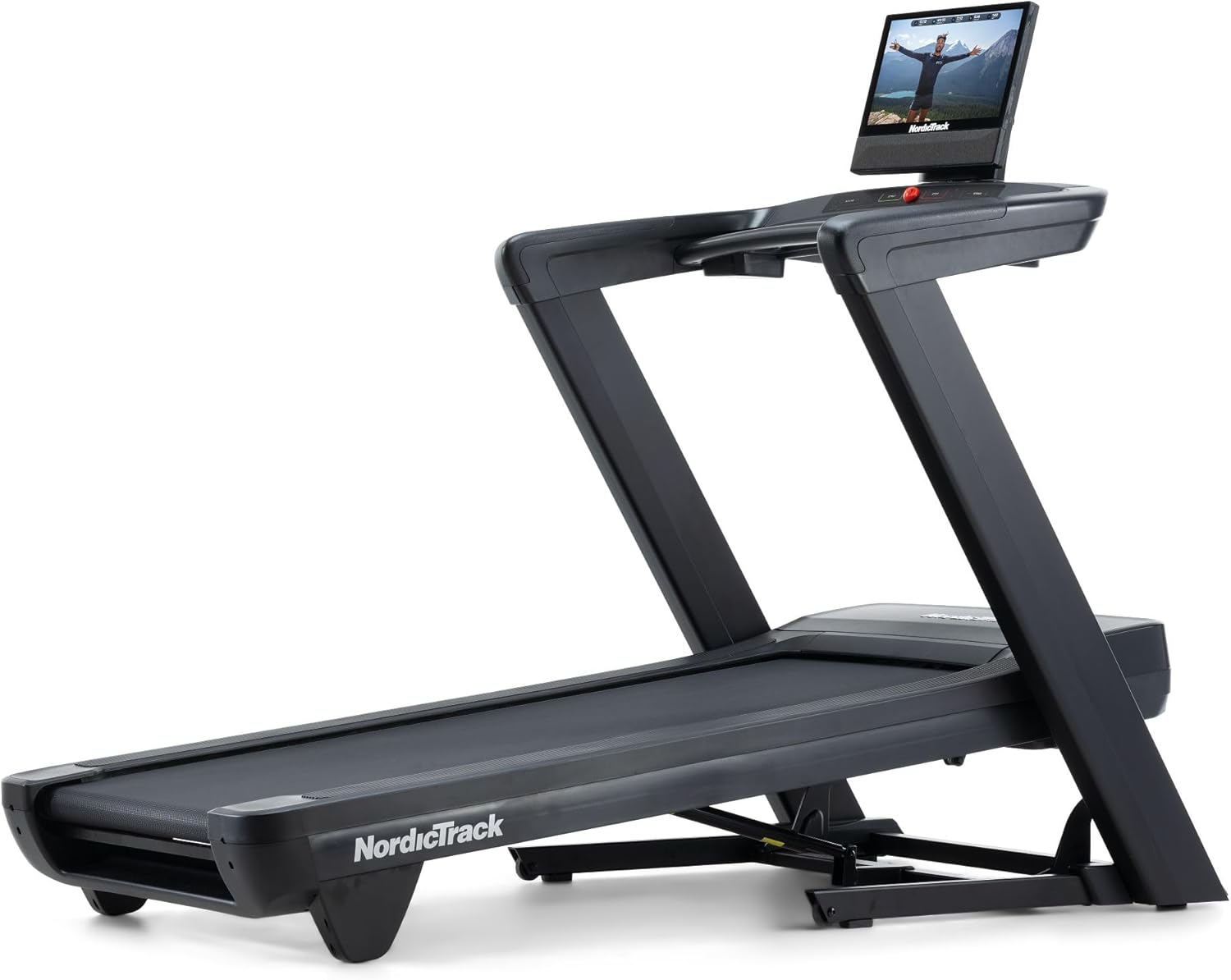
NordicTrack Commercial 1750
The most consistently recommended home treadmill across expert sources, combining a cushioned yet stable deck, a 16-inch touchscreen with iFIT integration, and incline-to-decline versatility that few competitors match.
Best Treadmill for Running
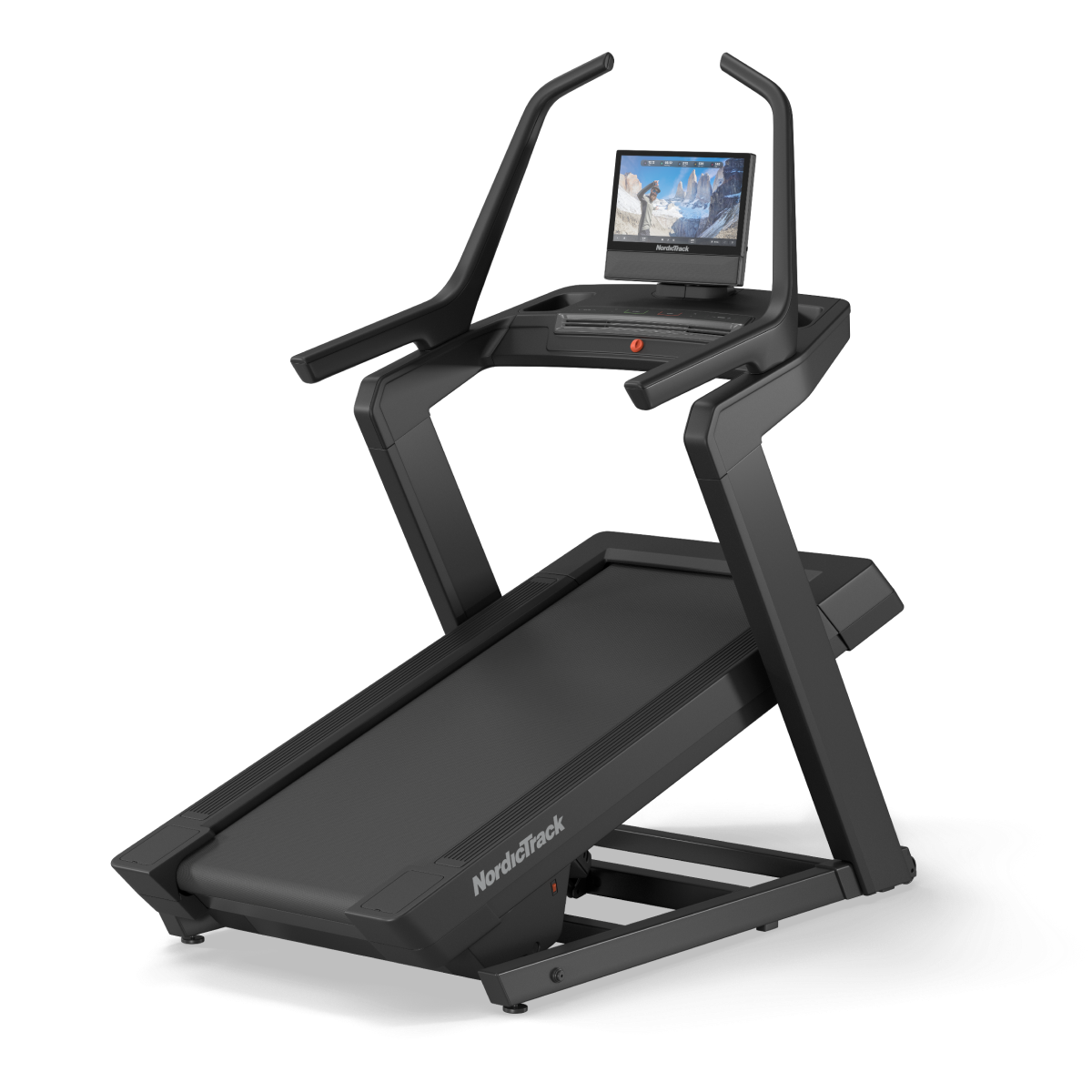
NordicTrack X16
The top-scoring treadmill in Outdoor Gear Lab’s side-by-side lab testing, with an industry-leading 40% incline to –6% decline range, a 400-pound weight capacity, and a SpringFlex cushioning deck built for serious runners.
Top Picks in Detail
Below are our recommendations explained in more depth, including why experts agree and where each pick has trade-offs.
Best Overall: NordicTrack Commercial 1750
BEST OVERALL
NordicTrack Commercial 1750
The most broadly recommended home treadmill among independent expert review sources. It pairs a powerful 4.25 CHP motor with a cushioned RunFlex deck, a 16-inch pivoting touchscreen, and a –3% to 12% incline-to-decline range that gives runners and walkers alike the versatility to simulate real outdoor terrain. A lifetime motor warranty and 10-year frame warranty back its long-term durability.
If you buy through our links, we may earn a commission. This doesn’t affect our recommendations.
Why It’s a Top Pick
The NordicTrack Commercial 1750 earns its Best Overall designation through the strongest cross-source consensus in this category. Wirecutter names it Top Pick after testing 37 treadmills over eight years, praising the deck’s balance of cushioning and stability. WIRED selects it as Best Overall, noting that it helps maintain outdoor mileage. Forbes Vetted names it Best Overall after hands-on testing by a marathon runner. Good Housekeeping’s Institute lab tested over 30 treadmills and names it Best Overall. Reviewed, The Strategist, Men’s Health, and SELF all independently reach the same conclusion.
The 1750’s –3% decline capability is a key differentiator that few competitors offer — it allows runners to simulate downhill terrain and target different muscle groups. The 16-inch touchscreen pivots for off-treadmill workouts like yoga and strength training through iFIT, and the machine folds with a hydraulic-assisted lift for storage. Consumer Reports, while not testing this specific model in its current roundup, rates the closely related Horizon and Sole folding models in the same performance tier.
What Experts Like
- The cushioned RunFlex deck hits a balance between softness for joint protection and firmness for a road-like running feel, earning praise from Wirecutter, Outdoor Gear Lab, and Forbes Vetted
- The –3% to 12% incline-to-decline range provides training versatility that most competitors lack, enabling hill simulation and varied muscle engagement
- The 16-inch pivoting touchscreen with iFIT integration offers an immersive training experience, including automatic speed and incline adjustments that follow a trainer’s terrain
- A lifetime motor warranty and 10-year frame warranty signal long-term durability and manufacturer confidence
Trade-Offs to Consider
- The iFIT subscription costs extra per month and is heavily integrated into the software experience; without it, the touchscreen’s functionality is significantly limited
- Even when folded, the machine has a substantial footprint that requires dedicated space
- The latest model removed the physical speed and incline buttons from the side of the screen that previous versions offered, which some users preferred
Runners-Up
Several strong alternatives serve buyers who prioritize subscription-free operation, a lower price, or additional features.
- Horizon 7.0 AT — Consumer Reports awards this folding treadmill top marks for ergonomics, construction, and exercise range. Forbes Vetted names it Best Under $1,000, and BarBend selects it as Best Overall. Its three-zone Variable Response Cushioning system provides comfort across walking and running, and it connects to apps like Peloton and Zwift via Bluetooth without requiring a proprietary subscription. It lacks a touchscreen and decline capability, and its build is less premium than the NordicTrack 1750.
- NordicTrack Commercial 2450 — The higher-end sibling of the 1750, selected as Best Overall by TechRadar and GearJunkie and as Best Folding by Runner’s World. Its faster 4.25 CHP motor reaches 14 mph (fast enough for sub-five-minute miles), and its 22-inch touchscreen provides a more immersive iFIT experience. However, its significant price premium over the 1750 limits its value for most buyers. Also appears as a runner-up in the Best Treadmill for Running segment.
- Horizon 7.4 AT — Yahoo Health names this treadmill Best Overall after testing 21 models, and Good Housekeeping selects it as Best for Interval Training. Consumer Reports rates it highly, and Outdoor Gear Lab scores it well for performance running. It offers a step-up from the 7.0 AT with additional features and a slightly larger motor, while maintaining the subscription-free Horizon approach.
Best Treadmill for Running: NordicTrack X16
BEST FOR RUNNING
NordicTrack X16
The top-scoring treadmill in Outdoor Gear Lab’s side-by-side lab testing, earning the Gold Standard designation for performance running. Its industry-leading 40% incline to –6% decline range, 400-pound weight capacity, and SpringFlex cushioning deck make it the strongest running-performance platform available for home use.
If you buy through our links, we may earn a commission. This doesn’t affect our recommendations.
Moderate Consensus Note: This segment has Moderate consensus among expert sources. The NordicTrack X16 earns the top score from Outdoor Gear Lab (a top Primary source) and a recommendation from CNET, but does not have the breadth of top-pick designations seen in the Best Overall segment. The original Peloton Tread had broader source support for the running use case but has been discontinued and replaced by a model not yet independently tested by most sources. Buyers should weigh the X16’s exceptional running performance against the runners-up below.
Why It’s a Top Pick
The NordicTrack X16 earns the Best Treadmill for Running designation through the strongest running-performance credentials in this category. Outdoor Gear Lab awards it the top overall score after side-by-side lab testing of 10 treadmills, with testing conducted by an ultramarathoner, a Doctor of Physical Therapy, and a professional runner. CNET recommends it for its extreme incline capability and build quality.
The X16’s 40% incline to –6% decline range is unmatched in the home treadmill market, enabling trail-running simulation and high-intensity hill training that no other model can replicate. Its 400-pound weight capacity is the highest among treadmills tested, and the commercial-grade construction signals a machine built for sustained, heavy use by serious runners.
What Experts Like
- Outdoor Gear Lab’s testers award it the Gold Standard designation after lab testing, praising its exceptional incline range and running deck quality
- The industry-leading 40% incline to –6% decline range enables trail simulation, high-intensity interval training, and varied muscle engagement that no competitor matches
- The 400-pound weight capacity and commercial-grade construction signal a machine built for sustained, heavy use by serious runners
- The SpringFlex cushioning deck provides joint protection during long runs while maintaining a responsive, road-like running feel
Trade-Offs to Consider
- The machine requires a dedicated large space and does not fold, making it impractical for smaller rooms
- An iFIT subscription is required for full software functionality; without it, the touchscreen’s guided workout capability is significantly limited
- The premium price point places it well above most home treadmills, making it a significant investment suited primarily for committed runners
Runners-Up
- Peloton Cross Training Series Tread — The original Peloton Tread earned strong expert support for running, with Consumer Reports rating it among the top-scoring non-folding treadmills and Tom’s Guide naming it Best for Classes. Forbes Vetted selected it as Best for Running, and Fit&Well named it Best for Live Classes. However, the original Tread has been discontinued and replaced by the Peloton Cross Training Series Tread, which features an updated swivel screen, refreshed design, and the new Peloton IQ platform. Most expert reviews have not yet independently tested the Cross Training Series version. Buyers drawn to Peloton’s class-driven ecosystem should monitor for updated reviews of the new model before purchasing.
- NordicTrack Commercial 2450 — The fastest treadmill in this review, with a 14 mph top speed and 4.25 CHP motor capable of supporting sub-two-hour marathon pace. TechRadar and GearJunkie select it as Best Overall, and Runner’s World names it Best Folding. Its 22-inch touchscreen and iFIT integration deliver a premium connected experience. Also appears as a runner-up in the Best Overall segment.
How to Choose the Right Treadmill for You
Decide whether you need a subscription-based or subscription-free treadmill. This is the single biggest decision that will shape your experience. Treadmills from NordicTrack and Peloton are designed around monthly subscription services (iFIT and Peloton All-Access, respectively) that unlock guided workouts, trainer-led classes, and automatic speed and incline adjustments. Without these subscriptions, their touchscreens offer limited functionality. Brands like Horizon, Sole, and BowFlex offer capable hardware that connects to third-party apps without locking you into a single ecosystem. If you plan to use the treadmill for decades and want to avoid ongoing costs, a subscription-free model may be the better long-term investment.
Match the motor power and deck size to your intended use. For walking and light jogging, a motor of 2.5 continuous horsepower (CHP) or higher with a 55-inch deck is sufficient. For regular running or interval training, experts recommend at least 3.0 CHP and a 60-inch deck to accommodate longer strides and sustained high speeds. Heavier users or those who run frequently should look for 3.5 CHP or higher and a weight capacity of at least 300 pounds.
Consider incline and decline range for training variety. Most mid-range treadmills offer 10-15% incline. Models with decline capability (such as the NordicTrack 1750’s –3% decline) allow you to simulate downhill terrain and engage different muscle groups. Extreme incline trainers like the NordicTrack X16 go up to 40%, which is valuable for hikers, trail runners, and high-intensity calorie-burning workouts — but unnecessary for most casual users.
Measure your space carefully, including ceiling height. A treadmill requires more floor space than its dimensions suggest. Most manufacturers recommend at least two feet of clearance on each side and six to eight feet of clear space behind the machine for safety. Ceiling height matters too: add the treadmill’s step-up height (typically 8-12 inches) to your height, plus six inches for vertical bounce during running. Folding treadmills save roughly half their footprint when stored upright but still require space for the folded frame.
Factor in total cost of ownership, not just the purchase price. A treadmill’s true cost includes delivery and assembly (often an additional fee), optional subscription services, a treadmill mat to protect your floor, and occasional maintenance like belt lubrication. Some subscription-based treadmills carry lower hardware prices but add hundreds of dollars annually in service fees. Over five years, a subscription-free treadmill with a higher upfront cost may cost less overall than a cheaper connected model with monthly fees.
How We Make Our Recommendations
Our recommendations follow a documented, repeatable editorial process designed to prioritize expert agreement, comparability, and clarity.
For each category, we:
- Define clear category scope and exclusions
- Identify and vet independent expert review sources
- Inventory all products reviewed across those sources
- Analyze patterns of agreement and disagreement
- Apply editorial judgment only after consensus is documented
When a category includes materially different product types, we segment recommendations rather than forcing a single “best overall.” For more information, see How We Work.
Sources & Citations
Primary Sources
- Consumer Reports, 10 Best Treadmills of 2026, Expert-Tested and Reviewed, Jan. 2026 [subscription required]
- Consumer Reports, Treadmill Buying Guide, May 2025 [subscription required]
- Consumer Reports, Treadmill Ratings & Reviews [subscription required]
- Outdoor Gear Lab, The Best Treadmills of 2026, Jan. 2026
- Tom’s Guide, I’ve run hundreds of miles on treadmills — and these are the only 3 I’d buy, April 2026
- Wirecutter, The Best Treadmill, Jan. 2026
- WIRED, The Best Home Treadmills to Maintain Your Mileage, June 2025
Secondary Sources Consulted for Context
- BarBend, Best Treadmills for Your Home in 2026, Reviewed by Personal Trainers, Aug. 2025
- CNET, The 5 Best Expert-Approved Treadmills for 2026, Jan. 2026
- Fit&Well, Best treadmill: top running machines for home workouts, April 2026
- Forbes Vetted, The 7 Best Treadmills For Home, Tested By Our Team, April 2026
- GearJunkie, The Best Treadmills Of 2026, March 2023
- Good Housekeeping, The Best Treadmills of 2026 That Actually Make You Want to Run, April 2026
- Men’s Health, The Best Treadmills to Buy in 2026, Tested by Experts and Runners, Dec. 2024
- Men’s Journal, I Tested NordicTrack 2450 and It Completely Changed the Way I Work Out, Jan. 2025
- Reviewed, The Best Treadmills of 2026, Feb. 2021
- TechRadar, Best treadmill 2025: Find the ultimate running machine, Jan. 2025
- The Strategist, 8 Best Treadmills, Feb. 2026
- Yahoo Health, The best treadmills of 2026, tested and reviewed, April 2026
Additional Sources Reviewed
- Runna, The Best Treadmills to Buy in 2026, April 2026
- Runner’s World, The 8 Best Treadmills of 2026, April 2026
- SELF, The Best Treadmills Help You Get Your Run In, Rain or Shine, May 2025
- SFGate, The best treadmills for running and walking indoors, Jan. 2026
- Shape, The 12 Best Treadmills for Every Budget and Space, According to Our Testing, March 2026
Updates & Ongoing Review
This review is monitored on an ongoing basis. We update recommendations when expert sources publish new test results, products are discontinued, or consensus meaningfully changes.
Version History
- 2026-04-24 — Initial publication
- 2026-07-05 — Removed the Budget Treadmill segment after a post-publication audit revealed that its picks were not supported by Primary sources (according to ExpertReviewHQ’s editorial methodology, only Primary sources can pick winners). The following products have been removed: Winner: Horizon T101; Runners-Up: Solo F63, BowFlext T6.