
Best Upright and Canister Vacuums (Expert Consensus)
Last reviewed: 2026-05-06
(This page is updated periodically as expert recommendations and market conditions change.)
Disclosure: This page contains affiliate links. If you buy through our links, we may earn a commission. This does not influence our recommendations or rankings.
Category Overview & Market Context
What This Category Is
Upright and canister vacuums are the workhorses of home floor care. Unlike cordless sticks and robots, these corded, full-size machines deliver sustained deep-cleaning power across large areas without battery limitations. Uprights stand as a single unit with the motor, dustbin, and brush head in one body, making them intuitive to store and powerful on carpet. Canisters separate the motor and dustbin into a wheeled body connected to a lightweight wand and hose, providing superior maneuverability on stairs, under furniture, and across bare floors.
This review covers corded upright vacuums (bagged and bagless) and corded canister vacuums (bagged and bagless) designed for residential use. Cordless stick vacuums, robot vacuums, handheld vacuums, wet/dry shop vacuums, and carpet cleaners are excluded — each is a distinct product category with different evaluation criteria and buyer intent.
State of the Market
The upright and canister vacuum market in 2026 is shaped by two competing trends: the rapid growth of cordless stick vacuums and the enduring performance advantages of corded machines. While cordless models have captured significant consumer attention for their convenience, expert sources consistently note that corded uprights and canisters still outperform them in sustained suction, deep carpet cleaning, and overall run time for larger homes.
In the upright segment, Shark has emerged as the dominant brand, with its Stratos, PowerDetect, and Navigator lines earning top picks across the majority of expert sources. Shark’s Powered Lift-Away technology — which allows the canister to detach while keeping the brush head motorized — has become a defining innovation that multiple sources highlight as a meaningful differentiation from competitors. Dyson’s Ball Animal line remains a strong performer, and SEBO’s German-engineered Felix Premium occupies a premium niche favored by two Tier 1 sources for its exceptional build quality and longevity. Notably absent from the upright segment is Miele, which discontinued its Dynamic U1 upright line several years ago. Miele’s uprights were once a fixture of expert recommendation lists, consistently earning top scores from Consumer Reports and strong endorsements from specialty vacuum dealers. No manufacturer has fully replaced what Miele offered in the upright category — German engineering, bagged HEPA filtration, and a build quality designed to last 15-20 years — though the SEBO Felix comes closest.
The canister segment tells a different story. Miele dominates here, with its Classic C1 and Complete C3 lines earning recommendations from the majority of expert sources. The company’s new Guard L1 series, launched in late 2025, has already earned Consumer Reports’ highest canister score. No other manufacturer currently matches Miele’s combination of German engineering, bagged filtration, and long-term reliability in the canister segment, though SEBO’s Airbelt K3 and D4 canisters offer the closest alternative in build quality and longevity, favored by Wirecutter and RTINGS respectively.
Budget options exist in both segments. The Shark Navigator NV360 offers a consensus-backed upright at an accessible price, while the Eureka Mighty Mite provides a lightweight, affordable canister for homes with predominantly bare floors.
Who This Is For / Not For
An upright vacuum is the right choice if your home has significant carpeted area and you want maximum deep-cleaning power in a single, easy-to-store unit. Uprights excel at embedding their brush heads into carpet fibers to extract dirt that lighter vacuums leave behind.
A canister vacuum is the better fit if your home has a mix of bare floors and carpet, multiple levels with stairs, or if you prioritize lighter handling and the ability to reach under furniture without moving it. The separated wand and body design makes canisters notably easier on the body for extended cleaning sessions.
Neither type is ideal if your primary need is quick, daily touch-ups or if you need a completely hands-free solution — a cordless stick or robot vacuum would serve those needs better. These corded, full-size machines are designed for thorough, whole-home cleaning sessions rather than grab-and-go convenience. If you need to clean up larger messes, or suck up liquids, a shop vac is a better choice.
How This Review Was Produced
This review is based on expert consensus rather than a single reviewer’s opinion.
We analyze and synthesize recommendations from multiple independent expert review sources that meet our editorial quality and transparency standards. We document where experts agree, where they differ, and why. No single source determines our recommendations.
We do not conduct original product testing. Instead, we rely on experts who do — such as publications that perform hands-on testing, lab measurements, or clearly documented evaluation methodologies.
Manufacturers do not influence our recommendations. Advertising, affiliate relationships, or commercial considerations do not affect which products are included, how they are ranked, or how they are described.
When helpful, we also consult additional secondary review outlets to understand how broader expert opinion aligns — or conflicts — with the primary consensus. These secondary sources do not determine winners but may provide context or confirmation.
Top Picks at a Glance
Best Upright Vacuum
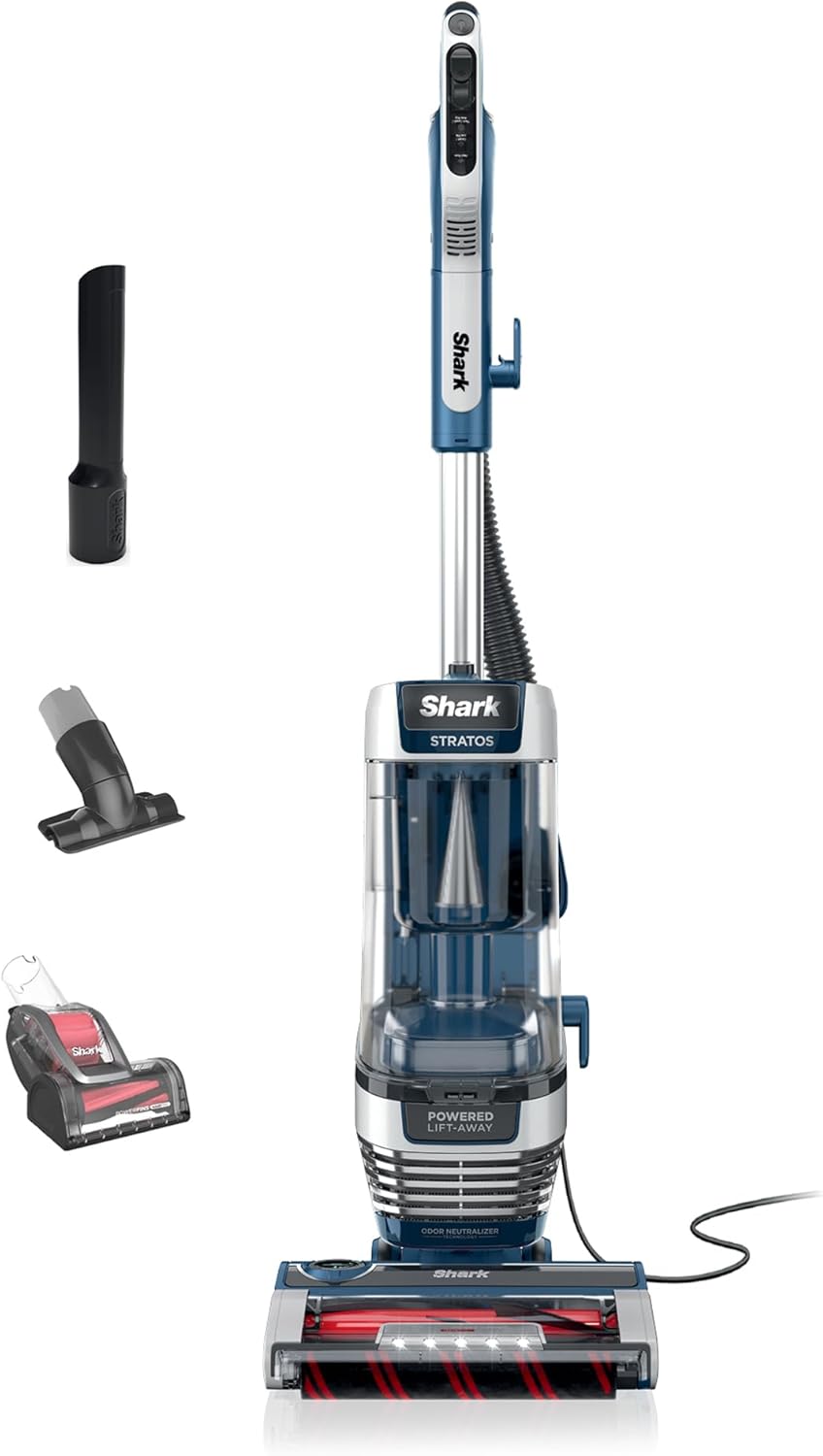
Shark Stratos AZ300
Five of eight Primary sources recommend the Shark Stratos for its powerful DuoClean system, Powered Lift-Away versatility, and consistent performance across carpet and bare floors.
Best Canister Vacuum
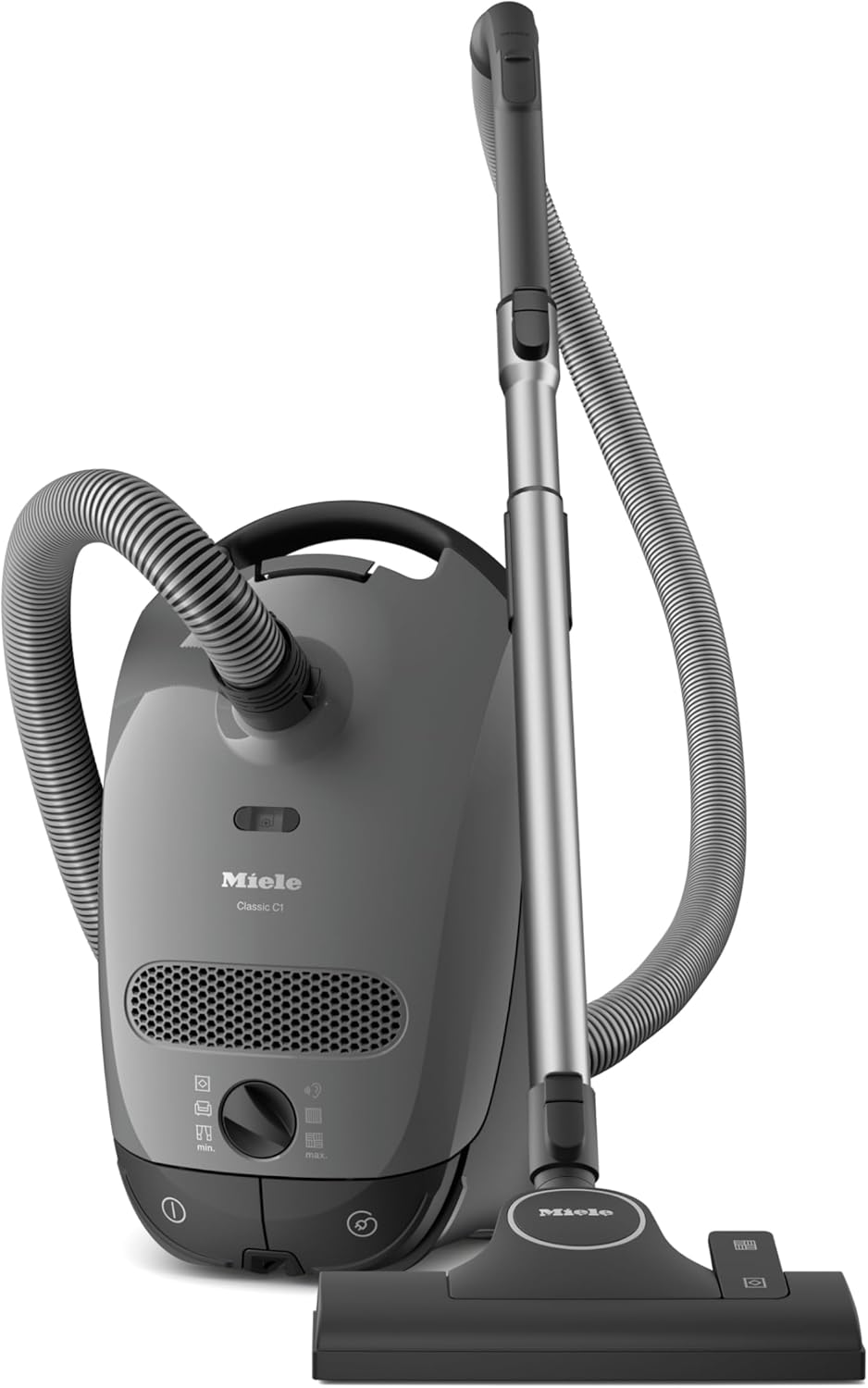
Miele Classic C1 Pure Suction PowerLine
Four of seven applicable Primary sources recommend a Miele Classic C1 variant for its exceptional suction, quiet operation, and the reliability that has made Miele the benchmark in canister vacuum engineering.
Top Picks in Detail
Below are our recommendations explained in more depth, including why experts agree and where each pick has trade-offs.
Best Upright Vacuum: Shark Stratos AZ3002
BEST UPRIGHT VACUUM
Shark Stratos AZ3002
The most broadly endorsed upright vacuum across expert testing sources. Its DuoClean PowerFins system and Powered Lift-Away design deliver strong performance on both carpet and bare floors, while HEPA filtration and a self-cleaning brushroll address the needs of pet owners and allergy sufferers alike.
If you buy through our links, we may earn a commission. This doesn’t affect our recommendations.
Why It’s a Top Pick
The Shark Stratos earns its position through the broadest cross-source consensus of any upright vacuum we analyzed. TechGearLab names it Best Overall with a score of 81 out of 100, and The Spruce also names it Best Overall after testing more than 60 upright models. Consumer Reports awards it a score of 78 and notes it earns near-top-level marks in carpet cleaning and stellar bare-floor performance. RTINGS recommends it for its Powered Lift-Away design, and Vacuum Wars ranks it second overall behind only the pricier Shark PowerDetect.
The Stratos’s signature feature is Powered Lift-Away, which allows you to detach the canister from the vacuum body while keeping the brush head powered and spinning. Multiple sources highlight this as a meaningful advantage over standard lift-away designs, essentially transforming the upright into a motorized stick vacuum for cleaning under furniture and reaching tight spaces. The DuoClean PowerFins system uses two brushrolls — a soft front roller for fine dust on bare floors and a finned rear roller for deep carpet agitation — to handle multi-surface homes without manual switching.
What Experts Like
- Powered Lift-Away keeps the brush head motorized when the canister is detached, allowing effective cleaning under low-clearance furniture
- DuoClean PowerFins two-brushroll system transitions smoothly between carpet and bare floors without manual adjustments
- Self-cleaning brushroll actively removes hair wrap during operation, reducing maintenance for pet owners
- Odor Neutralizer Technology uses a replaceable cartridge to address vacuum odors between emptying
- Anti-Allergen Complete Seal with HEPA filtration traps particles during cleaning
Trade-Offs to Consider
- Heavier than budget uprights at approximately 17 pounds, which can make stair cleaning more tiring
- Corded design limits mobility compared to the growing field of cordless stick vacuums
- Dustbin capacity is modest relative to some competitors, requiring more frequent emptying in heavy-cleaning sessions
Runners-Up
Several other upright vacuums earned strong expert endorsements and are worth considering depending on your priorities.
- Shark PowerDetect AZ4002 — Consumer Reports’ highest-scored bagless upright and Vacuum Wars’ top-ranked model. Its network of Intelli-Sense sensors automatically adjusts suction and brushroll speed based on floor type, dirt level, edges, and even cleaning direction. Not selected as the overall winner because fewer sources name it as their top overall pick despite its strong individual scores, and it carries a higher price point than the Stratos.
- SEBO Felix Premium — RTINGS’ Best Overall upright and Wirecutter’s Top Pick. This German-engineered machine is built to last 15-20 years, with a quiet 1,000-watt motor, S-class hospital-grade filtration, and a 180-degree swivel neck for exceptional maneuverability. Not selected as the overall winner because only two of eight Primary sources recommend it, compared to five for the Shark Stratos. Note that SEBO is sold primarily through specialty vacuum dealers rather than mass-market retailers, which may affect purchasing convenience.
- Shark Navigator NV360 — The consensus budget upright, recommended as a value pick by five Primary sources including The Spruce, Reviewed, and TechGearLab. Its Lift-Away feature, HEPA filtration, and swivel steering deliver solid everyday cleaning at an accessible price. Not selected as the overall winner because every source that recommends it positions it as a value alternative rather than a performance leader.
Best Canister Vacuum: Miele Classic C1 Pure Suction PowerLine
BEST FOR SEGMENT
Miele Classic C1 Pure Suction PowerLine
Delivers the combination of powerful suction, quiet operation, and German-engineered reliability that has made Miele the dominant name in canister vacuums. Four Primary sources recommend a C1 variant as a top canister pick, making it the broadest consensus choice in the segment.
If you buy through our links, we may earn a commission. This doesn’t affect our recommendations.
Why It’s a Top Pick
The Miele Classic C1 earns its position through the broadest consensus among canister-focused Primary sources. TechGearLab names it Best Overall Canister Vacuum after lab testing nine models and awarding it a score of 78 out of 100. CNN Underscored names the Turbo Team variant (which shares the same core motor and canister platform) as Best Canister Vacuum after hands-on testing. RTINGS and Reviewed both recommend C1 variants in their canister roundups.
Miele’s 1,200-watt Vortex motor delivers consistent, powerful suction through six adjustable settings controlled by a rotary dial on the canister body. The bagged design uses Miele’s GN AirClean 3D Efficiency bags with nine electrostatically charged layers and an auto-locking cap, providing effective dust containment that multiple sources note is particularly beneficial for allergy sufferers. At approximately 10 pounds for the canister body alone, the C1 is among the most lightweight full-size canisters available.
The Classic C1 comes in several configurations that share the same core platform. The Pure Suction model (tested by TechGearLab and Reviewed) includes a combination floor head suitable for bare floors and low-pile carpet. The Turbo Team model (tested by CNN Underscored) adds a turbo brush for more aggressive carpet cleaning. The Cat & Dog model adds an electrobrush and activated-charcoal exhaust filter for pet owners. All share the same motor, filtration system, and canister body.
What Experts Like
- Exceptionally powerful suction from Miele’s 1,200-watt Vortex motor, with six adjustable settings for different surfaces
- Lightweight canister body at approximately 10 pounds makes it easy to carry between floors and maneuver around furniture
- Quiet operation compared to many uprights and competing canisters, noted by multiple sources
- Bagged AirClean filtration system with nine-layer electrostatically charged bags provides effective dust and allergen containment
- Retractable cord with foot-activated rewind and a 29.5-foot operating radius for uninterrupted room-to-room cleaning
Trade-Offs to Consider
- The Pure Suction model lacks a powered brush head, relying on suction alone for carpet cleaning, which limits effectiveness on medium- and high-pile carpet
- Bagged design requires ongoing purchase of Miele GN replacement bags, adding a recurring cost
- The combination floor head included with the base model is less effective on deep carpet than the powered heads available with premium C1 variants
Runners-Up
The canister segment offers strong alternatives at different price points and with different strengths.
- SEBO Airbelt K3 Premium — Wirecutter’s Top Pick and The Spruce’s Best Overall Bagged canister. This German-engineered mid-size canister includes the commercial-quality ET-1 electric power head, which provides four-level height adjustment for different carpet piles and a low 3.5-inch profile for cleaning under furniture. S-class sealed filtration and a seven-year motor warranty reflect SEBO’s emphasis on longevity. Not selected as the overall winner because only two Primary sources name it as their top pick, compared to four for the Miele C1. Note that SEBO is sold primarily through specialty vacuum dealers, which may affect purchasing convenience.
- Miele Guard L1 — Consumer Reports’ highest-scoring canister vacuum and Wirecutter’s Runner-Up. This newly launched model features a universal powerhead that transitions between floor types, foot-controlled suction settings, and a modern design tested for the equivalent of 20 years of use. Not selected as the overall winner because it carries a significantly higher price point than the Classic C1 and has been tested by fewer sources given its recent market entry.
- Eureka Mighty Mite 3670 — The consensus budget canister, named Best Budget by RTINGS, TechGearLab, and CNN Underscored. At under nine pounds with a 12-amp motor, it provides surprisingly capable bare-floor cleaning at a fraction of the Miele’s price. Not selected as the overall winner because its lighter build, lack of a powered brush head, and basic feature set position it as a budget alternative rather than a performance leader.
How to Choose the Right Vacuum for You
Not sure which type of vacuum is right for you? See our guide: Which Type of Vacuum Do You Actually Need?
Decide between an upright and a canister based on your home’s layout and floor types. Uprights generally outperform canisters on carpet, thanks to their motorized brush heads and heavy downward pressure. Canisters excel on bare floors, stairs, and above-floor surfaces because the lightweight wand separates from the heavier motor body. If your home is primarily carpeted and single-level, an upright is typically the better fit. If you have a multi-level home, mostly bare floors, or need to clean stairs frequently, a canister will make the job easier.
Consider HEPA filtration and sealed systems if anyone in your household has allergies or asthma. Nearly every expert source in our analysis emphasizes the importance of filtration quality. A HEPA filter alone is not sufficient — the vacuum must also have a sealed air path to prevent fine particles from escaping through gaps in the housing. Look for language like “sealed system,” “anti-allergen complete seal,” or “S-class filtration” in product descriptions. Bagged vacuums generally contain dust more effectively during disposal than bagless models.
Evaluate bagged versus bagless based on your priorities for convenience and hygiene. Bagless vacuums avoid the recurring cost of replacement bags, but emptying the dustbin can release dust back into the air. Bagged vacuums contain dust more hygienically during disposal and tend to maintain suction more consistently as the collection chamber fills. Several sources note that bagged models score slightly higher overall in lab testing, but the convenience of bagless designs makes them more popular with consumers.
Weight and maneuverability matter more than you might expect. Full-size uprights typically weigh 13-17 pounds, and that weight adds up during extended cleaning sessions or when carrying the vacuum between floors. Features like swivel steering and lift-away designs can make a heavier vacuum feel more manageable. Canister vacuums distribute weight differently — the canister body stays on the floor while you maneuver only the lightweight wand — which most sources note is easier on the body for prolonged use.
Factor in pet hair removal if you have shedding animals. Look for self-cleaning or anti-tangle brushrolls, which prevent hair from wrapping around the roller and degrading performance over time. Multiple sources highlight this as one of the most meaningful practical improvements in recent vacuum design. Turbo brushes and powered pet tools also help, especially for cleaning upholstery and stairs.
Check cord length and cleaning radius before buying. Cord length determines how far you can clean from a single outlet before needing to re-plug. Upright vacuums typically offer 25-30 foot cords, while canisters often provide a larger cleaning radius due to the combined reach of cord, hose, and telescoping wand. If your home has sparse outlets or large rooms, a longer cord can save significant time.
How We Make Our Recommendations
Our recommendations follow a documented, repeatable editorial process designed to prioritize expert agreement, comparability, and clarity.
For each category, we:
- Define clear category scope and exclusions
- Identify and vet independent expert review sources
- Inventory all products reviewed across those sources
- Analyze patterns of agreement and disagreement
- Apply editorial judgment only after consensus is documented
When a category includes materially different product types, we segment recommendations rather than forcing a single “best overall.” For more information, see How We Work.
Sources & Citations
Primary Sources
- CNN Underscored, The best canister vacuums in 2026, tried and tested, Jan. 2026
- CNN Underscored, The best upright vacuums for spotless floors, April 2026
- CNN Underscored, The best vacuum cleaners of 2026, tried and tested, March 2026
- Consumer Reports, 8 Best Canister Vacuums of 2026, Lab-Tested and Reviewed, Jan. 2026 [subscription required]
- Consumer Reports, 9 Best Upright Vacuums of 2026, Jan. 2026 [subscription required]
- Consumer Reports, Canister Vacuums, Ratings & Reviews [subscription required]
- Consumer Reports, Upright Vacuums, Ratings & Reviews [subscription required]
- Reviewed, The Best Canister Vacuums of 2026, April 2026
- Reviewed, The Best Upright Vacuum Cleaners of 2026, Oct. 2025
- RTINGS, The 4 Best Canister Vacuums of 2026, March 2026
- RTINGS, The 5 Best Upright Vacuums of 2026, Feb. 2026
- TechGearLab, The Best Canister Vacuums, Sept. 2025
- TechGearLab, The Best Upright Vacuums, Aug. 2025
- The Spruce, The 7 Best Canister Vacuums The Spruce Has Tested, Feb. 2026
- The Spruce, The 7 Best Upright Vacuums The Spruce Has Tested, Jan. 2026
- Vacuum Wars, The Best Upright Vacuums of 2026, May 2026
- Wirecutter, The Best Upright and Canister Vacuums, Nov. 2025
Secondary Sources Consulted for Context
- Better Homes & Gardens, The 5 Best Canister Vacuums of 2026, Tested by BHG, Jan. 2026
- Better Homes & Gardens, The 5 Best Upright Vacuums, Tested by BHG, Oct. 2025
- Business Insider, Best upright vacuums of 2026, tested and reviewed, June 2025
- CNET, Best Vacuum Cleaner for Your Home In 2026, March 2025
- Good Housekeeping Institute, 6 Best Canister Vacuums, Lab Tested by Our Cleaning Pros, April 2026
- HGTV, 5 Best Canister Vacuums of 2026, Tested and Reviewed, Feb. 2026
- People, The 10 Best Upright Vacuums, Tested by PEOPLE, March 2026
- Reader’s Digest, 7 Best Upright Vacuum Cleaners (2026), Tested and Reviewed, April 2026
- Real Simple, The Best Canister Vacuums for Efficient Home Cleaning, According to Our Editors, July 2025
- Real Simple, The Best Upright Vacuums, Tested, According to Real Simple Editors, May 2025
- Tom’s Guide, Best vacuum cleaners 2026: Top picks for spotless floors, Jan. 2026
- Yahoo Shopping, The best canister vacuums for 2026, tested and reviewed, April 2026
- Yahoo Shopping, The best vacuum cleaners for 2026, tested and reviewed, April 2026
Additional Sources Reviewed
- Apartment Therapy, The Best Vacuum Cleaners of 2025 (We Tested All of These), Oct. 2025
- Forbes Vetted, Best Vacuums Of 2025: Our Home Editors Share 11 Models For Any Mess, Dec. 2025
- The Strategist, The 9 Very Best Vacuums, April 2026
Updates & Ongoing Review
This review is monitored on an ongoing basis. We update recommendations when expert sources publish new test results, products are discontinued, or consensus meaningfully changes.
Version History
- 2026-05-06 — Initial publication