
Best Smart Thermostats (Expert Consensus)
Last reviewed: 2026-07-15
(This page is updated periodically as expert recommendations and market conditions change.)
Disclosure: This page contains affiliate links. If you buy through our links, we may earn a commission. This does not influence our recommendations or rankings.
Sources
17
expert sources consulted
Products
52
products considered
Consensus Picks
7
top picks 🥇 & runners-up 🥈
Category Overview & Market Context
What This Category Is
Smart thermostats are Wi-Fi-connected devices that replace traditional thermostats to manage residential heating and cooling systems. They connect to a home’s existing HVAC system wiring and enable remote temperature control through smartphone apps, voice assistants, and automated scheduling. Most models on the market today work with standard 24-volt forced-air, heat pump, and boiler systems, though compatibility varies by model and wiring configuration.
This review covers smart thermostats designed for central HVAC systems. It does not cover smart AC controllers for mini-split systems, line-voltage thermostats for electric baseboard heaters, in-floor radiant heating controllers, or non-smart programmable thermostats. These excluded categories use materially different wiring, installation procedures, and evaluation criteria.
State of the Market
The smart thermostat market has matured into a stable competitive landscape dominated by three major product families: Ecobee, Google Nest, and Honeywell Home (now manufactured by Resideo under the Honeywell Home brand). Amazon competes at the budget tier with a single model built on Honeywell Home technology, and Copeland’s Sensi line (formerly Emerson Sensi) holds a strong position among HVAC professionals.
The most significant recent development is the introduction of the Google Nest Learning Thermostat 4th generation in late 2024, which brought a larger display, Matter certification, and improved AI-driven scheduling. Ecobee expanded its lineup in early 2025 with the Smart Thermostat Essential, bringing its touchscreen experience and HomeKit support to a lower price point. Honeywell Home introduced the X8S with its distinctive 5-inch display and video doorbell integration, representing a premium push.
ENERGY STAR certification and utility rebate eligibility remain important buyer considerations, and all major models in this review carry the certification. The smart-home ecosystem divide — particularly Apple HomeKit support — continues to be a meaningful differentiator, as the Nest Learning Thermostat still does not support HomeKit.
Who This Is For / Not For
Smart thermostats are designed for homeowners and renters (with landlord permission) who have central heating and cooling systems with compatible low-voltage wiring. They benefit buyers who want remote temperature control, automated scheduling, or energy usage tracking.
They are not designed for homes with line-voltage heating systems (electric baseboard heaters, in-wall heaters), mini-split or ductless systems without adapters, or commercial HVAC installations. Buyers with these systems should look at specialized products outside this review’s scope. Installation requires basic comfort with low-voltage wiring, though most manufacturers provide step-by-step app-guided instructions; professional installation is available through all major brands.
How This Review Was Produced
This review is based on expert consensus rather than a single reviewer’s opinion.
We analyze and synthesize recommendations from multiple independent expert review sources that meet our editorial quality and transparency standards. We document where experts agree, where they differ, and why. No single source determines our recommendations.
We do not conduct original product testing. Instead, we rely on experts who do — such as publications that perform hands-on testing, lab measurements, or clearly documented evaluation methodologies.
Manufacturers do not influence our recommendations. Advertising, affiliate relationships, or commercial considerations do not affect which products are included, how they are ranked, or how they are described.
When helpful, we also consult additional secondary review outlets to understand how broader expert opinion aligns — or conflicts — with the primary consensus. These secondary sources do not determine winners but may provide context or confirmation.
Top Picks at a Glance
Best Overall
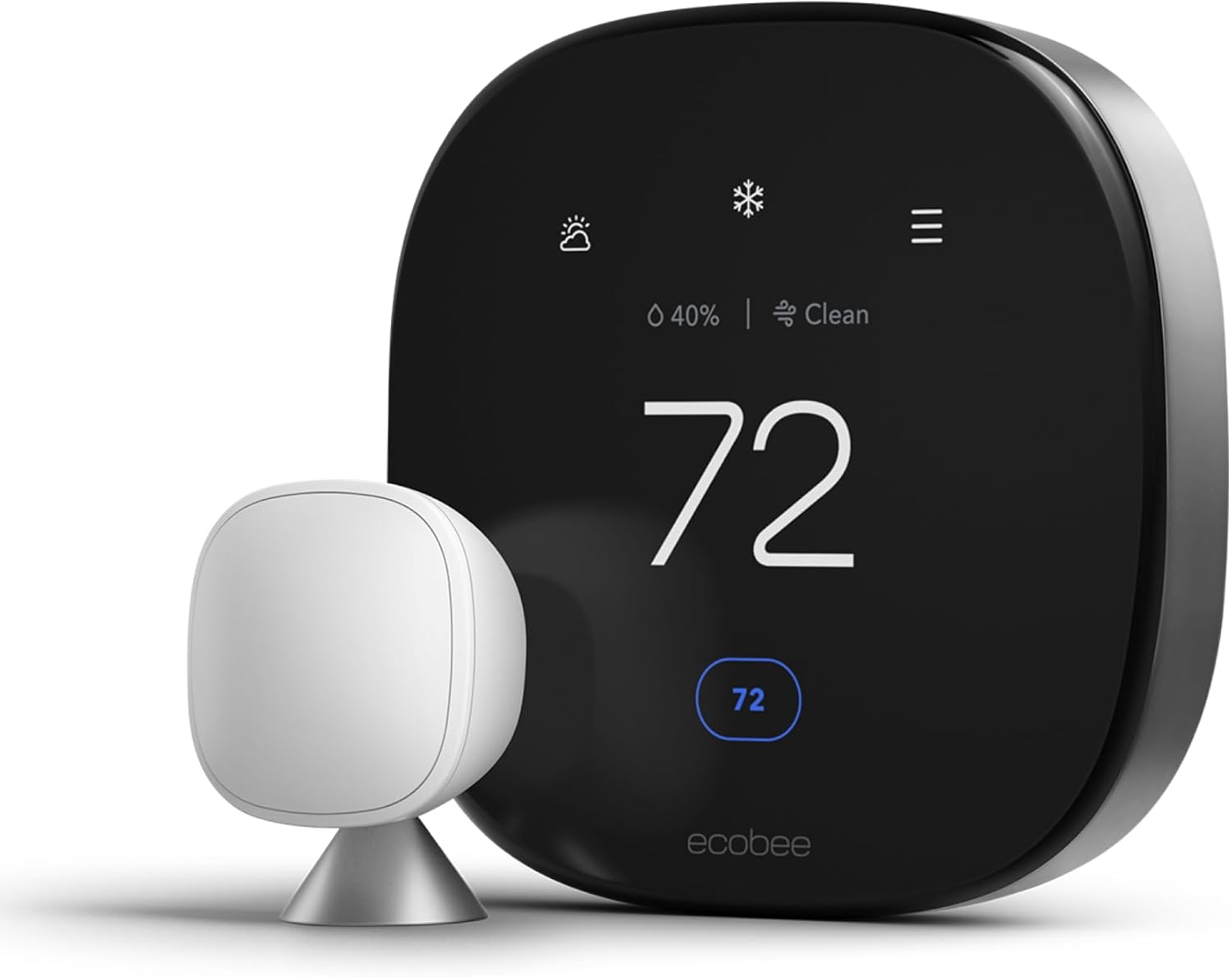
Ecobee Smart Thermostat Premium
The most broadly recommended smart thermostat, earning top-pick or best-overall designations from Wirecutter, PCMag, CNET, and Consumer Reports, with the widest ecosystem support and built-in air quality monitoring.
Best Budget Smart Thermostat
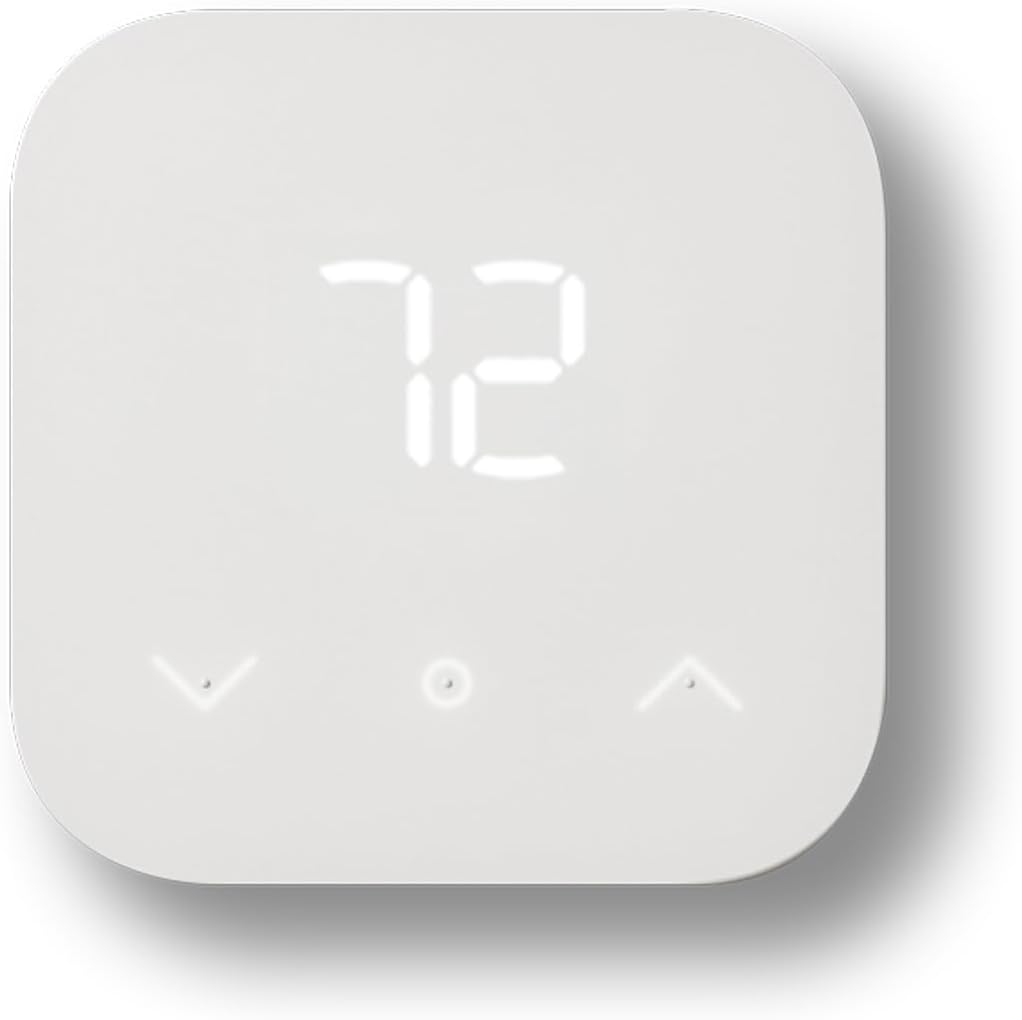
Amazon Smart Thermostat
The most affordable smart thermostat, recommended by five expert sources for delivering reliable Alexa-based climate control at the category’s lowest price point.
🔍 Where the Experts Disagree
Is the Amazon Smart Thermostat still a good budget pick despite its poor Consumer Reports score?
The split. Consumer Reports rates the Amazon Smart Thermostat 31 out of 100, citing a 1/5 Automation score and 2/5 Smart IQ. Yet five other expert sources — Wirecutter, Bob Vila, TechGearLab, PCMag, and CNN Underscored — recommend it as a top budget pick.
Why they differ. Consumer Reports’ lab methodology evaluates how intelligently a thermostat manages temperature without human input — schedule learning, occupancy sensing, weather adaptation. The Amazon has minimal autonomous features. Sources like Wirecutter and Bob Vila evaluate complete ownership experience — installation, daily usability, Alexa integration, and value relative to price.
What it means for you. If you want a thermostat that actively learns and optimizes on its own, the Amazon Smart Thermostat is not the right choice — consider the Ecobee Essential or Google Nest Thermostat instead. If you want simple, reliable smart control with voice commands and remote access at the lowest possible price, the Amazon delivers exactly that.
Top Picks in Detail
Below are our recommendations explained in more depth, including why experts agree and where each pick has trade-offs.
Best Overall: Ecobee Smart Thermostat Premium
BEST OVERALL
Ecobee Smart Thermostat Premium
The most broadly recommended smart thermostat among expert reviewers. It combines built-in air quality monitoring, radar-based occupancy sensing, an included SmartSensor for multi-room comfort, and compatibility with Siri, Alexa, Google Assistant, and Apple HomeKit — the widest ecosystem support of any premium thermostat.
If you buy through our links, we may earn a commission. This doesn’t affect our recommendations.
Why It’s a Top Pick
The Ecobee Smart Thermostat Premium draws the broadest expert consensus of any product in this category. Consumer Reports rates it first among all smart thermostats tested, with top scores for Smart IQ and manual operation. Wirecutter names it their top overall pick, praising its combination of room sensors, air quality monitoring, and built-in Alexa speaker. PCMag awards it an Editors’ Choice designation and highlights its comprehensive smart-home integration. CNET’s home energy team similarly selects it as their overall top recommendation after months of hands-on evaluation.
What separates the Ecobee Premium from the competition, according to experts, is its all-in-one approach. It is the only smart thermostat that combines an indoor air quality monitor, a built-in smart speaker with a choice of voice assistants, and radar-based occupancy detection in a single device. Multiple sources note that its included SmartSensor helps manage temperature variations between rooms — a feature that typically requires separate purchases with competing models.
The Premium also earns praise for supporting all major smart-home ecosystems, including Apple HomeKit — a significant differentiator given that the Nest Learning Thermostat, its closest competitor, lacks HomeKit support entirely. Forbes Vetted, Popular Mechanics, Good Housekeeping, Better Homes & Gardens, and Digital Trends all independently select it as their top overall recommendation, reinforcing the strong expert consensus.
What Experts Like
- Consumer Reports awards it the highest overall score (91/100) of any smart thermostat tested, with perfect marks for Smart IQ and manual operation
- Built-in air quality monitoring tracks volatile organic compounds (VOCs), estimated CO2, and humidity — a feature no other thermostat offers, according to Wirecutter and CNET
- Supports all four major smart-home ecosystems (Apple HomeKit, Amazon Alexa, Google Assistant, Samsung SmartThings), giving it the widest compatibility of any premium model
- Included SmartSensor for multi-room temperature balancing comes in the box rather than requiring a separate purchase, as multiple sources note
Trade-Offs to Consider
- Multiple sources acknowledge it carries a significant price premium over the competition, positioning it firmly in the premium tier
- Consumer Reports notes the automation score is slightly lower than its overall ranking would suggest, indicating room for improvement in adaptive scheduling
- The built-in Alexa speaker, while praised for convenience, cannot fully replace a dedicated Echo device for music quality, according to Wirecutter
Runners-Up
Several other smart thermostats earn strong expert support across different use cases and priorities. The alternatives below offer competitive performance with distinct strengths.
- Google Nest Learning Thermostat (4th gen) — Named Best Overall by Bob Vila and TechGearLab, and a top pick by CNN Underscored, the Nest Learning Thermostat earned the second-highest Consumer Reports score (89/100). Its adaptive learning algorithm automatically builds a schedule based on household patterns, and its redesigned 60% larger display makes information visible across the room. Experts note it lacks Apple HomeKit support, which limits its appeal for Apple-centric households. Some expert reviews, notably Reviewed, still recommend the predecessor 3rd generation model, which remains available; buyers should verify which generation is being sold.
- Honeywell Home X8S Smart Thermostat — Tom’s Guide names it Best Overall, and CNET selects it for Best Whole-House Control. Its standout feature is a 5-inch customizable touchscreen and video doorbell integration (compatible with First Alert and Ring doorbells). It supports Matter for broad smart-home interoperability. As a newer entrant, it has a thinner testing history than the Ecobee or Nest, but early expert evaluations are strongly positive.
- Sensi Touch 2 Smart Thermostat — The Spruce names it Best Overall, PCMag and Bob Vila praise its touchscreen interface, and Reviewed selects it for Best Traditional-Style. Manufactured by Copeland (formerly Emerson) with over 100 years of HVAC experience, experts highlight its widest HVAC system compatibility and strong data privacy position — Sensi does not sell user data. It offers a more focused, less feature-rich experience compared to the Ecobee Premium.
Best Budget Smart Thermostat: Amazon Smart Thermostat
BEST BUDGET SMART THERMOSTAT

Amazon Smart Thermostat
The Amazon Smart Thermostat delivers essential smart thermostat features — app-based scheduling, voice control through Alexa, and remote temperature management — at the category’s lowest price point. Built with Honeywell Home thermostat technology, it provides a straightforward entry into smart home climate control.
If you buy through our links, we may earn a commission. This doesn’t affect our recommendations.
Moderate Consensus Note: Consumer Reports, which conducts independent lab testing of smart thermostats, rates the Amazon Smart Thermostat 31 out of 100 — one of the lowest scores among current-generation models. Their lab testing emphasizes automation capability, where the Amazon scores 1 out of 5. Multiple other expert sources that evaluate real-world usability and value recommend it as a top budget pick. This split reflects a genuine difference in evaluation methodology: lab testing of autonomous features versus real-world assessment of core functionality and value. Readers who prioritize advanced automation should consider the runners-up below.
Why It’s a Top Pick
The Amazon Smart Thermostat emerges as the budget consensus pick across five Primary sources. Wirecutter recommends it as their top budget selection, noting it delivers reliable basic smart thermostat functionality at a fraction of the cost of premium models. Bob Vila names it Best Bang for the Buck after hands-on testing, highlighting its surprisingly smooth installation process and dependable Alexa integration. TechGearLab awards it Best Value after side-by-side lab comparisons with more expensive competitors.
Experts consistently note that the Amazon Smart Thermostat is built with Honeywell Home thermostat technology, bringing established HVAC reliability to its budget-friendly package. Its deep Alexa integration allows users to control temperature with voice commands through any Echo device, set routines, and receive energy-usage insights through the Alexa app.
However, it is important to note that Consumer Reports rates the Amazon Smart Thermostat significantly lower than the expert budget consensus would suggest — scoring it 31 out of 100 in their lab testing, with a 1-out-of-5 Automation score and a 2-out-of-5 Smart IQ rating. This reflects the Amazon’s limited autonomous features: it does not learn your schedule, does not have occupancy sensing, and does not include room sensors. For buyers prioritizing set-it-and-forget-it automation, the runners-up below offer substantially more capable alternatives at a higher price point.
What Experts Like
- Wirecutter, Bob Vila, and TechGearLab all select it as a top budget pick, making it the most broadly endorsed affordable option
- Built with Honeywell Home thermostat technology, bringing established HVAC reliability to an entry-level price point
- Deep Alexa integration enables voice control, energy tracking, and routine automation through any Echo device
- Compatible Echo devices can serve as remote temperature sensors to help address hot and cold spots throughout the home
Trade-Offs to Consider
- Consumer Reports rates it 31/100 with the lowest automation score of any current-generation smart thermostat, reflecting its limited adaptive intelligence
- No learning capability — it does not automatically adjust to household patterns the way the Nest or Ecobee models do
- Limited to the Alexa ecosystem; not compatible with Apple HomeKit or Google Home, restricting its appeal for non-Amazon smart-home setups
- Does not include a remote room sensor, and lacks occupancy detection for automatic home/away adjustments
Runners-Up
For buyers willing to spend more, two alternatives offer significantly more smart features while remaining below the premium tier.
- Ecobee Smart Thermostat Essential — Wirecutter’s runner-up overall, Tom’s Guide’s Best Budget pick, and a PCMag recommendation. Launched in early 2025, it offers a color touchscreen, Apple HomeKit support, and compatibility with ecobee’s SmartSensor ecosystem — features absent from the Amazon. It costs roughly double the Amazon Smart Thermostat but brings substantially more adaptive intelligence.
- Google Nest Thermostat — PCMag names it the Most Affordable Nest option, and TechGearLab selects it as Best for Most buyers. It offers Google Home integration, Quick Schedule setup through the app, and home/away detection using phone location. Unlike the Amazon, it lacks voice assistant hardware built in, but works with Google Assistant and Alexa-enabled devices. It also does not support Apple HomeKit.
How to Choose the Right Smart Thermostat for You
Check your wiring compatibility before you shop. The single most important step is confirming your home’s thermostat wiring supports the model you want. Most smart thermostats require a C-wire (common wire) for reliable power, though the Nest Learning Thermostat and Nest Thermostat are designed to work without one in most homes. Ecobee models include or offer a Power Extender Kit as an alternative. Every manufacturer provides an online compatibility checker — use it before purchasing. If you are unsure about your system type, consult an HVAC professional before removing your existing thermostat.
Your smart-home ecosystem should guide your choice. If your home runs on Apple HomeKit, the Nest Learning Thermostat is not compatible — the Ecobee Premium, Ecobee Essential, Sensi Touch 2, and Honeywell Home X8S all support HomeKit. If you are invested in the Alexa ecosystem, the Amazon Smart Thermostat offers the deepest integration at the lowest cost. Google Home users will find the tightest experience with the Nest thermostats. Most premium models support multiple ecosystems, but the depth of integration varies — a thermostat that works with an ecosystem is not the same as one built for it.
Room sensors matter most for multi-story or unevenly heated homes. If your home has hot and cold spots — common in multi-story homes or homes with a single thermostat controlling multiple zones — look for models that support remote room sensors. The Ecobee Premium includes a SmartSensor in the box and can manage temperature based on which rooms are occupied. The Honeywell Home X8S and T9 support their own room sensor systems. The Nest Learning Thermostat works with Nest Temperature Sensors. The Amazon Smart Thermostat can use compatible Echo devices as temperature sensors, though with less precision.
Consider how much automation you actually want. Smart thermostats range from fully autonomous models that learn your schedule and make adjustments automatically (Nest Learning, Ecobee Premium) to simpler models that rely on manual programming and basic scheduling (Amazon Smart). Consumer Reports’ lab testing reveals the widest performance gap in automation capability. If you want a thermostat that actively optimizes energy use without your involvement, the learning models justify their higher price. If you simply want remote access and voice control on a basic schedule, a budget model delivers that core value.
Energy savings depend on your behavior, not just the thermostat. All ENERGY STAR-certified smart thermostats can help reduce heating and cooling costs, but actual savings depend heavily on how they are used. Ecobee estimates up to 26% savings for Premium users; Google claims up to 31% for Nest Learning Thermostat users. These figures compare smart thermostat use against holding a constant temperature. Households that already use a well-programmed schedule will see smaller gains. The most impactful savings come from automated home/away detection and occupancy-based adjustments — features more prominent in premium models.
How We Make Our Recommendations
Our recommendations follow a documented, repeatable editorial process designed to prioritize expert agreement, comparability, and clarity.
For each category, we:
- Define clear category scope and exclusions
- Identify and vet independent expert review sources
- Inventory all products reviewed across those sources
- Analyze patterns of agreement and disagreement
- Apply editorial judgment only after consensus is documented
When a category includes materially different product types, we segment recommendations rather than forcing a single “best overall.” For more information, see How We Work.
Sources & Citations
Primary Sources
- Bob Vila, The Best Smart Thermostats, According to Testing, Jan. 2026
- CNET, The Best Smart Thermostats of 2026: Prepare for the Heat, June 2026
- CNN Underscored, The best smart thermostats of 2025, tried and tested, Jan. 2025
- Consumer Reports, 8 Best Smart Thermostats of 2026, Lab-Tested and Reviewed, Jan. 2026 [subscription required]
- Consumer Reports, Smart Thermostats Ratings [subscription required]
- PCMag, The Best Smart Thermostats for 2026, June 2026
- Reviewed, The Best Smart Thermostats of 2026, April 2026
- The Spruce, The 5 Best Smart Thermostats We Tested That Control Climate With Ease, June 2026
- TechGearLab, The Best Thermostat, Oct. 2025
- Tom’s Guide, These are the 3 best smart thermostats we’ve tested to control your home’s temperature and bring down energy costs, June 2026
- Wirecutter, The Best Smart Thermostat, Jan. 2026
Secondary Sources Consulted for Context
- Better Homes & Gardens, The 6 Best Smart Thermostats, According To Testing, Oct. 2025
- Digital Trends, The 4 best smart thermostats in 2025, March 2025
- Forbes Vetted, The Best Smart Thermostats Save You Money And Reduce Emissions, July 2025
- Good Housekeeping, Best Smart Thermostats, May 2024
- HGTV, 4 Best Smart Thermostats of 2026, Tested and Reviewed, Feb. 2026
- Popular Mechanics, The 6 Best Smart Thermostats to Keep Your House Warm and Save You Money, Jan. 2026
- TechRadar, The best smart thermostat 2026: the easy way to make your heating more efficient, June 2026
Updates & Ongoing Review
This review is monitored on an ongoing basis. We update recommendations when expert sources publish new test results, products are discontinued, or consensus meaningfully changes.
Version History
- 2026-07-15 — Initial publication