
Best Camping Tents (Expert Consensus)
Last reviewed: 2026-05-21
(This page is updated periodically as expert recommendations and market conditions change.)
Disclosure: This page contains affiliate links. If you buy through our links, we may earn a commission. This does not influence our recommendations or rankings.
Category Overview & Market Context
What This Category Is
Camping tents are portable shelters designed for overnight use at drive-up campsites, state parks, national forest campgrounds, and similar locations where weight and packability are secondary to comfort, space, and weather protection. This review covers three-season car camping and family camping tents in dome, cabin, and tunnel designs, typically in four-person to eight-person capacities. Backpacking tents, four-season mountaineering shelters, rooftop tents, and canvas glamping tents are outside this scope and evaluated separately by most expert sources.
State of the Market
The camping tent market in 2026 features strong competition across a wide range of designs and materials. Premium tents from brands like The North Face, NEMO, and REI Co-op have raised the bar for livability, with near-vertical walls, standing-height interiors, and massive vestibules that blur the line between tent and basecamp. Meanwhile, budget-friendly options from Coleman and Kelty have improved significantly, offering features like pre-bent poles and Dark Room technology that were previously reserved for higher-end models. Aluminum pole construction continues to replace fiberglass in the mid-range segment, and manufacturers are increasingly incorporating recycled materials and PFAS-free coatings in response to sustainability concerns.
Who This Is For / Not For
This review is for car campers, families, couples, and groups who drive to their campsite and prioritize comfort, space, and ease of setup over ultralight weight. If you are looking for a tent to carry on multi-day backpacking trips where every ounce matters, this review is not for you. Expert sources universally evaluate backpacking tents using materially different criteria, and we recommend consulting dedicated backpacking tent guides for that use case.
How This Review Was Produced
This review is based on expert consensus rather than a single reviewer’s opinion.
We analyze and synthesize recommendations from multiple independent expert review sources that meet our editorial quality and transparency standards. We document where experts agree, where they differ, and why. No single source determines our recommendations.
We do not conduct original product testing. Instead, we rely on experts who do — such as publications that perform hands-on testing, lab measurements, or clearly documented evaluation methodologies.
Manufacturers do not influence our recommendations. Advertising, affiliate relationships, or commercial considerations do not affect which products are included, how they are ranked, or how they are described.
When helpful, we also consult additional secondary review outlets to understand how broader expert opinion aligns — or conflicts — with the primary consensus. These secondary sources do not determine winners but may provide context or confirmation.
Top Picks at a Glance
Best Overall
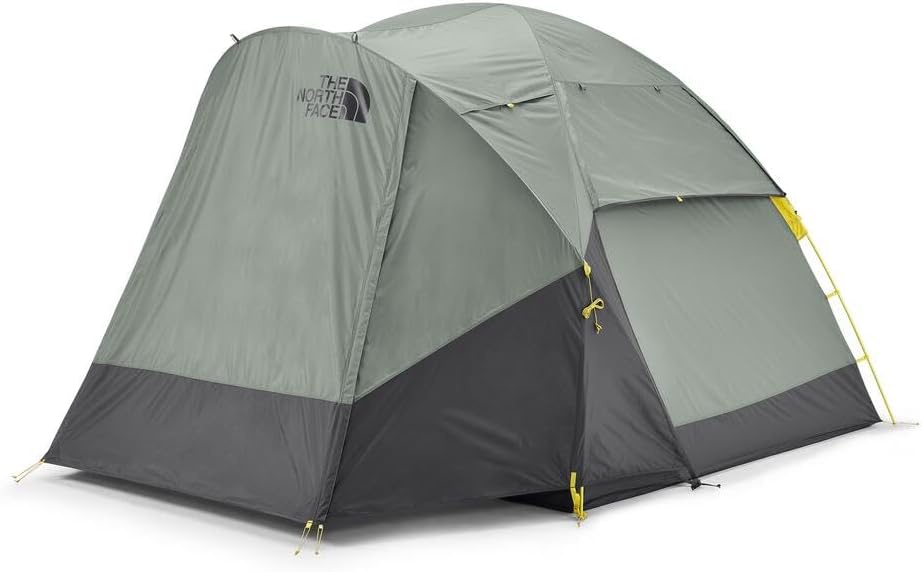
The North Face Wawona 6
The most consistently recommended camping tent across expert sources, praised for its massive vestibule, standing-height interior, and premium build quality that makes it the gold standard for car camping comfort.
Best Budget Camping Tent
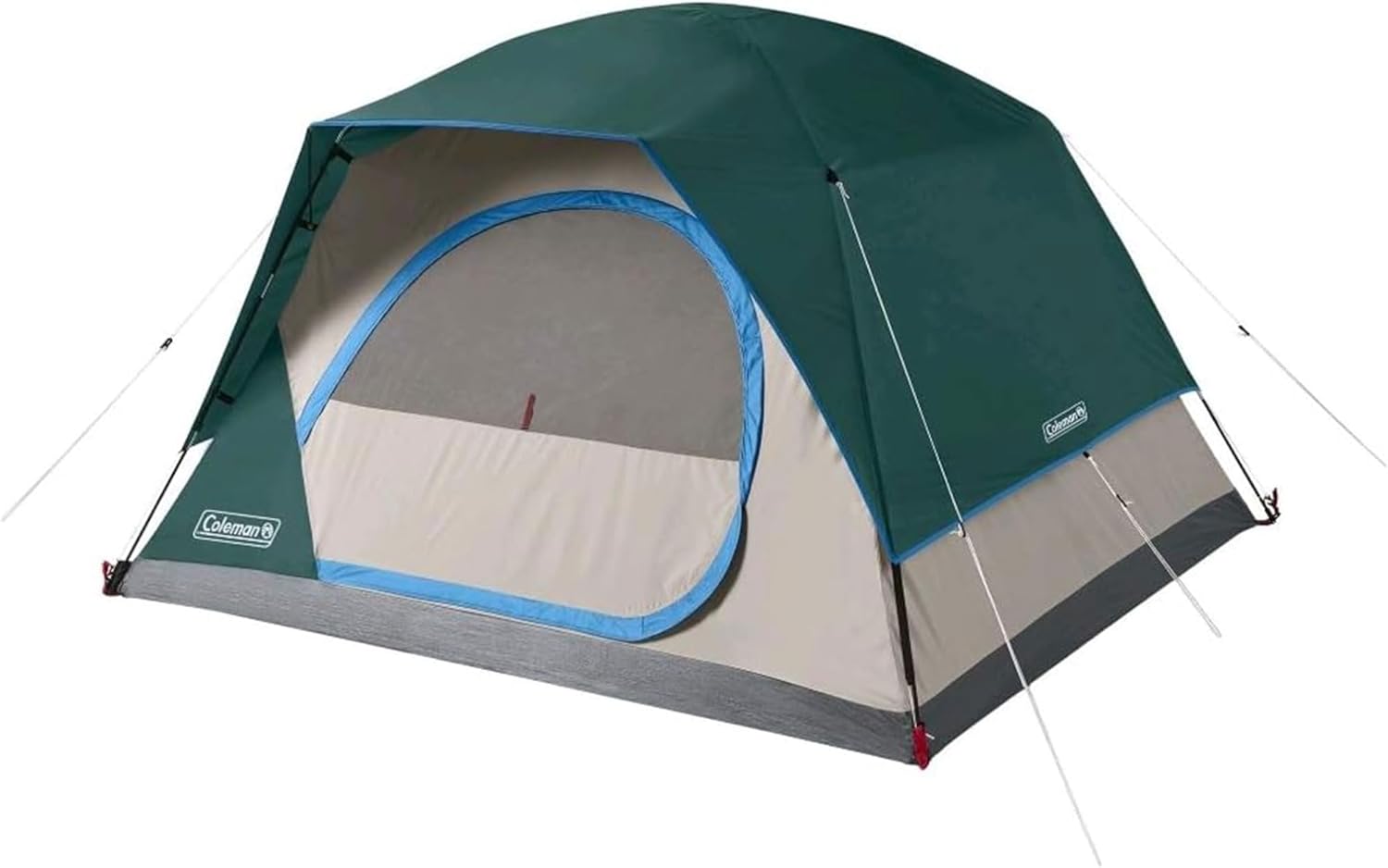
Coleman Skydome 6P
A modernized budget tent with pre-bent poles and steeper walls that deliver significantly more interior volume than older Coleman designs, offering reliable shelter at an accessible entry point.
Best Camping Tent for Two
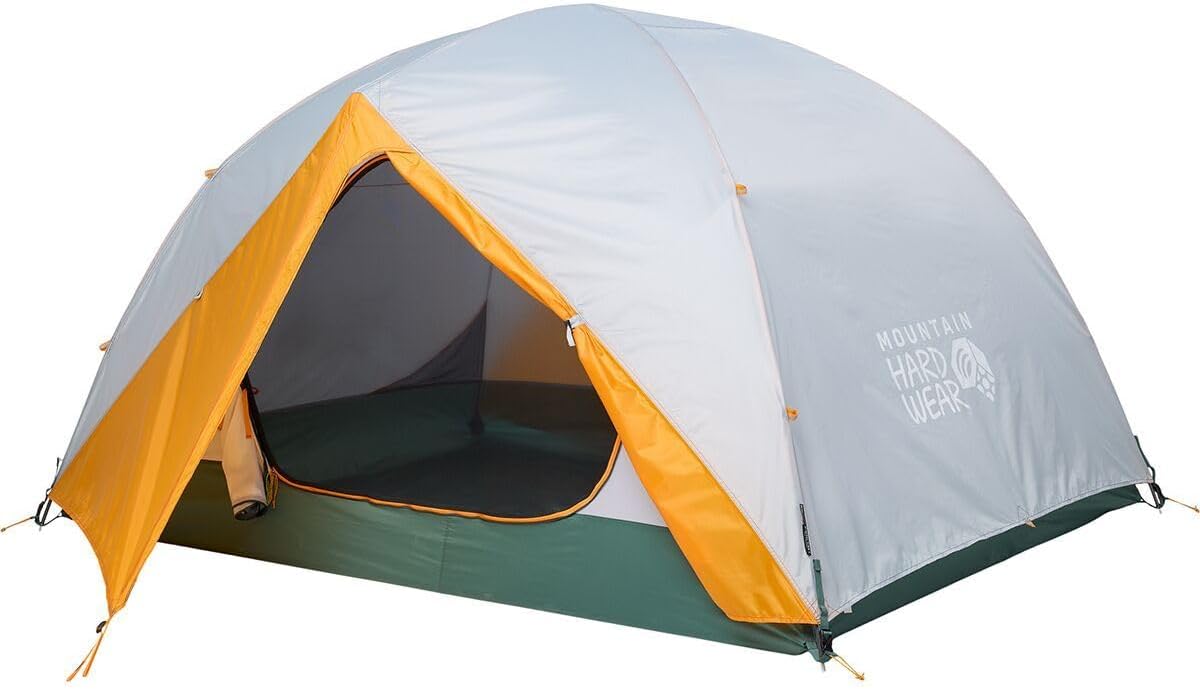
Mountain Hardwear Mineral King 3
A lightweight, two-door tent with a generous footprint and premium aluminum poles that make it an excellent choice for couples who want a comfortable car camping shelter with crossover backpacking potential.
Top Picks in Detail
Below are our recommendations explained in more depth, including why experts agree and where each pick has trade-offs.
Best Overall: The North Face Wawona 6
BEST OVERALL
The North Face Wawona 6
The most frequently selected Best Overall camping tent across independent expert sources. Its 76-inch peak height, near-vertical walls, and massive 44.7-square-foot front vestibule create a basecamp-quality shelter that multiple testing teams rank at the top of their lineups for livability, space, and long-term durability.
If you buy through our links, we may earn a commission. This doesn’t affect our recommendations.
Why It’s a Top Pick
The North Face Wawona 6 earns the Best Overall designation with the broadest expert support of any camping tent we evaluated. Five of eight Primary sources select it as their top recommendation or equivalent: CleverHiker names it Best Overall after testing more than 50 tents, OutdoorGearLab ranks it first among 13 tested models, Better Trail awards it Best Overall in their field-tested lineup, Outdoor Life selects it as Best Overall, and Treeline Review makes the same call after a decade of tent testing at an outdoor education camp.
What sets the Wawona apart is its vestibule. At 44.7 square feet, the front vestibule functions as a genuine porch — large enough for multiple bikes, bins of gear, or camp chairs and a small table. CleverHiker describes it as feeling more like a basecamp than a basic camping tent. Wirecutter notes the vestibule can store large items like bikes or accommodate a table and chairs. GearJunkie’s tester calls it a real gear garage for equipment-heavy trips.
The tent’s interior space is equally impressive. The 76-inch peak height allows most adults to stand upright, and the near-vertical wall design maximizes usable floor space. Better Trail rates the Wawona’s space and livability at 4.5 out of 5, and Switchback Travel praises its massive front vestibule and expansive interior. Aluminum pole construction and a 150-denier polyester floor contribute to long-term durability that multiple sources highlight.
Sources that favor weather-first evaluation methodology — notably GearJunkie and CNN Underscored — rank the REI Co-op Base Camp higher for its four-pole geodesic structure and full-coverage rainfly. This reflects a genuine methodological difference rather than a negative assessment of the Wawona: the Base Camp is a stronger storm shelter, while the Wawona excels at overall livability and camp utility.
What Experts Like
- The 44.7-square-foot front vestibule is the largest of any tent in this category, functioning as a genuine covered porch for gear, bikes, or relaxation
- Standing-height interior (76 inches at peak) with near-vertical walls that maximize usable floor space for sleeping pads, cots, or camp furniture
- Aluminum pole construction and 150-denier polyester floor deliver premium durability that multiple sources expect to last many seasons
- Dual doors, plentiful pockets, a lantern loop, and color-coded poles create a well-organized, user-friendly shelter
Trade-Offs to Consider
- At roughly 19-20 pounds packed weight, this is strictly a car camping tent and one of the heaviest options in the category
- Setup can be challenging solo, especially in windy conditions, due to the tent’s tall profile and large footprint
- The hybrid double-wall rainfly does not fully cover the lower tent body, which may concern campers in heavy sideways rain
- A footprint is not included and must be purchased separately
Runners-Up
The Best Overall segment benefits from particularly strong competition. Two additional tents earned significant expert support and represent legitimate alternatives depending on camping style and priorities.
- NEMO Aurora Highrise 6P — Switchback Travel’s Best Overall pick and Better Trail’s Runner-Up. Its unique frame design creates steep walls and standing height throughout, with large rain-protected windows and an intuitive setup that multiple testers praise. The dome shape sacrifices some headroom at the sides compared to the Wawona’s tunnel design, and it has less vestibule space, but it offers a brighter, more open interior feel and is generally easier to pitch.
- REI Co-op Base Camp 6 — GearJunkie’s Best Overall pick and CNN Underscored’s top choice in the four-person size. The strongest option for campers who prioritize all-weather performance, featuring four full-size aluminum poles, a full-coverage rainfly, and a mountaineering-inspired design. Wirecutter selects the Base Camp for unpredictable weather, and Switchback Travel names it Best Reliability in Rough Weather. The trade-off is less vestibule utility and a more complex setup compared to the Wawona.
Best Budget Camping Tent: Coleman Skydome 6P
BEST BUDGET CAMPING TENT
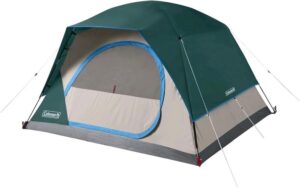
Coleman Skydome 6P
A modernized budget tent that represents a significant step forward from Coleman’s legacy designs. Pre-bent poles create steeper walls and noticeably more headroom, while the accessible entry point makes it a strong choice for occasional campers and families just getting into car camping.
If you buy through our links, we may earn a commission. This doesn’t affect our recommendations.
Moderate Consensus Note: The budget camping tent segment is more fragmented than Best Overall, with three products receiving budget designations from different Primary sources. The Coleman Skydome has the most Primary source support (three sources), but no single product commands a majority. The runners-up below represent credible alternatives with their own expert backing.
Why It’s a Top Pick
The Coleman Skydome earns the Best Budget Camping Tent designation with support from three Primary sources: Switchback Travel selects it as Best Budget, Better Trail names it their budget pick, and CleverHiker rates it Best Budget Tent for Casual Campers. What distinguishes the Skydome from Coleman’s older Sundome line is its modernized pole geometry. Pre-bent poles create steeper, more vertical walls that open up the interior significantly. Switchback Travel notes the Skydome looks and feels surprisingly modern compared to Coleman’s dated and cheap-feeling Sundome. Better Trail reports that Coleman claims 20 percent more headroom than the Sundome, and notes that it feels like even more than that in practice.
Setup is fast and straightforward, with pre-attached poles that unfold into place. CleverHiker describes it as the clear entry-level pick for occasional campers who want a foolproof pitch and basic features. The tent is available in multiple sizes, with the six-person version offering enough room for a family of four with gear.
What Experts Like
- Pre-bent poles create steeper walls and significantly more headroom than older Coleman dome designs
- Fast setup with pre-attached, color-coded poles that unfold intuitively
- Available in multiple capacity sizes to match different group needs
Trade-Offs to Consider
- Fiberglass poles are less durable and heavier than the aluminum poles found on premium tents
- Weather protection is adequate for fair to moderate conditions but not designed for severe storms
- Interior features and storage pockets are more basic than mid-range and premium options
Runners-Up
- Kelty Discovery Basecamp 4 — GearJunkie’s Best Budget pick and CNN Underscored’s Best Budget selection. A classic design at the lowest price point in this roundup, with a durable construction and easy X-pole setup. CNN Underscored praises its balance of price and protection, noting the rainfly covers nearly the entire tent. The main trade-off is limited ventilation — the close-fitting rainfly reduces airflow, which can make the tent hot in warm weather.
- Coleman Sundome 6 — Wirecutter’s Budget Pick, selected for its simple, intuitive setup and the largest footprint in the budget class. Its partial mesh walls and partial rain fly make it the most ventilated budget option. However, it uses an older design with only one door, no vestibule, and a lower ceiling than the Skydome, and multiple sources note it as dated compared to modern budget alternatives.
Best Camping Tent for Two: Mountain Hardwear Mineral King 3
BEST CAMPING TENT FOR TWO
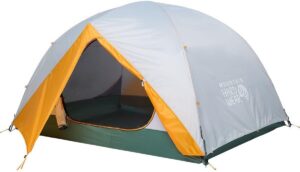
Mountain Hardwear Mineral King 3
A lightweight, thoughtfully designed three-person tent that excels as a roomy shelter for two. Dual doors and vestibules, premium aluminum poles, and a compact pack size give it crossover potential for occasional backpacking, while the generous floor space and improved ventilation make it a comfortable car camping option for couples.
If you buy through our links, we may earn a commission. This doesn’t affect our recommendations.
Moderate Consensus Note: Not all Primary sources explicitly segment a tent-for-two pick. Two Primary sources that do — Wirecutter and CleverHiker — both select the Mountain Hardwear Mineral King 3, providing strong directional alignment. The runner-up below has broader multi-source support across adjacent categories.
Why It’s a Top Pick
The Mountain Hardwear Mineral King 3 is selected as the best car camping tent for two people by both Wirecutter and CleverHiker. Wirecutter’s tester highlights its 43 square feet of living space, noting it can comfortably accommodate two people with room to spare, and praises its easy setup and two sizable vestibules that add significant sheltered storage for muddy boots. CleverHiker rates it 4.7 out of 5 and calls it one of their favorite crossover tents for its thoughtful design and ease of use, noting it is light enough for backpacking in a pinch.
The Mineral King 3 uses premium DAC aluminum poles with a pre-bent geometry that maximizes headroom and shoulder space within its classic dome shape. The all-mesh canopy provides excellent warm-weather ventilation and stargazing potential, and the rainfly can roll up halfway for partial stargazing while maintaining weather readiness. At roughly seven pounds, it packs down small enough to double as a backpacking tent, especially if you split the weight between two hikers.
What Experts Like
- Lightweight at roughly seven pounds with a compact pack size that bridges car camping and backpacking
- Two doors and two sizable vestibules provide sheltered gear storage and easy entry from either side
- Premium DAC aluminum poles with pre-bent geometry maximize interior headroom
- All-mesh canopy delivers exceptional ventilation and stargazing, with a half-rollable rainfly
- Includes a footprint, which is a notable bonus at this level
Trade-Offs to Consider
- At four feet of peak height, this is the shortest tent in the roundup and not suitable for standing
- Setup can be especially difficult in windy conditions due to the lightweight, flexible structure
- Guyline stakes are not included despite being recommended for wind stability
Runners-Up
- Marmot Tungsten 4P — Wirecutter’s Runner-Up for Two, OutdoorGearLab’s Best 4-Person tent, and Switchback Travel’s Best Crossover pick. A roomier alternative with 52.7 square feet of floor space, two large doors, and a strong reputation for wind resistance. Wirecutter notes that its pre-bent aluminum poles can twist in the wind if the fly is not attached using the Velcro tabs, a small but important setup detail. For couples who want more floor space and do not need backpacking crossover capability, the Tungsten is a strong choice.
How to Choose the Right Camping Tent for You
Decide how much space you actually need, not how much the label says you get. Tent capacity ratings are optimistic. Nearly every expert source in this review notes that a six-person tent comfortably fits three to four adults, or two adults with children and a dog. If you want room to store gear inside, set up a cot, or move around without crawling over tentmates, size up from the stated capacity.
Consider whether weather protection or ventilation matters more for your camping style. This is the single biggest design trade-off in camping tents, and it explains why different expert sources reach different conclusions about the same products. Sources that prioritize storm readiness tend to favor tents like the REI Co-op Base Camp, with its full-coverage rainfly and four-pole geodesic structure. Sources that prioritize livability and airflow favor tents like the Wawona, with its massive vestibule and mesh-heavy design. Neither approach is wrong — the right choice depends on where and when you camp.
Think about how much you will camp before spending on premium features. If you camp once or twice a year in fair weather, a budget tent will serve you well. Premium features like aluminum poles, full-coverage rainflies, and 150-denier floors matter most for frequent campers who expect their tent to last many seasons and perform in varied conditions. The gap between budget and premium tents is real, but so is the gap in how often most families actually use them.
Evaluate setup complexity relative to your patience and group size. Larger, feature-rich tents generally take longer to pitch and often benefit from a second pair of hands. If you frequently set up camp in failing light or high wind, an intuitive pole system and color-coded clips can make a meaningful difference. Budget tents tend to be simpler, while premium models trade setup speed for structural strength and livability.
Understand the difference between a camping tent and a backpacking tent before you buy. Car camping tents prioritize interior space, headroom, and features because weight is not a constraint — you drive to your campsite. Backpacking tents prioritize low weight and small pack size because you carry them on your back. A few products in this review, like the Mountain Hardwear Mineral King 3 and the Marmot Tungsten 4P, straddle both categories, but most camping tents are strictly drive-up shelters. If trail weight matters, consult a dedicated backpacking tent guide.
How We Make Our Recommendations
Our recommendations follow a documented, repeatable editorial process designed to prioritize expert agreement, comparability, and clarity.
For each category, we:
- Define clear category scope and exclusions
- Identify and vet independent expert review sources
- Inventory all products reviewed across those sources
- Analyze patterns of agreement and disagreement
- Apply editorial judgment only after consensus is documented
When a category includes materially different product types, we segment recommendations rather than forcing a single “best overall.” For more information, see How We Work.
Sources & Citations
Primary Sources
- Better Trail, Best Camping Tents of 2026, April 2026
- CleverHiker, Best Camping Tents of 2026, May 2026
- CNN Underscored, I tested 9 of the best camping tents. These 2 are worth your money, Feb. 2026
- GearJunkie, The Best Camping Tents Of 2026, May 2026
- Outdoor Life, The 7 Best Camping Tents We’ve Tested, May 2026
- Outdoor Life, The Best 8-Person Tents of 2026, Sept. 2023
- OutdoorGearLab, The Best Camping Tents, Oct. 2025
- Switchback Travel, Best Camping Tents of 2026, Nov. 2025
- Wirecutter, The Best Camping Tents, April 2026
Secondary Sources Consulted for Context
- Condé Nast Traveler, 9 Best Camping Tents for Every Type of Adventure, March 2025
- Gear Patrol, The 13 Best Tents for Happy Camping, July 2023
- Good Housekeeping, The Best Camping Gear of 2024, According to Outdoor Enthusiasts, April 2023
- Men’s Journal, I’ve Pitched Hundreds of Tents. These Are the Best Shelters to Weather Mother Nature, June 2025
- Reader’s Digest, The 6 Best Tents That’ll Keep You Cool All Camping Season Long, May 2024
- The Inertia, Home Is Where You Pitch It: The Best Camping Tents, May 2025
- The Strategist, The 10 Very Best Tents for Camping and Backpacking, May 2026
- Travel + Leisure, The 9 Best Tents, Tested and Reviewed, Oct. 2024
- Treeline Review, Best Camping Tents of 2025, April 2025
- WIRED, The Best Tents for Camping in Any Weather, Oct. 2025
Additional Sources Reviewed
- Camping Guidance, The 9 Best Family Camping Tents (Bought & Tested!), May 2025
- Outside Online, Our Favorite Two-Person Tents for Every Adventure, Aug. 2021
- REI Co-op (Expert Advice), The 6 Best Camping Tents of 2025: Tested, Aug. 2025
Updates & Ongoing Review
This review is monitored on an ongoing basis. We update recommendations when expert sources publish new test results, products are discontinued, or consensus meaningfully changes.
Version History
- 2026-05-21 — Initial publication