
Best Point-and-Shoot Cameras (Expert Consensus)
Last reviewed: 2026-03-18
(This page is updated periodically as expert recommendations and market conditions change.)
Disclosure: This page contains affiliate links. If you buy through our links, we may earn a commission. This does not influence our recommendations or rankings.
Category Overview & Market Context
What This Category Is
Point-and-shoot cameras are compact, fixed-lens digital cameras designed to deliver better image quality, optical zoom, and manual control than a smartphone — all in a package small enough to slip into a pocket or bag. Unlike interchangeable-lens mirrorless cameras or DSLRs, point-and-shoots are self-contained: the lens is built in and cannot be swapped. This simplicity is their core appeal. You pick one up, frame your shot, and press the shutter button.
This review focuses specifically on pocketable point-and-shoot cameras. Larger bridge cameras and superzooms — which offer extreme telephoto reach but are too bulky to fit in a pocket — fall outside our scope, as do action cameras, instant cameras, and video-first devices like the Sony ZV series.
State of the Market
After years of declining sales driven by smartphone camera improvements, point-and-shoot cameras are experiencing a genuine resurgence. Social media interest in compact cameras has surged, with models like the Fujifilm X100VI and Ricoh GR series driving waitlists and backorders. Camera manufacturers are responding: Panasonic returned to the travel zoom segment with the Lumix ZS99, Ricoh launched the GR IV with a redesigned sensor and lens, and Canon has ramped up production of its popular PowerShot G7 X Mark III.
The current market spans a wide range, from affordable budget models to premium enthusiast compacts. Expert sources consistently organize their coverage around distinct use cases — everyday versatility, travel zoom, budget simplicity, and rugged durability — rather than ranking all compacts on a single scale. Our segmented approach reflects this expert consensus.
Who This Is For / Not For
A point-and-shoot camera is worth considering if you want noticeably better image quality than your smartphone — especially in low light, at telephoto distances, or when printing photos — without the bulk, weight, and lens-swapping complexity of a mirrorless system. Point-and-shoots are popular among travelers, street photographers, parents at sporting events, and photography hobbyists who want a capable camera they can carry everywhere.
A point-and-shoot may not be the right choice if you need interchangeable lenses for specialized work, if your smartphone camera already meets your needs, or if you primarily shoot video content and want features optimized for that workflow.
How This Review Was Produced
This review is based on expert consensus rather than a single reviewer’s opinion.
We analyze and synthesize recommendations from multiple independent expert review sources that meet our editorial quality and transparency standards. We document where experts agree, where they differ, and why. No single source determines our recommendations.
We do not conduct original product testing. Instead, we rely on experts who do — such as publications that perform hands-on testing, lab measurements, or clearly documented evaluation methodologies.
Manufacturers do not influence our recommendations. Advertising, affiliate relationships, or commercial considerations do not affect which products are included, how they are ranked, or how they are described.
When helpful, we also consult additional secondary review outlets to understand how broader expert opinion aligns — or conflicts — with the primary consensus. These secondary sources do not determine winners but may provide context or confirmation.
Top Picks at a Glance
Best Overall
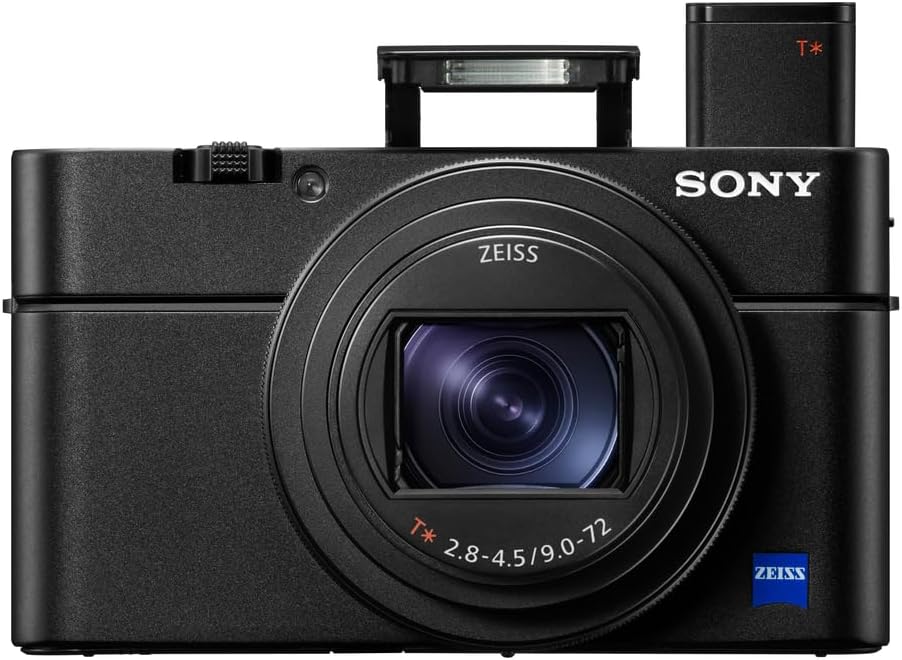
Sony RX100 VII
The most consistently recommended point-and-shoot across expert sources, combining a versatile 24–200mm zoom lens, excellent autofocus, and a 1-inch sensor in a truly pocket-sized body.
Best Travel Zoom Point-and-Shoot Camera

Panasonic Lumix ZS99
An impressive 30x optical zoom packed into a pocketable body, making it the standout choice for travelers who want extreme reach without the bulk of a bridge camera.
Best Budget Point-and-Shoot Camera: Kodak PixPro FZ55
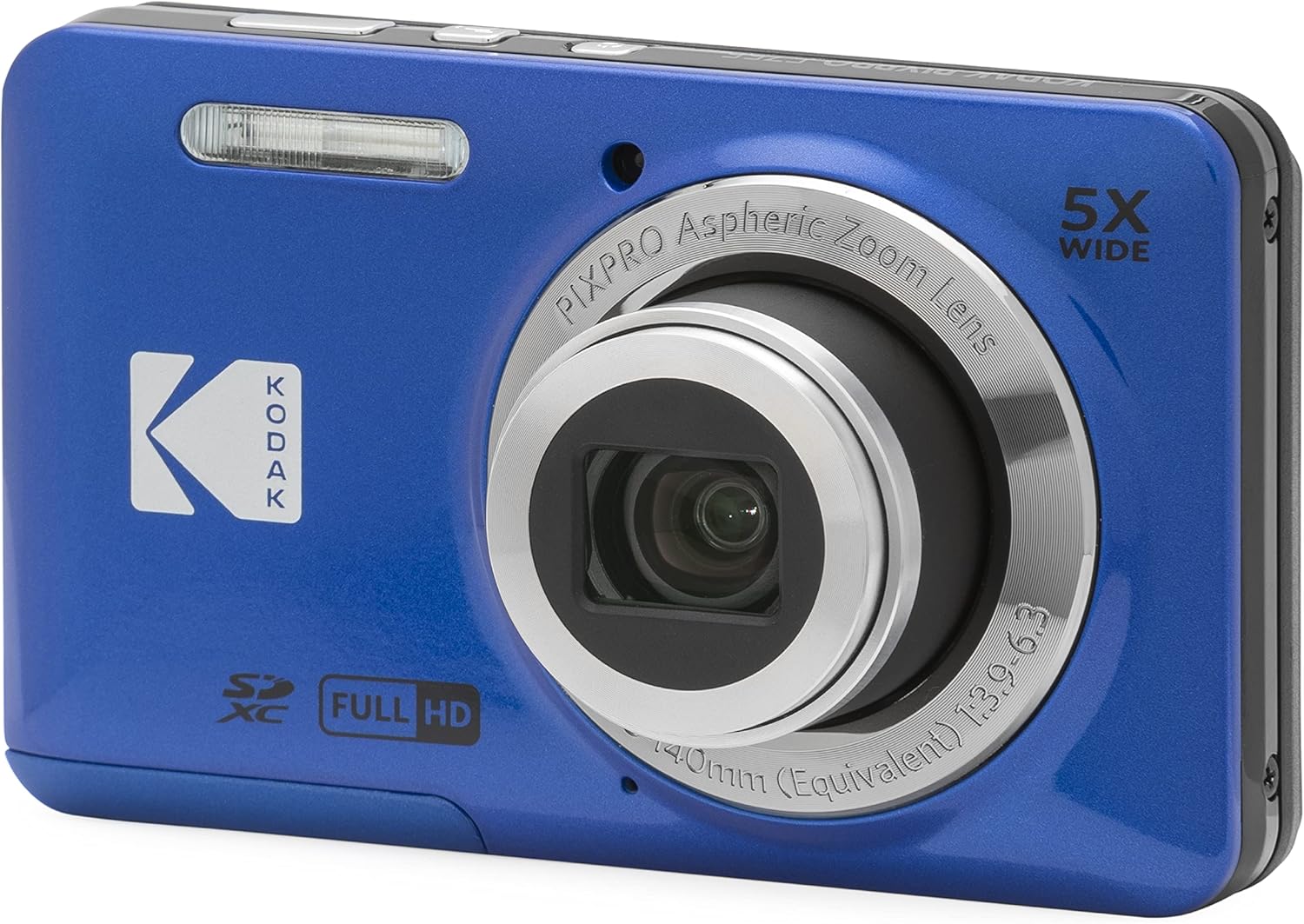
Kodak PixPro FZ55
An ultra-affordable, no-frills compact camera that delivers simple point-and-shoot simplicity for casual photographers and beginners.
Best Rugged / Waterproof Point-and-Shoot Camera
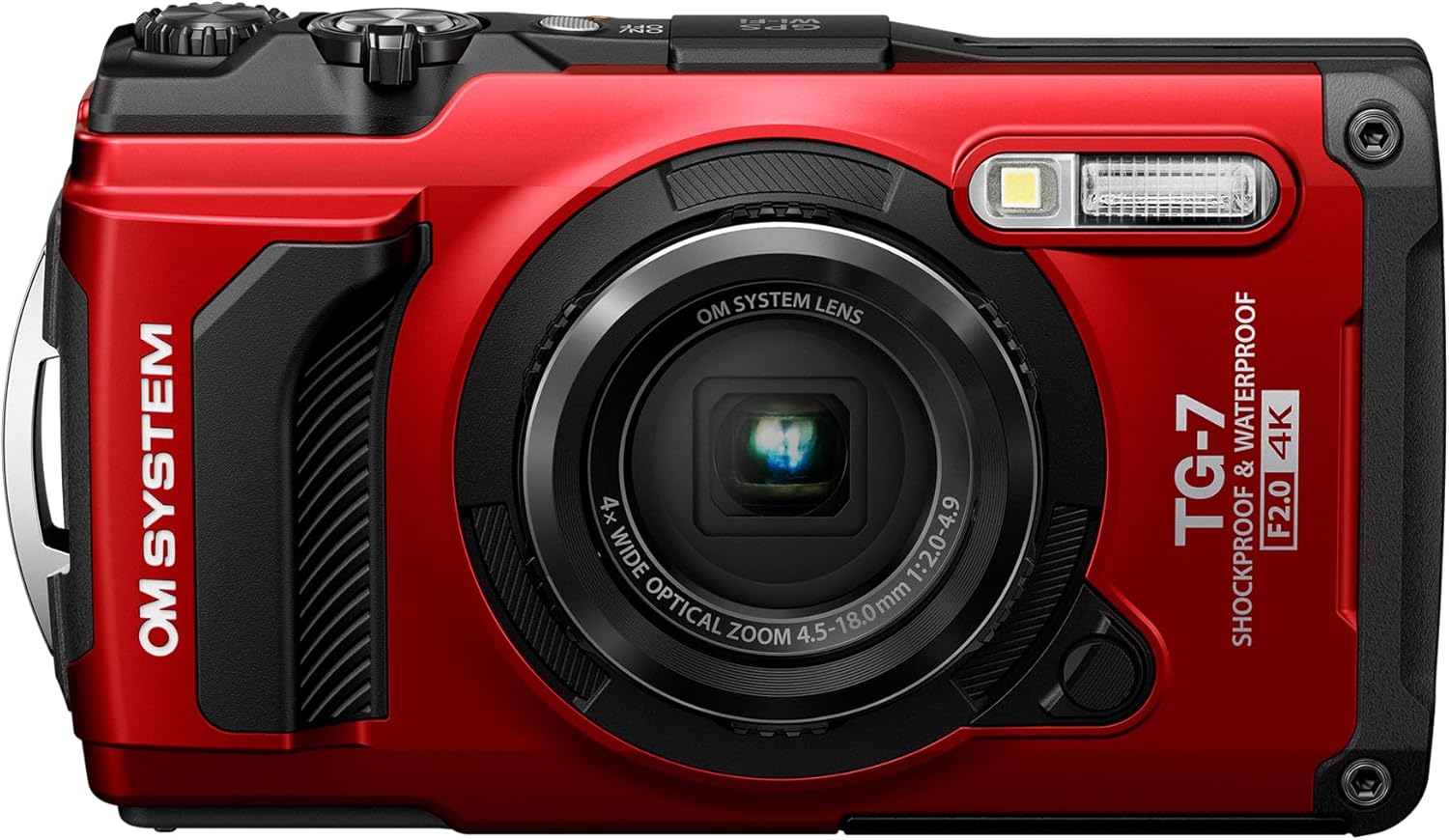
OM System Tough TG-7
The dominant expert pick for harsh-environment shooting, with waterproofing to 50 feet, shockproofing, and a versatile macro system that no other rugged compact can match.
Top Picks in Detail
Best Overall Point-and-Shoot Camera: Sony RX100 VII
BEST OVERALL
Sony RX100 VII
The Sony RX100 VII packs a 1-inch sensor, a versatile 24–200mm Zeiss zoom lens, and class-leading autofocus tracking into a body not much bigger than a deck of cards. It delivers sharper images, more realistic color, and better background blur than smartphone cameras can produce — especially in low light and at telephoto distances. With a pop-up electronic viewfinder, tilting touchscreen, and 4K video recording, it is the most well-rounded compact camera available.
If you buy through our links, we may earn a commission. This doesn’t affect our recommendations.
Why It’s a Top Pick
The Sony RX100 VII earns the Best Overall designation because it is recommended by more expert sources than any other compact camera we analyzed. Seven of eight Primary sources identify it as a top pick in their point-and-shoot coverage. Wirecutter names it their Top Pick and calls it “the ideal smartphone-camera upgrade.” DPReview selects it as the Best Do-It-All Compact. Digital Camera World names it Best Overall. RTINGS picks it as the Best Point-and-Shoot Zoom Camera. PCMag awards it Best Premium Long Zoom. TechRadar and Consumer Reports also recommend it.
What sets it apart is its combination of attributes: a 24–200mm zoom range that covers everything from wide landscapes to tight portraits, an autofocus system borrowed from Sony’s professional Alpha cameras with real-time tracking and eye detection, and a compact body that genuinely fits in a jacket pocket. No other compact camera matches this breadth of capability in such a small package.
What Experts Like
- The 24–200mm Zeiss zoom lens covers an exceptionally wide range of focal lengths in a pocketable body, making it one of the most versatile travel cameras available
- The autofocus system uses 357 phase-detection points and real-time tracking, enabling reliable subject tracking and eye detection for both people and animals
- A pop-up electronic viewfinder (EVF) and tilting touchscreen provide flexible shooting options, including easy composition in bright sunlight
- Blackout-free continuous shooting at up to 20 frames per second makes it capable of capturing fast-moving subjects like sports and wildlife
Trade-Offs to Consider
- The camera was released in 2019 and has not been refreshed. While its capabilities remain competitive, it lacks USB-C charging and weather sealing
- The 1-inch sensor is smaller than the APS-C sensors found in premium fixed-lens alternatives like the Fujifilm X100VI and Ricoh GR IV, resulting in less background blur potential and slightly lower image quality at high sensitivities
- The maximum aperture narrows to f/4.5 at the telephoto end, limiting low-light performance when zoomed in
Runners-Up
The Best Overall segment is unusually competitive. Several premium fixed-lens compacts deliver superior image quality to the Sony RX100 VII but sacrifice zoom versatility. These alternatives are best suited to photographers who know they want a specific shooting style and are willing to accept the trade-offs.
- Fujifilm X100VI — RTINGS names it the number-one point-and-shoot camera overall, and PCMag selects it as the Best Compact Camera for Photo Enthusiasts. Its 40-megapixel APS-C sensor, hybrid optical/electronic viewfinder, and beloved film simulation modes create a uniquely satisfying shooting experience. However, it has no zoom, is larger and heavier than most compacts, carries a significant price premium, and has faced persistent availability constraints since launch.
- Ricoh GR IV — Wirecutter’s Best for Street Photography pick and PCMag’s Best Picture Quality designee. Its APS-C sensor delivers outstanding image quality in a body so compact it fits in a jeans pocket. The Snap Focus feature allows instant shooting from the hip. However, its fixed 28mm wide-angle lens offers no zoom, it lacks a viewfinder, and the rear display does not tilt.
- Leica D-Lux 8 — DPReview selects it as the compact with the best interface, praising its dedicated dials for shutter speed and aperture. CNET names it the Best Phone Upgrade with Zoom. It pairs a larger-than-1-inch sensor with a 24–75mm zoom lens and Leica’s signature design. Expert support for this model is moderate — two Primary sources recommend it, each in a different category — and it carries a significant price premium. It is best suited to enthusiasts who value manual control, build quality, and the Leica shooting experience.
Best Travel Zoom Point-and-Shoot Camera: Panasonic Lumix ZS99
BEST TRAVEL ZOOM POINT-AND-SHOOT CAMERA
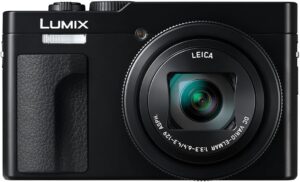
Panasonic Lumix ZS99
The Panasonic Lumix ZS99 squeezes a 30x optical zoom (24–720mm equivalent) into a body small enough for a jacket pocket. It is the standout choice for travelers, concert-goers, and anyone who wants to capture distant subjects without carrying a bulky telephoto lens. The touchscreen flips up for easy selfies, and 4K video recording adds versatility.
If you buy through our links, we may earn a commission. This doesn’t affect our recommendations.
Why It’s a Top Pick
The Panasonic Lumix ZS99 is the only current-production pocketable camera with a 30x optical zoom and broad expert support. Four Primary sources recommend it: CNET names it the Best Point-and-Shoot Camera Overall, TechRadar picks it as the number-one Best Zoom, PCMag selects it as the Best Pocket Superzoom, and Digital Camera World includes it as one of their top zoom picks. It fills a niche that no other compact currently occupies — extreme telephoto reach in a genuinely pocketable body.
What Experts Like
- The 30x optical zoom (24–720mm equivalent) provides extraordinary reach for wildlife, sports, and architectural details without the bulk of a bridge camera
- The flip-up touchscreen makes framing selfies and overhead shots intuitive, and 4K video recording adds versatility for travel content
- 5-axis hybrid optical image stabilization helps maintain sharpness at extreme zoom lengths where camera shake would otherwise ruin handheld shots
Trade-Offs to Consider
- The small 1/2.3-inch sensor limits image quality compared to cameras with 1-inch or larger sensors, particularly in low-light conditions
- There is no electronic viewfinder (EVF), which can make composing shots difficult in bright sunlight
- Image quality cannot compete with the 1-inch sensor models in the Best Overall segment, making this a reach-first choice rather than a quality-first one
Best Budget Point-and-Shoot Camera: Kodak PixPro FZ55
BEST BUDGET POINT-AND-SHOOT CAMERA
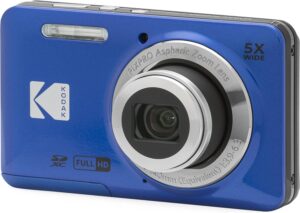
Kodak PixPro FZ55
An ultra-compact, affordable camera that keeps photography simple. It offers 5x optical zoom and a 16-megapixel sensor in a body light enough to forget you’re carrying it. Image quality is limited compared to more expensive compacts, but for casual snapshots, travel memories, and a first camera, it delivers a straightforward point-and-shoot experience.
If you buy through our links, we may earn a commission. This doesn’t affect our recommendations.
Limited Consensus Note: Budget point-and-shoot cameras receive less detailed coverage from expert review sources than premium compacts. Most Primary sources focus on cameras with larger sensors and higher price points. Our recommendation in this segment draws on a narrower pool of expert evaluations than our other segments. Readers should weigh this limited consensus accordingly.
Why It’s a Top Pick
The Kodak PixPro FZ55 is the most frequently cited affordable point-and-shoot across the sources we reviewed. NBC Select names it the Best Budget pick after hands-on testing abroad. Amateur Photographer includes it among its recommended cheap compact cameras. Digital Camera World and PCMag mention it in their coverage. According to BCN Ranking sales data cited by Digital Camera World, the PixPro FZ55 has been the best-selling compact camera in Japan for multiple consecutive months — an indication that its combination of simplicity and affordability resonates with a broad audience.
What Experts Like
- Extremely compact and lightweight, small enough to fit in any pocket and light enough to carry all day without noticing
- Simple, no-frills operation that requires no photography knowledge — true point-and-shoot simplicity
- The 5x optical zoom (28–140mm equivalent) provides more flexibility than a smartphone’s digital zoom at this price point
Trade-Offs to Consider
- The small 1/2.3-inch sensor produces noticeably less detail and struggles significantly in low-light environments compared to cameras with larger sensors
- No 4K video recording, no viewfinder, and very limited manual controls
- Image quality falls well short of the cameras in our other segments. This is a camera for casual snapshots, not for users who want to print or enlarge their photos
Best Rugged / Waterproof Point-and-Shoot Camera: OM System Tough TG-7
BEST RUGGED / WATERPROOF POINT-AND-SHOOT CAMERA
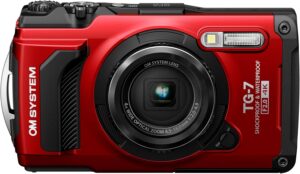
OM System Tough TG-7
The OM System Tough TG-7 is built to go where other cameras cannot. Waterproof to 50 feet, shockproof from drops up to 7 feet, crushproof to 220 pounds, and freezeproof down to 14°F, it handles beaches, ski slopes, snorkeling trips, and construction sites alike. A bright f/2.0 wide-angle lens and dedicated underwater and macro modes make it more than just durable — it is a genuinely capable photographic tool for harsh environments.
If you buy through our links, we may earn a commission. This doesn’t affect our recommendations.
Why It’s a Top Pick
The OM System Tough TG-7 dominates the rugged/waterproof segment with no meaningful competition. Four Primary sources recommend it: PCMag names it the Best Waterproof and Rugged Camera, DPReview selects it as the Best Waterproof Compact, Digital Camera World picks it as the Best Waterproof Point-and-Shoot, and TechRadar recommends it as the Best Rugged pick. The TG series has been the expert consensus leader in this segment for years, and the TG-7 continues that tradition.
What Experts Like
- Comprehensive rugged specifications — waterproof to 50 feet, shockproof to 7 feet, crushproof to 220 pounds, freezeproof to 14°F — allow worry-free use in virtually any environment
- The bright f/2.0 wide-angle lens and dedicated microscope mode deliver impressive macro photography, and optional accessory lenses extend its versatility
- RAW file support, built-in GPS, compass, and pressure sensors provide functionality that most rugged cameras lack
- Dedicated underwater shooting modes optimize white balance and exposure for subaquatic photography
Trade-Offs to Consider
- The small 1/2.3-inch, 12-megapixel sensor is the most significant limitation. Image quality falls well short of cameras with 1-inch or larger sensors, particularly in low light
- The rear LCD screen is known to scratch easily, which is ironic for a camera designed for rough conditions
- The 4x optical zoom range (25–100mm equivalent) is modest, and video recording at 4K is limited to short clips
How to Choose the Right Point-and-Shoot Camera for You
Decide what you need most: zoom versatility, image quality, or rugged durability. Point-and-shoot cameras serve different needs, and no single model excels at everything. If you want one camera for travel, events, and everyday shooting, the Best Overall segment focuses on versatile all-rounders. If reaching distant subjects matters more than pixel-level image quality, the Best Travel Zoom segment is where to look. If you need a camera that can survive water, drops, and extreme conditions, the Best Rugged/Waterproof segment has you covered.
Sensor size is the single biggest factor in image quality. Larger sensors capture more light and detail, producing cleaner images with better background blur. The cameras in this review span three sensor tiers: APS-C sensors (found in the Fujifilm X100VI and Ricoh GR IV) deliver the best image quality; 1-inch sensors (as in the Sony RX100 VII) offer a strong balance of quality and compactness; and 1/2.3-inch sensors (found in the Panasonic Lumix ZS99, Kodak PixPro FZ55, and OM System TG-7) prioritize zoom range or affordability at the cost of image quality, particularly in low light.
Consider whether you need a zoom lens or a fixed lens. Zoom lenses provide framing flexibility — you can capture wide landscapes and zoom in on distant details with the same camera. Fixed-lens cameras like the Fujifilm X100VI and Ricoh GR IV trade that flexibility for sharper optics and larger apertures, which translates to better image quality and more background blur. If you know you prefer a specific focal length and shooting style, a fixed-lens compact can be a rewarding choice.
A viewfinder makes a real difference in bright conditions. If you shoot outdoors in direct sunlight, a camera with an electronic viewfinder (EVF) will be much easier to compose with than one that relies solely on a rear LCD screen. The Sony RX100 VII and Fujifilm X100VI both include viewfinders; the Panasonic ZS99, Kodak FZ55, and Ricoh GR IV do not.
Availability and stock shortages are a real consideration in this category. Several popular compacts — most notably the Fujifilm X100VI and Canon PowerShot G7 X Mark III — have experienced persistent backorders and stock shortages. If immediate availability matters, check retailer stock before committing. The Sony RX100 VII and Panasonic Lumix ZS99 are generally easier to find in stock.
How We Make Our Recommendations
Our recommendations follow a documented, repeatable editorial process designed to prioritize expert agreement, comparability, and clarity.
For each category, we:
- Define clear category scope and exclusions
- Identify and vet independent expert review sources
- Inventory all products reviewed across those sources
- Analyze patterns of agreement and disagreement
- Apply editorial judgment only after consensus is documented
When a category includes materially different product types, we segment recommendations rather than forcing a single “best overall.” For more information, see How We Work.
Sources & Citations
Primary Sources
- CNET, Best Point-and-Shoot Camera for 2025, March 2025
- Consumer Reports, Advanced Point-and-Shoot Camera Ratings & Reviews [subscription required]
- Consumer Reports, Advanced Point-and-Shoot Camera Recommended [subscription required]
- Digital Camera World, The best point-and-shoot camera in 2026: Easy-to-use cameras to fit every pocket, Feb. 2026
- DPReview, The Best compact zoom cameras in 2025, July 2025
- PCMag, The Best Point-and-Shoot Cameras for 2026, March 2026
- RTINGS, The 4 Best Point-And-Shoot Cameras of 2026, Jan. 2025
- TechRadar, Best point-and-shoot camera: I’ve tested a range of carry-everywhere models for simple shooting, Jan. 2026
- Wirecutter, The Best Point-and-Shoot Cameras, Jan. 2026
Secondary Sources Consulted for Context
- Amateur Photographer, Best compact camera in 2026 – the perfect point-and-shoots for photos and video, Feb. 2026
- CNN Underscored, The best point-and-shoot cameras in 2026, tried and tested, Jan. 2026
- NBC Select, The best point-and-shoot cameras in 2026, March 2026
- Tom’s Guide, The best cameras in 2026, Feb. 2026
Additional Sources Reviewed
- PetaPixel, Best Compact Cameras in 2026, Jan. 2026
- Travel + Leisure, The 6 Best Compact Cameras, Tested and Reviewed, March 2025
Updates & Ongoing Review
This review is monitored on an ongoing basis. We update recommendations when expert sources publish new test results, products are discontinued, or consensus meaningfully changes.
Version History
- 2026-03-18 — Initial publication
- 2026-07-05 — Added Wirecutter to Primary Sources