
Best Smart Scales (Expert Consensus)
Last reviewed: 2026-03-09
(This page is updated periodically as expert recommendations and market conditions change.)
Disclosure: This page contains affiliate links. If you buy through our links, we may earn a commission. This does not influence our recommendations or rankings.
Category Overview & Market Context
What This Category Is
Smart scales are Wi-Fi– or Bluetooth-connected bathroom scales that measure body weight and transmit data to a companion smartphone app. Most models also estimate body composition metrics — including body fat percentage, muscle mass, bone mass, BMI, and water percentage — using bioelectrical impedance analysis (BIA), a technology that sends a small, safe electrical current through the body to estimate how weight is distributed between fat, muscle, bone, and water.
The defining feature of a smart scale is its connected app. Rather than displaying a single number, these devices track trends over time, sync with fitness platforms like Apple Health, Google Fit, and Fitbit, and help users understand how their body is changing — not just whether they gained or lost weight. Many models support multiple user profiles, making them practical for households.
State of the Market
The smart scale market in 2026 spans a wide price range, from affordable budget models to premium health stations. At the lower end, products like the Wyze Scale X and Renpho Elis 1 deliver reliable weight tracking and basic body composition at prices comparable to non-connected digital scales. In the mid-range, WITHINGS dominates with a family of scales that progressively add visceral fat tracking, vascular health insights, and nerve health monitoring. At the premium tier, handle-based scales offering segmental body composition analysis and ECG monitoring represent the frontier of what consumer hardware can measure at home.
A key market reality: while smart scales are useful for tracking trends, they are not clinical instruments. BIA-based body composition readings can vary with hydration, time of day, and individual physiology. Multiple expert sources and peer-reviewed studies emphasize that smart scale body composition data is best used for monitoring relative changes over time, not as a substitute for clinical measurements such as DEXA scans.
Who This Is For / Not For
Smart scales are well-suited to anyone who wants to track weight trends over time without manual logging, fitness enthusiasts who want a fuller picture of body composition alongside their workout data, households that want a shared scale with individual profiles, and users already embedded in fitness ecosystems like Apple Health, Google Fit, Garmin Connect, or Fitbit.
Smart scales are less suitable for anyone with a pacemaker or similar implanted medical device (BIA sends an electrical current that may interfere), individuals who are pregnant (fluid shifts affect BIA accuracy; though some models offer a pregnancy-safe weight-only mode), users seeking clinical-grade body composition data (a DEXA scan is the gold standard), and anyone for whom frequent weigh-ins may trigger anxiety or disordered eating patterns.
How This Review Was Produced
This review is based on expert consensus rather than a single reviewer’s opinion.
We analyze and synthesize recommendations from multiple independent expert review sources that meet our editorial quality and transparency standards. We document where experts agree, where they differ, and why. No single source determines our recommendations.
We do not conduct original product testing. Instead, we rely on experts who do — such as publications that perform hands-on testing, lab measurements, or clearly documented evaluation methodologies.
Manufacturers do not influence our recommendations. Advertising, affiliate relationships, or commercial considerations do not affect which products are included, how they are ranked, or how they are described.
When helpful, we also consult additional secondary review outlets to understand how broader expert opinion aligns — or conflicts — with the primary consensus. These secondary sources do not determine winners but may provide context or confirmation.
Top Picks at a Glance
Best Overall
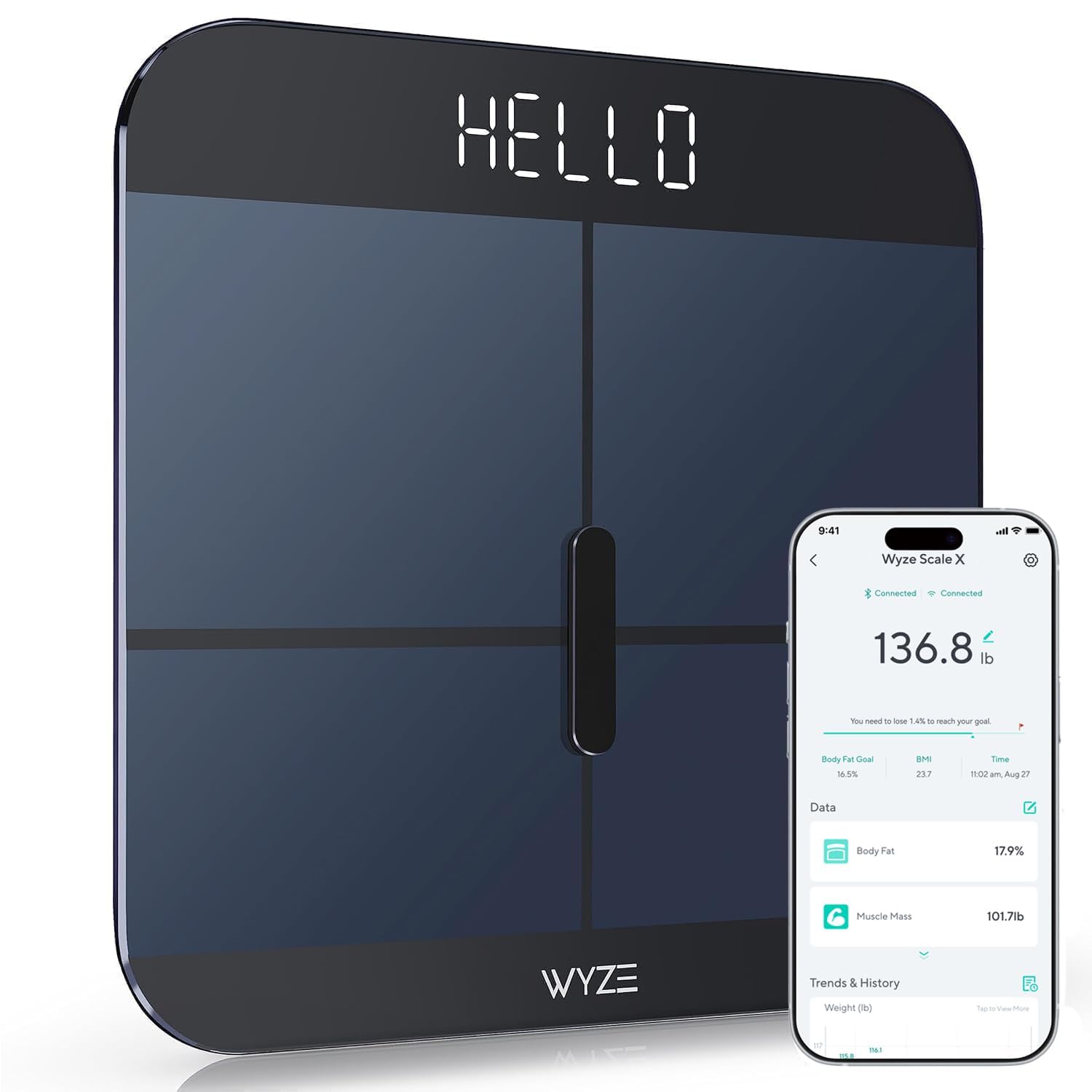
Wyze Scale X
The most consistently recommended smart scale across expert sources, praised for accurate weight readings, a clean app, and exceptional value.
Best Premium Smart Scale
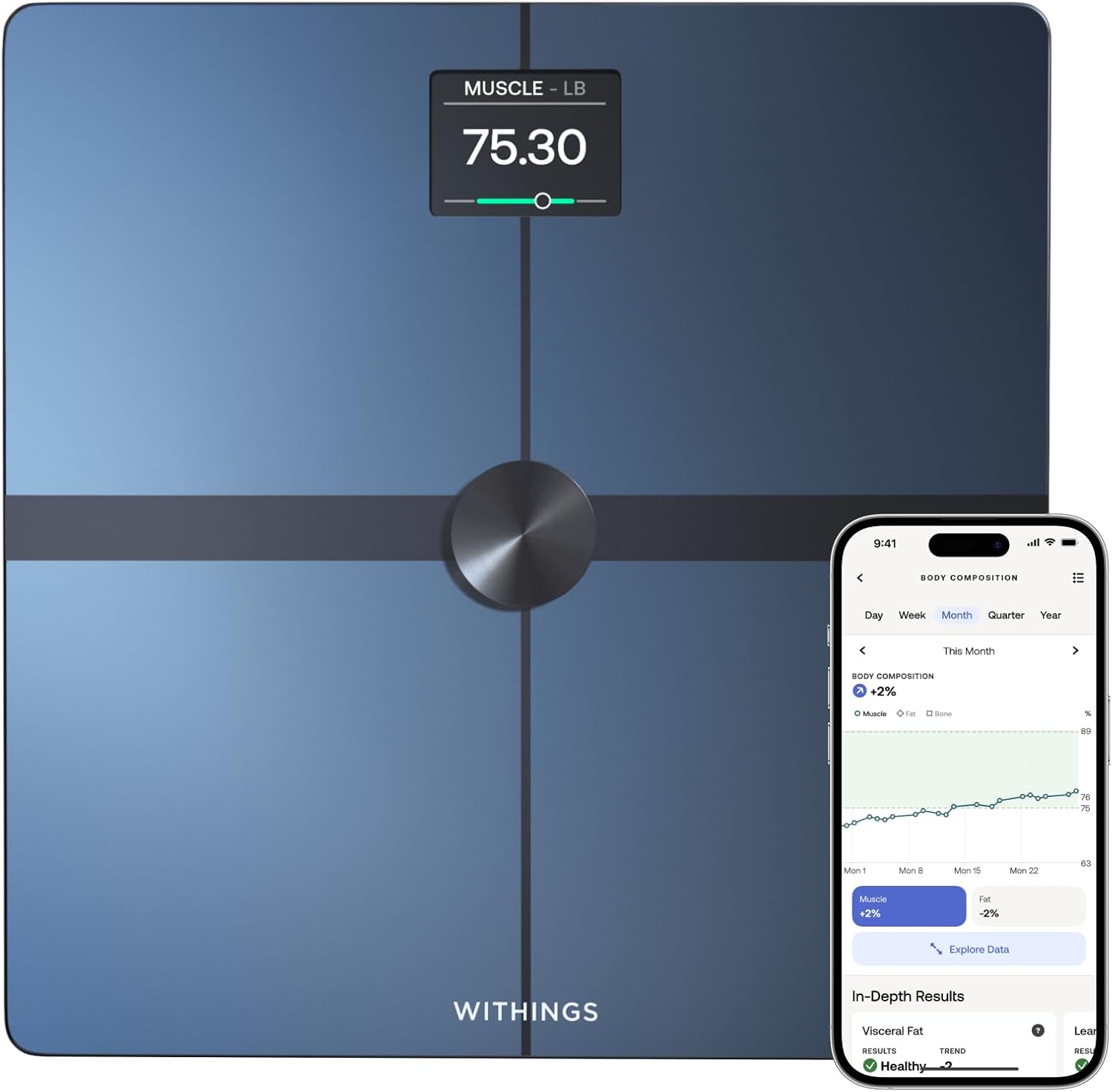
WITHINGS Body Smart
The strongest balance of advanced body composition tracking, app quality, and specialized modes at the entry of the premium tier.
Top Picks in Detail
Below are our recommendations explained in more depth, including why experts agree and where each pick has trade-offs.
Best Overall: Wyze Scale X
BEST OVERALL
Wyze Scale X
The most consistently recommended smart scale across expert sources, praised for accurate weight readings, a clean app, and exceptional value.
If you buy through our links, we may earn a commission. This doesn’t affect our recommendations.
Why It’s a Top Pick
The Wyze Scale X is the top pick at Wirecutter after seven years of testing dozens of smart scales, and CNN Underscored’s top choice after testing 10 models. TechGearLab gave it the highest score in their lab testing (88 out of 100), noting the lowest standard deviation of any scale tested at just 0.11 pounds. Consumer Reports (CR) rated the Wyze WSCLU_BL a 92 out of 100, earning top marks in accuracy, consistency, and unbalanced weighing. Tom’s Guide names it their Best Budget pick, praising its ITO glass coating for improved accuracy and its expanded health app compatibility.
The breadth of this consensus is unusual. Few smart scales earn top or near-top marks from this many independent testing organizations simultaneously, which is what makes the Wyze Scale X a clear Best Overall pick.
What Experts Like
- Consistently accurate weight readings across multiple independent lab and hands-on tests, with one of the lowest measurement variances recorded
- Clean, intuitive app that syncs via Bluetooth with Apple Health, Google Fit, and Fitbit
- 22-month battery life on four AAA batteries—the longest of any replaceable-battery model tested by Wirecutter
- Versatile modes for weighing babies, pets, and luggage, plus a pregnancy-safe weight-only mode that disables BIA
- Accommodates up to eight user profiles with automatic recognition
Trade-Offs to Consider
- Bluetooth only — no Wi-Fi, so your phone must be nearby during weigh-ins to sync data
- The Wyze app is functional but basic compared to WITHINGS or Eufy, with limited context or educational content around body composition metrics
- Wyze experienced a data breach in 2019 affecting its camera products; the company states it has since implemented comprehensive security improvements
- Does not display weight in stones, which may matter for some international users
Runners-Up
Several strong alternatives exist in this segment, each with distinct strengths that may suit specific preferences better than the Wyze Scale X.
- WITHINGS Body Smart — Tom’s Guide’s Best Overall pick and a favorite of multiple secondary sources for its polished app, Wi-Fi connectivity, and advanced modes (athlete, pregnancy, baby, eyes-closed). It offers visceral fat tracking and hydration metrics that the Wyze lacks. It didn’t win because its higher price positions it at the boundary of the premium segment, and its broadest expert support comes at the mid-range rather than the budget tier where consensus is strongest. Also our Best Premium Smart Scale pick.
- Renpho Elis 1 — Live Science’s Best Overall pick and Reviewed’s top choice, praised for 13 body composition metrics, unlimited user profiles, and a well-designed app at an even lower price than the Wyze. It didn’t win because it uses Bluetooth only with 0.2-pound measurement increments (versus 0.1 for most competitors), and all users must share the same app login. At its price point, it is the strongest budget alternative in the category.
Best Premium Smart Scale: WITHINGS Body Smart
BEST PREMIUM SMART SCALE
WITHINGS Body Smart
[Why it won: For much less than the overall winner, this model sacrifices a bit of functionality. Short rationale, 2-3 sentences max, high-level, no specs, no hedging]
If you buy through our links, we may earn a commission. This doesn’t affect our recommendations.
Why It’s a Top Pick
Tom’s Guide names the WITHINGS Body Smart its Best Overall smart scale after hundreds of weigh-ins, highlighting its gorgeous, easily navigable app and wide array of metrics. Live Science recommends it as their Best for Larger Feet pick due to its generous 12.8-inch platform. The WITHINGS Health Mate app stands out among expert sources for its depth of health education, trend visualization, and integration with the broader WITHINGS ecosystem of watches and health devices.
What distinguishes the Body Smart from budget scales is its multi-frequency BIA technology, which provides more precise body composition estimates, plus metrics like visceral fat index and hydration level that most budget-tier scales do not offer. It also supports athlete, pregnancy, baby, and eyes-closed modes — the last of which logs your metrics without displaying numbers on the scale, a thoughtful feature for users who prefer not to see their weight at every weigh-in.
What Experts Like
- Wi-Fi and Bluetooth connectivity — data syncs automatically without requiring your phone nearby
- High-resolution color display shows weight trends directly on the scale
- Visceral fat index, hydration level, and multi-frequency body composition — metrics not available on most budget models
- Athlete, pregnancy, baby, and eyes-closed modes accommodate diverse household needs
- 15-month battery life with batteries included
Trade-Offs to Consider
- Carries a significant price premium over budget smart scales
- Some app features — including Health Improvement Score and Body Score — are locked behind an optional annual subscription
- Does not include ECG, nerve health monitoring, or segmental body composition; those features require stepping up to the more expensive WITHINGS Body Comp or Body Scan
Runners-Up
The premium smart scale segment is dominated by WITHINGS, which offers a clear product ladder from the Body Smart through increasingly advanced models.
- WITHINGS Body Comp — WIRED’s Best Overall smart scale pick and Engadget’s Best Premium recommendation. It adds nerve health monitoring via electrodermal activity, vascular age estimation, and enhanced cardiovascular insights over the Body Smart. Multiple secondary sources also recommend it for data-driven health enthusiasts. It didn’t win because the additional features address niche health-monitoring needs that most users do not require, at a meaningfully higher price.
- WITHINGS Body Scan — Tom’s Guide’s Best Premium pick. The most feature-rich consumer smart scale available, with segmental body composition analysis across five body zones, a 6-lead ECG, and nerve health scoring via a retractable handle. It didn’t win because its very high price limits its consensus breadth — few sources recommend it as a primary pick for most users, and some features require an optional annual subscription.
How to Choose the Right Smart Scale for You
Decide what you actually want to track. If your primary goal is monitoring weight trends over time, any well-reviewed smart scale will serve you well—and a budget model like the Wyze Scale X or Renpho Elis 1 will do the job reliably. If you want deeper body composition data (visceral fat, hydration, vascular health), you will need to step up to a mid-range or premium model. Be honest about whether you will actually use advanced metrics before paying for them.
Consider connectivity: Bluetooth vs. Wi-Fi. Bluetooth-only scales require your phone to be nearby during each weigh-in to capture data. Wi-Fi scales sync automatically in the background — you step on, and the data appears in your app even if your phone is in another room. For households with multiple users or anyone who wants frictionless tracking, Wi-Fi is a meaningful upgrade.
Check app ecosystem compatibility before you buy. If you already track health data in Apple Health, Google Fit, Garmin Connect, or Fitbit, confirm that the scale’s app syncs with your platform. Some scales (like the Garmin Index S2) are designed specifically for users already invested in a particular ecosystem and may offer limited value outside it.
Understand what BIA can and cannot tell you. Smart scales use bioelectrical impedance analysis to estimate body fat percentage, muscle mass, and other metrics. These estimates are useful for tracking trends — if your body fat reading drops steadily over months of training, that is meaningful signal. However, BIA readings vary with hydration, time of day, and individual physiology, and should not be treated as clinical measurements. For precise body composition data, a DEXA scan remains the gold standard.
Think about who else will use the scale. Most smart scales support multiple user profiles with automatic recognition — typically 8 to 16 users. If your household includes someone with a pacemaker or who is pregnant, look for a scale with a weight-only mode that disables the BIA current. Some models also offer baby and pet weighing modes, which can be surprisingly practical.
Do not chase specifications you will not use. A scale that measures 16 metrics is not inherently better than one measuring 13 if you only check your weight and body fat percentage. Expert sources consistently find that app quality, measurement consistency, and ease of daily use matter more than raw metric count. The best smart scale is the one you will actually step on every morning.
How We Make Our Recommendations
Our recommendations follow a documented, repeatable editorial process designed to prioritize expert agreement, comparability, and clarity.
For each category, we:
- Define clear category scope and exclusions
- Identify and vet independent expert review sources
- Inventory all products reviewed across those sources
- Analyze patterns of agreement and disagreement
- Apply editorial judgment only after consensus is documented
When a category includes materially different product types, we segment recommendations rather than forcing a single “best overall.” For more information, see How We Work.
Sources & Citations
Note: Two citation titles could not be fully confirmed character-by-character from the archived source text due to line wrapping or page format. These are flagged below for EIC verification.
Primary Sources
- CNN Underscored, The best smart scale of 2026, tried and tested, Jan. 2026
- Consumer Reports, 6 Best Bathroom Scales of 2026, Expert-Tested and Reviewed, Jan. 2026, [subscription required]
- Consumer Reports, Bathroom Scales, Ratings & Reviews [subscription required]
- Engadget, The best smart scales for 2026, Jan. 2026
- Live Science, Best smart scales 2026: Track body composition in the comfort of your home, Feb. 2026
- PCMag, The Best Smart Scales for 2026, Jan. 2026
- TechGearLab, The Best Bathroom Scales, March 2025
- Tom’s Guide, These are the best smart scales we’ve tested in 2026 to track your health and fitness at home, Jan. 2026
- Wirecutter, The Best Smart Scale, Dec. 2025
Secondary Sources Consulted for Context
- Android Police, Best smart scales in 2025, Dec. 2024
- Garage Gym Reviews, The Best Smart Scales Sync With Your Favorite Health Apps, Track Body Weight, and So Much More, Sept. 2025
- Gear Patrol, The Best Smart Scales for Accurately Tracking Your Fitness Progress, March 2023
- Good Housekeeping Institute, 9 Best Digital Bathroom Scales, Tested & Reviewed, March 2026
- Men’s Health, 6 Best Smart Scales to Unlock Your True Health Potential, According to Trainers, Jan. 2026
- NBC Select, Should you use a smart scale? We asked experts, Aug. 2025
- Reviewed, The Best Smart Scales of 2026, July 2023
- TechRadar, Best smart scales: Weigh up the best digital body composition scales, Oct. 2025
- The Independent, 7 best bathroom scales to track weight and fitness, tested by our tech expert, Jan. 2026
- WIRED, The Best Smart Scales, Jan. 2026
- Yahoo Health, We tested 14 models to find the best body composition scales for 2026 — one stood out, Dec. 2025
Updates & Ongoing Review
This review is monitored on an ongoing basis. We update recommendations when expert sources publish new test results, products are discontinued, or consensus meaningfully changes.
Version History
- 2026-03-09 — Initial publication