
Best Smart Doorbell Cameras (Expert Consensus)
Last reviewed: 2026-03-14
(This page is updated periodically as expert recommendations and market conditions change.)
Disclosure: This page contains affiliate links. If you buy through our links, we may earn a commission. This does not influence our recommendations or rankings.
Category Overview & Market Context
What This Category Is
Smart doorbell cameras are internet-connected devices that replace or supplement a traditional doorbell with a built-in camera, microphone, and speaker. They allow homeowners to see, hear, and speak with visitors from a smartphone app, whether at home or away. Most models also detect motion and record video clips, providing a first line of defense against package theft, unwanted visitors, and break-ins.
This review covers consumer-grade smart video doorbell cameras designed for DIY self-installation. It includes both wired models (which connect to existing doorbell wiring for continuous power) and battery-powered models (which mount with screws and run on rechargeable or replaceable batteries). Models that optionally integrate with home security systems are included as long as they can be purchased and used as standalone devices. Smart doorbells are a distinct category from outdoor security cameras as their primary purpose is to function as a doorbell, with additional video capabilities. If you just need an outdoor camera, consult our Outdoor Security Cameras review.
State of the Market
The video doorbell market has matured significantly, with strong options available across a wide range of needs and budgets. Resolution has climbed from 1080p to 2K and even 4K in premium models, while AI-powered detection — distinguishing between people, packages, vehicles, and animals — has become a standard differentiator rather than a premium feature. Subscription requirements remain a key dividing line: some brands (notably Ring and Google Nest) lock meaningful features behind monthly plans, while others (Eufy, TP-Link Tapo, Reolink) emphasize local storage and subscription-free operation.
The major ecosystem players are Google Home (Nest doorbells), Amazon Alexa (Ring and Blink doorbells), and Apple HomeKit (limited options). Cross-platform compatibility varies, and ecosystem lock-in is a real consideration for buyers already invested in a particular smart home platform.
Who This Is For / Not For
This review is for anyone considering a video doorbell for package monitoring, visitor screening, or front-door security — whether you’re a first-time smart home buyer or upgrading an older model. It covers options for renters (battery-powered, no-drill models), homeowners with existing doorbell wiring, and privacy-conscious users who want to avoid cloud subscriptions.
This review is not for buyers looking for professionally installed and monitored security systems (such as ADT or Vivint packages), commercial-grade access control, or traditional non-smart doorbells and chimes without video capability.
How This Review Was Produced
This review is based on expert consensus rather than a single reviewer’s opinion.
We analyze and synthesize recommendations from multiple independent expert review sources that meet our editorial quality and transparency standards. We document where experts agree, where they differ, and why. No single source determines our recommendations.
We do not conduct original product testing. Instead, we rely on experts who do — such as publications that perform hands-on testing, lab measurements, or clearly documented evaluation methodologies.
Manufacturers do not influence our recommendations. Advertising, affiliate relationships, or commercial considerations do not affect which products are included, how they are ranked, or how they are described.
When helpful, we also consult additional secondary review outlets to understand how broader expert opinion aligns — or conflicts — with the primary consensus. These secondary sources do not determine winners but may provide context or confirmation.
Top Picks at a Glance
Best Overall
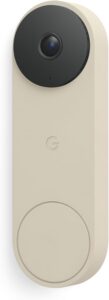
Google Nest Doorbell (Wired, 3rd Gen)
Backed by the broadest expert consensus among the sources we reviewed, the Nest Doorbell (Wired, 3rd Gen) delivers accurate motion identification, crisp 2K video, and the option for 24/7 cloud recording.
Best Budget Smart Doorbell Camera
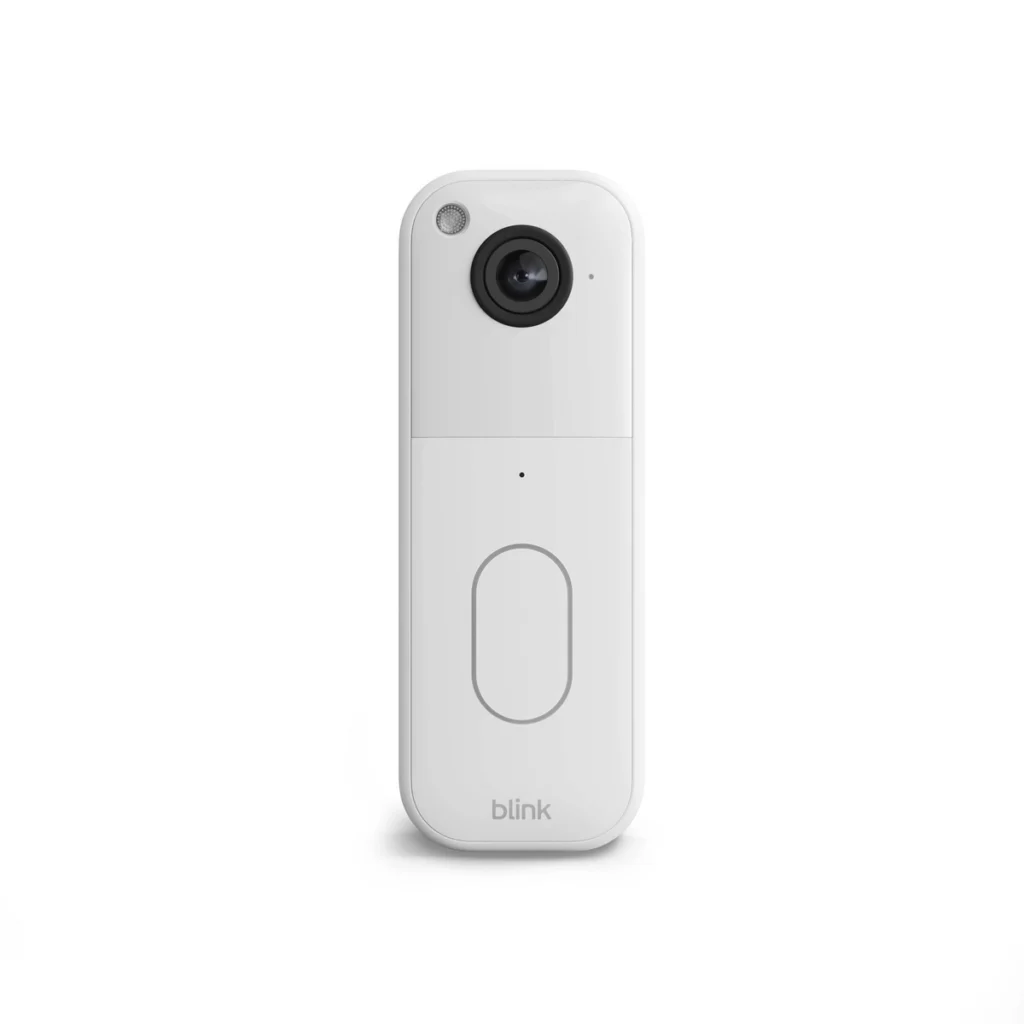
Blink Video Doorbell (2nd Gen)
A strong budget consensus pick across four primary sources, the Blink Video Doorbell offers essential doorbell camera features with up to two years of battery life at an approachable entry point.
Best Subscription-Free Smart Doorbell Camera
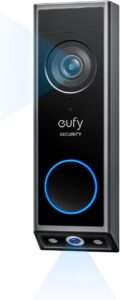
Eufy Video Doorbell E340
The standout choice for users who want to avoid recurring fees, the Eufy E340’s dual-camera design and built-in local storage deliver comprehensive package protection without a monthly subscription.
Top Picks in Detail
Best Overall: Google Nest Doorbell (Wired, 3rd Gen)
BEST OVERALL
Google Nest Doorbell (Wired, 3rd Gen)
The most broadly endorsed video doorbell across the expert sources we consulted, the Nest Doorbell (Wired, 3rd Gen) captures 2K HDR video with a 166° field of view and accurately distinguishes between people, packages, vehicles, and animals. It supports 24/7 cloud recording with a Google Home Premium subscription and integrates seamlessly with the Google Home ecosystem.
If you buy through our links, we may earn a commission. This doesn’t affect our recommendations.
Why It’s a Top Pick
The Google Nest Doorbell (Wired, 3rd Gen) earned the top spot in this review because it has the broadest first-choice consensus across the expert sources we consulted. Wirecutter names it the best smart doorbell camera overall, praising its accurate motion identification and consistent restriction of alerts when activity zones are configured. Tom’s Guide selects it as the best video doorbell for most people, highlighting its 2K resolution and free six-hour video history. Reviewed calls it the best video doorbell overall, noting its wide 166-degree field of view.
Consumer Reports (CR) rates it in its video doorbell rankings, and PCMag includes it among its recommended picks. The doorbell launched in October 2025 as Google’s newest Nest Doorbell, with Gemini AI features available through the higher-tier Google Home Premium Advanced subscription.
What Experts Like
- Accurately identifies different sources of motion, distinguishing between people, animals, vehicles, and packages, with consistent activity-zone behavior according to Wirecutter’s testing
- Records 2K HDR video with a 166-degree field of view, providing a head-to-toe perspective and clear detail even in low light
- Offers free cloud storage with 10-second event clips (auto-deleting after six hours) without requiring a subscription for basic functionality
- Integrates deeply with the Google Home ecosystem, supporting voice announcements on Nest speakers and displays, and compatibility with Alexa for notifications
Trade-Offs to Consider
- Requires existing doorbell wiring (16–24VAC transformer); there is no battery option for this specific variant, limiting installation flexibility for homes without wiring
- Meaningful video history requires a Google Home Premium subscription; the free tier’s six-hour, 10-second clip storage is very limited for security purposes
- Alexa support is more limited than Google Home integration; buyers in an Alexa-centric household may find the experience less seamless
- CR’s lab score for the wired 3rd Gen Nest Doorbell is moderate relative to top-rated models, and CR’s data privacy rating is a consideration — a trade-off common across Google-connected devices
Runners-Up
The Arlo Video Doorbell 2K leads in lab testing, while the Nest Doorbell (Battery) serves users without existing doorbell wiring.
- Arlo Video Doorbell 2K (2nd Gen) — CNET’s and PCMag’s Best Overall pick with the highest Consumer Reports lab score (82) among doorbells tested. It offers 2K HDR video, a 180° field of view, and flexible battery or wired installation. Some advanced features require an Arlo Secure subscription, and it did not achieve the same breadth of top-pick designations as the Nest Doorbell across sources.
- Google Nest Doorbell (Battery) — PCWorld’s and WIRED’s top smart doorbell pick for its reliable performance and easy battery-powered installation. It shares many of the Wired 3rd Gen’s intelligent detection features but at a lower resolution, and its battery requires periodic recharging. It serves a different installation scenario from the wired winner.
Best Budget Smart Doorbell Camera: Blink Video Doorbell (2nd Gen)
BEST BUDGET SMART DOORBELL CAMERA
Blink Video Doorbell (2nd Gen)
The most consistently recommended affordable video doorbell across the sources we reviewed, the Blink Video Doorbell delivers head-to-toe HD video with up to two years of battery life from three AA batteries. It offers flexible wired or wireless installation and works with Amazon Alexa for voice-activated monitoring.
If you buy through our links, we may earn a commission. This doesn’t affect our recommendations.
Why It’s a Top Pick
The Blink Video Doorbell (2nd Gen) earned the strongest budget-segment consensus of any product in this review, with four primary sources — CNET, CNN Underscored, PCWorld, and WIRED — naming it their Best Budget pick. Its combination of essential features, long battery life, and a low entry cost makes it a clear value leader. Tom’s Guide contributor testing and Reviewed’s hands-on assessment also recognized Blink as a standout for ease of setup.
What Experts Like
- Battery life is a standout feature: three AA lithium batteries can last up to two years, eliminating the frequent recharging common with rechargeable battery doorbells
- Flexible installation supports both battery-only (wireless) and wired setups that connect to an existing doorbell chime
- The 150-degree head-to-toe field of view captures visitors and packages in a 1:1 aspect ratio, providing clear doorstep coverage
- Local storage is available without a subscription when paired with a Sync Module and USB flash drive, though a Blink subscription unlocks additional features
Trade-Offs to Consider
- Consumer Reports rates the Blink Video Doorbell’s data privacy at 1 out of 5 — a significant concern for privacy-conscious buyers that should be weighed against its value proposition
- The doorbell only works with Amazon Alexa; there is no Google Home or Apple HomeKit support, limiting its appeal for non-Alexa households
- Without a subscription, the doorbell lacks person detection, video recording history, and other advanced features; the core free experience is limited to live view and motion alerts
- Video resolution is 1080p HD, which is lower than the 2K resolution offered by most competitors in the next tier up
Runners-Up
Both alternatives offer higher video resolution and smarter detection than the Blink at a modest price increase.
- TP-Link Tapo D130 — Wirecutter’s Budget Pick, recording 2K video and distinguishing between people, animals, vehicles, and packages. It earns a high Consumer Reports lab score (81) and supports free local storage via microSD card. It does not work with existing doorbell chimes, using a plug-in chime instead.
- Wyze Battery Video Doorbell — Tom’s Guide’s Best Value pick, offering color night vision, local storage up to 256GB, and compatibility with both Alexa and Google Home. Its single-source top-pick endorsement limits cross-source consensus strength, and full AI features require a higher-tier subscription.
Best Subscription-Free Smart Doorbell Camera: Eufy Video Doorbell E340
BEST SUBSCRIPTION-FREE SMART DOORBELL CAMERA
Eufy Video Doorbell E340
The leading choice for subscription-free doorbell camera operation, the Eufy E340 features dual cameras — a front-facing 2K lens and a downward-facing lens for package monitoring — with 8GB of built-in local storage and no monthly fees required. It supports both battery and wired installation.
If you buy through our links, we may earn a commission. This doesn’t affect our recommendations.
Why It’s a Top Pick
The Eufy Video Doorbell E340 dominates the subscription-free segment with consistent endorsement across primary sources. Tom’s Guide and WIRED both name it their Best Subscription-Free pick, PCWorld highlights it as the best subscription-free option, and Reviewed selects it as the Best Dual-Camera doorbell — with its subscription-free local storage cited as a key benefit. Consumer Reports rates it as CR Recommended. ZDNET names it the best video doorbell overall, specifically for its subscription-free reliability.
What Experts Like
- The dual-camera design captures visitors at eye level and packages on the ground simultaneously, providing comprehensive front-door coverage that single-camera doorbells cannot match
- 8GB of built-in eMMC storage holds approximately 90 days of motion-triggered clips without any subscription; storage is expandable via a HomeBase S380 hub for up to 16TB
- AI detection identifies people, packages, vehicles, and animals; a Delivery Guard feature tracks package activity and alerts when someone approaches a delivered package
- Flexible installation supports both rechargeable battery power (with a quick-release removable battery) and hardwired connection to existing doorbell wiring
Trade-Offs to Consider
- The dual-camera interface displays a split-screen view in the app that some users find unusual — half the screen shows the front camera and half shows the downward camera
- The front-facing camera’s 120-degree field of view is narrower than many competitors, some of which offer 150–180 degrees
- Advanced features like human recognition (identifying known faces) require pairing with the separate HomeBase 3 hub, which is sold separately
- The doorbell only supports 2.4GHz Wi-Fi, which may be a limitation in homes where the 2.4GHz band is congested
Runners-Up
Both alternatives pair local storage with higher-resolution sensors and wider fields of view than the Eufy E340.
- Reolink Battery Doorbell — PCWorld’s runner-up pick and Reviewed’s Best Local Storage choice. It supports microSD storage (up to 128GB) or NAS integration with no subscription required and offers 2K resolution with dual-band Wi-Fi support. It has less extensive smart home ecosystem integration than the major brands.
- TP-Link Tapo D225 — Wirecutter’s top battery-powered pick and a PCMag recommended model. It earns a high Consumer Reports lab score (81) and offers free local storage via microSD (up to 512GB) alongside 2K video and a 180-degree field of view. Its AI detection covers people, vehicles, animals, and packages without a subscription.
How to Choose the Right Smart Doorbell Camera for You
Decide whether you need wired or battery-powered installation. Wired doorbells connect to your home’s existing low-voltage doorbell wiring (typically 16–24VAC) and provide continuous power, which enables features like 24/7 recording and faster response times. Battery-powered doorbells are easier to install — often requiring only two screws and a smartphone app — but need periodic recharging (typically every one to eight months depending on activity and weather). Some models offer both options, giving you flexibility to start wireless and hardwire later.
Understand subscription costs before you buy. Many video doorbells lock important features behind monthly subscriptions, including video recording history, person detection, and activity zones. Subscription costs typically range from a few dollars per month to around twenty dollars per month for premium tiers. If ongoing fees are a concern, look for doorbells with local storage options (microSD cards or hub-based storage) that provide core functionality without recurring charges. Factor the total cost of ownership over two to three years, not just the purchase price.
Match the doorbell to your smart home ecosystem. Video doorbells work best when they integrate with your existing smart home platform. Google Nest doorbells integrate deeply with Google Home and Nest devices; Ring and Blink doorbells are built for Amazon Alexa; and Apple HomeKit support remains limited to a few models (notably the Ecobee Smart Doorbell Camera). Cross-platform compatibility varies significantly, so check ecosystem support before purchasing.
Evaluate video quality and field of view together. Resolution matters, but it’s not the only factor in useful video. A wider field of view (150–180 degrees) captures more of your doorstep and reduces blind spots, which is especially important for seeing packages on the ground. HDR and color night vision improve usability in challenging lighting conditions. A 2K doorbell with a narrow field of view may miss more than a 1080p model with a wider lens. A doorbell camera covers your entry, but many homes pair it with indoor security cameras for the interior coverage a doorbell cannot reach.
Consider data privacy and security alongside features. Video doorbells capture sensitive footage of your home’s entrance. Consumer Reports evaluates both data security (protection against unauthorized access) and data privacy (how companies collect, use, and share your data). These ratings vary significantly across brands and models. If privacy is a priority, local-storage-only doorbells keep your footage off third-party servers entirely.
How We Make Our Recommendations
Our recommendations follow a documented, repeatable editorial process designed to prioritize expert agreement, comparability, and clarity.
For each category, we:
- Define clear category scope and exclusions
- Identify and vet independent expert review sources
- Inventory all products reviewed across those sources
- Analyze patterns of agreement and disagreement
- Apply editorial judgment only after consensus is documented
When a category includes materially different product types, we segment recommendations rather than forcing a single “best overall.” For more information, see How We Work.
Sources & Citations
Primary Sources
- CNET, The Best Video Doorbells of 2026 That Act as Front Door Guardians, Feb. 2026
- CNN Underscored, The best video doorbell cameras of 2026, tried and tested, Jan. 2026
- Consumer Reports, 10 Best Video Doorbell Cameras of 2026, Lab-Tested and Reviewed, March 2026 [subscription required]
- Consumer Reports, Best Video Doorbell Cameras Without a Subscription, Sept. 2025 [subscription required]
- Consumer Reports, Home Security Camera Buying Guide, 2026 [subscription required]
- Consumer Reports, Home Security Cameras, Rating & Reviews
- PCMag, The Best Video Doorbells for 2026, March 2026
- PCWorld, Best video doorbells 2026: Ring, Nest, and more, Nov. 2025
- Reviewed, The Best Video Doorbells of 2026, Oct. 2025
- Tom’s Guide, Best video doorbells in 2026: Ring, Nest, Wyze and more tested, Feb. 2026
- Wirecutter, The Best Smart Doorbell Camera, Feb. 2026
- WIRED, The Best Video Doorbell Cameras, July 2025
Secondary Sources Consulted for Context
- Bob Vila, Our Favorite Video Doorbell of 2026 Is a Must-Have for Home Security, Jan. 2026
- Good Housekeeping, 8 Best Doorbell Cameras of 2024 for a Safer Home, June 2024
- Popular Mechanics, The 5 Best Tested Doorbell Cameras for Improved Home Security, Dec. 2025
- TechRadar, The best video doorbell: security for your home, wherever you are, Nov. 2025
- The Ambient, The best video doorbells: Smart doorbell cameras reviewed and rated, Dec. 2025
- The Spruce, The 6 Best Wireless Doorbells The Spruce Has Tested, Jan. 2026
- ZDNET, The best video doorbells you can buy: Expert tested, Jan. 2025
Additional Sources Reviewed
- Reviews.com, The Best Video Doorbell Cameras in 2025, Nov. 2025
- SafeHome.org, Best Video Doorbell Cameras for 2026, March 2026
- Security.org, The Best Video Doorbell Cameras Security Experts Recommend in 2026, Feb. 2026
Updates & Ongoing Review
This review is monitored on an ongoing basis. We update recommendations when expert sources publish new test results, products are discontinued, or consensus meaningfully changes.
Version History
- 2026-03-14 — Initial publication